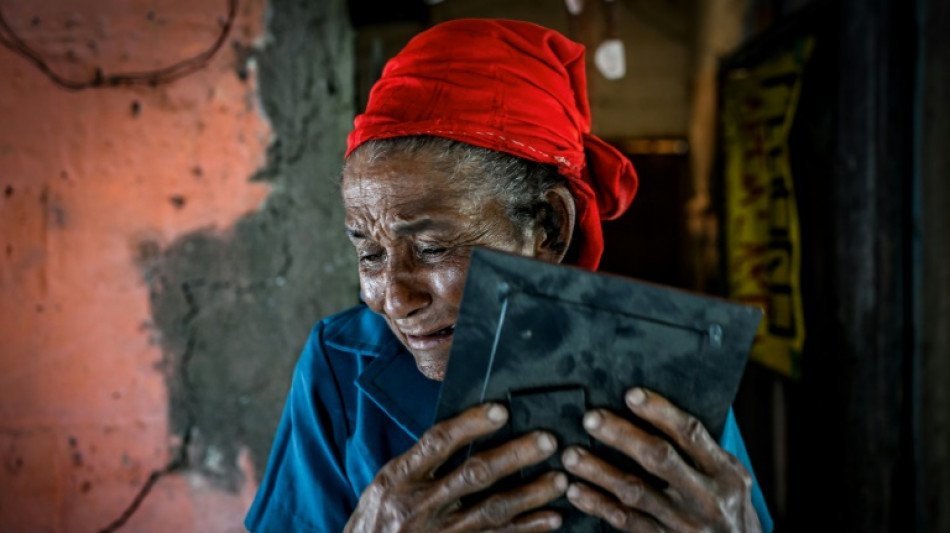
Buried clothes, bones and DNA help identify Colombia's missing / Photo: © AFP

 Abhishek hits record T20 ton as India post 221-7 against Afghanistan
 Macron hosts Lebanon security talks to back 'indispensable' army

 Final rally of season in Saudi Arabia cancelled due to Middle East conflict

 Gaza documentary sparks political storm in Israel

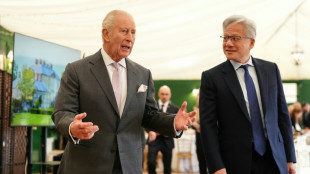 King Charles warns tech bosses of 'existential dangers' of AI
 French fishermen block ports over petrol prices

 AFP photo shows Trump examining image of Kennedy Center apparent demolition

 Andersson vows to take Sweden in 'new direction' after election win
 Turkey's Erdogan to run again in early 2028 vote, top adviser says
 Sweden's Andersson: a trusted, no-nonsense political operator
 Canada's Carney pushes 'new alliance' with EU despite Trump threats
 Ireland to boycott Eurovision 2027 over Gaza

 India's Tata Sons reappoints N. Chandrasekaran as chairman
 Sweden's left-wing wins election thriller
 Germany urges EU action against China to defend carmakers
 Stocks mostly rise after US Fed rate hike, oil eases
 Palestinians turn rugged caves into homes after Israeli demolitions
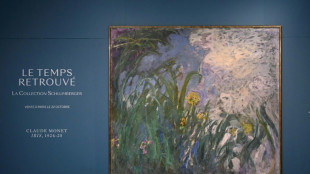 Two unseen Monet paintings to be sold in Paris: auction house
 Klopp wants German team to help reclaim national pride from far-right
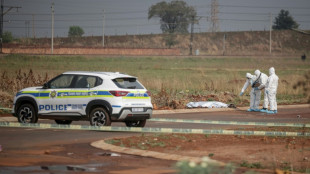 Ninth woman found dead in South Africa killing spree

 Smog scuppers Japan force helping fight Indonesia wildfires
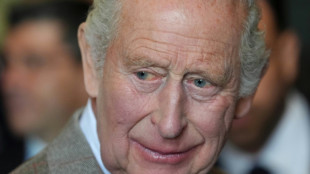 King Charles to call on tech giants for 'reassurances' over AI

 Lebanon security talks in Paris focus on replacing UN mission
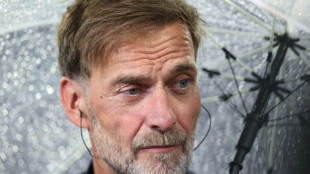
 Most stocks rise as Fed hikes and oil prices drop

 'Vande Mataram': Why is India's freedom song in spotlight?
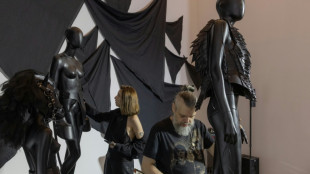
Two decades after her son went missing, Soledad Ruiz was handed a small coffin containing his remains, identified using DNA and the sweater he was wearing when he disappeared.
Her face worn by grief and time, Ruiz wipes away tears as she clutches a composite sketch of her son, Apolinar, who was 25 when he left for work on a farm in San Onofre in northern Colombia in 1999, never to be seen again.
The Caribbean region of Sucre was then a hotspot for paramilitary groups, brutal far-right squads that formed to combat leftist guerrilla groups but also became involved in drug trafficking, extortion and atrocities.
Ruiz long thought her son had been killed by a paramilitary leader who was known for throwing the bodies of his victims in a caiman-infested river.
However, his remains were found buried elsewhere in San Onofre with the fragments of his old sweater, and his identity confirmed by comparing his DNA to his mother's.
"I wanted him alive. I didn't want him as he came," what was left of him placed in a tiny coffin to be buried 24 years later, Ruiz told AFP.
"But that is how it is, it was his destiny."
- Perpetrators hinder search -
Across Colombia, efforts have intensified to find, exhume, and identify those who have gone missing during the country's six decades of armed conflict, since a 2016 peace agreement was signed with the Marxist guerrilla group, the Revolutionary Armed Forces of Colombia (FARC).
The Search Unit for Persons Reported Missing (UBPD), created after the peace deal, said it has found 1,256 bodies -- including that of Apolinar -- and is still looking for 104,000 more missing.
It's no easy task in a country where armed groups still wreak havoc, even as the leftist government of President Gustavo Petro tries to negotiate peace with several of them.
Hadaluz Osorio, a forensic anthropologist at Legal Medicine, which is involved in the identification of bodies, said paramilitary groups, guerillas and even state agents had tried to hinder the search.
"They murdered people and buried them clandestinely," she said.
In some cases, the perpetrators have exhumed the victims "and divided their remains into different graves to make it even harder to identify them," she said, surrounded by the bones of suspected victims in a Bogota laboratory.
Osorio examines a skull where the neat entry and explosive exit of a bullet are clearly seen.
Another skeleton shows cut marks that could be from a machete. That victim also has signs of wear and tear on their knee -- a valuable clue to relatives whose missing loved one may have complained of knee pain.
It's about "translating what the dead are telling us," said Osorio.
Her colleague Grace Alexandra Terreros grinds bone fragments and teeth into powder to extract DNA which is compared to samples kept in the "Bank of Genetic Profiles of the Disappeared."
Created in 2010, the bank contains at least 62,000 blood samples from family members of the missing.
- A strand of hair or fingernail -
The Special Jurisdiction for Peace (JEP), a court set up after the 2016 peace deal, has called for the process of identifying bodies to be sped up to help families heal their wounds.
Soledad Ruiz said she is more at ease since Apolinar's remains were found, but she is still waiting for news of her younger son, Jose de los Santos, who disappeared 15 days after him.
One of her grandchildren, Jimy, also went missing in 2001.
"I want them to come back, dead or alive," she said from her rural thatched-roof home, where chickens peck in the dirt near some banana trees, and horses graze in the distance.
Jimy's mother Alba Silgado is convinced she will soon get a phone call announcing that the remains of her son and brother have been identified, "even if it's because of hair, even if it's because of a fingernail."
M.Furrer--BTB