
EU parliament adopts 'pioneering' rules on AI / Photo: © AFP/File

 Juventus, Palace cruise to Europa League wins, Bournemouth beat Sociedad

 Stocks climb as oil retreats, Fed calms inflation fears

 Russians begin voting in controlled election as war drags

 Hispanics feel 'betrayed' on immigration, Republican warns Trump

 High-scoring Bears face Vikings in battle of NFL unbeatens

 'In our lane': Fed's Warsh defies Trump but still fighting for credibility

 Trump admin makes major cut to endangered species protections

 Princess Diana's brother makes new explosive claims against Charles

 Ovechkin on Russian political video: 'I support my country'
 Can we shut down AI?

 Teenager Sullivan named in new-look US squad

 Travis Scott and Keith Richards feature on GTA VI soundtrack

 AFP photo shows Trump examining image of apparent Kennedy Center razing
 Pochettino rings changes for USA friendlies
 Alonso says Chelsea ambition 'very clear' after end of Boehly era

 Mbappe draws political fire over Ceuta t-shirt controversy

 Third malaria death in Germany from outbreak tied to Frankfurt airport

 AtlasClear Holdings Reports Preliminary Fiscal 2026 Revenue of Approximately $20.1 Million, Up 85%; Revenue Plus Interest Income of Approximately $21.9 Million

 Alonso says Chelsea ambition clear after end of Boehly era
 Micron's Taiwan workers say 68 months' bonus not enough
 'Another arrow to the quiver': World Bank posts record private capital mobilization
 Macron hosts Lebanon security talks as UN mission nears end
 From land to race laws: what's driving the US-South Africa rift?

 Beyond Investment Returns: Families Are Measuring Wealth by Freedom, Continuity, and Legacy, According to Nour Private Wealth

 King Charles disputes claims in book by Princess Diana's brother
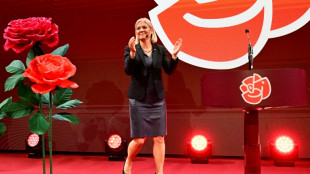
The European Parliament gave final approval on Wednesday to the world's most far-reaching rules to govern artificial intelligence, including powerful systems like OpenAI's ChatGPT.
The AI Act focuses on higher-risk uses of the technology by the private and public sector, with tougher obligations for providers, stricter transparency rules for the most powerful models like ChatGPT, and outright ban on tools considered too dangerous.
Senior European Union officials say the rules, first proposed in 2021, will protect citizens from the risks of a technology developing at breakneck speed, while also fostering innovation on the continent.
EU chief Ursula von der Leyen hailed the vote ushering in a "pioneering framework for innovative AI, with clear guardrails."
"This will benefit Europe's fantastic pool of talents. And set a blueprint for trustworthy AI throughout the world," she said on X.
The text passed with support from 523 EU lawmakers, with 46 voting against. The EU's 27 states are expected to endorse the law in April before publication in the bloc's Official Journal in May or June.
Brussels has been sprinting to pass the new rules since OpenAI's Microsoft-backed ChatGPT arrived on the scene in late 2022, unleashing a global AI race.
There was a burst of excitement for generative AI as ChatGPT wowed the world with its human-like capabilities -- from digesting complex text to producing poems within seconds, or passing medical exams.
Further examples include DALL-E and Midjourney, which produce images, while others create sounds based on a simple input in everyday language.
But with the excitement came a swift realisation of the threats -- not least that AI-generated audio and video deepfakes would turbocharge disinformation campaigns.
"Today is again a historic day on our long path towards regulation of AI," said Brando Benifei, an Italian lawmaker who pushed the text through parliament with Romanian MEP Dragos Tudorache.
"We managed to find that very delicate balance between the interest to innovate and the interest to protect," Tudorache told journalists before the vote.
Rules covering AI models like ChatGPT will enter into force 12 months after the law becomes official, while companies must comply with most other provisions in two years.
- AI policing restrictions -
The EU's rules known as the "AI Act" take a risk-based approach: the riskier the system, the tougher the requirements -- with outright bans on the AI tools deemed to carry the most threat.
For example, high-risk AI providers must conduct risk assessments and ensure their products comply with the law before they are made available to the public.
"We are regulating as little as possible and as much as needed, with proportionate measures for AI models," the EU's internal market commissioner, Thierry Breton, said.
Violations can see companies hit with fines ranging from 7.5 million to 35 million euros ($8.2 million to $38.2 million), depending on the type of infringement and the firm's size.
There are strict bans on using AI for predictive policing and systems that use biometric information to infer an individual's race, religion or sexual orientation.
The rules also ban real-time facial recognition in public spaces but with some exceptions for law enforcement, although police must seek approval from a judicial authority before any AI deployment.
Digital civil rights group Access Now said the bans did not go far enough.
"The final text is full of loopholes, carve-outs, and exceptions, which mean that it will not protect people, nor their human rights, from some of the most dangerous uses of AI," it said in a statement.
- EU 'resisted pressure' -
Since AI will likely transform every aspect of Europeans' lives and big tech firms are vying for dominance in what will be a lucrative market, the EU has been subject to intense lobbying.
Watchdogs on Tuesday pointed to campaigning by French AI startup Mistral AI and Germany's Aleph Alpha as well as US-based tech giants like Google and Microsoft.
They warned the law's implementation "could be further weakened by corporate lobbying".
"Many details of the AI Act are still open and need to be clarified in numerous implementing acts, for example, with regard to standards, thresholds or transparency obligations," three watchdogs based in Belgium, France and Germany said.
Lawmaker Tudorache said the law was "one of the... heaviest lobbied pieces of legislation, certainly in this mandate", but insisted: "We resisted the pressure."
Organisations representing the European creative and cultural sectors welcomed the vote in a joint statement but urged the EU to ensure "these important rules are put into practice in a meaningful and effective way".
J.Horn--BTB