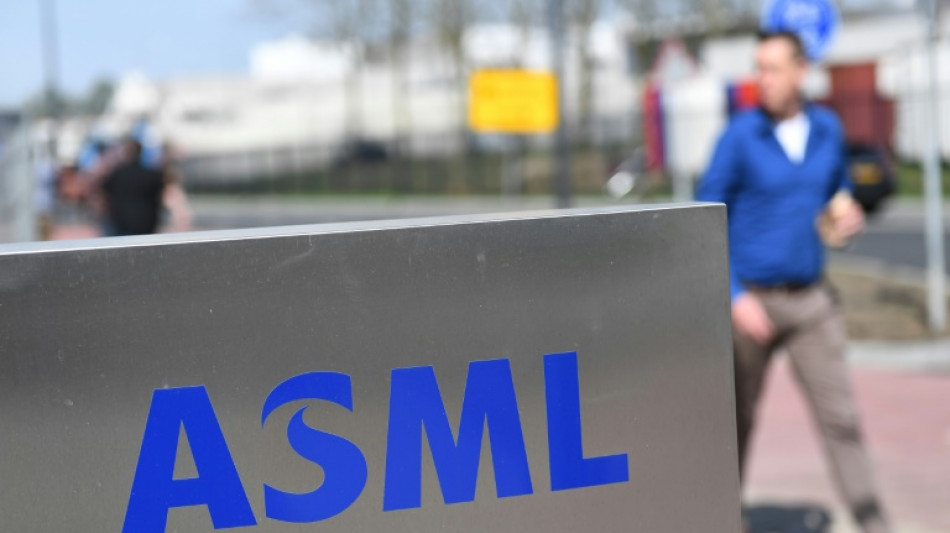
'Operation Beethoven': Dutch 2.5bn-euro charm offensive to keep ASML / Photo: © AFP

 Alexander-Arnold and Palmer return to England squad for Nations League
 Russians vote as Ukraine war drags on for fifth year

 Backpackers fret over Australian visa crackdown
 Most Asian stocks track Wall St rally, yen drops after BoJ rate hike
 Russians begin voting in controlled election as war drags on

 Trump 'clearly' wants dialogue with Pyongyang: South Korean President

 Bank of Japan hikes rates to 31-year high to battle inflation
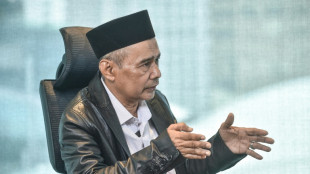 Thailand's Muslim separatists vow to fight to the end
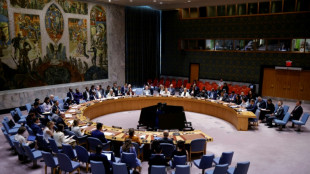 Mideast turmoil, AI set to dominate UN gathering of world leaders

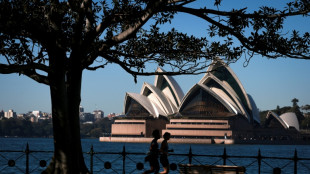 Australia to detain tourists who overstay visa, minister says

 Championship rivals brace for renewal of bitter feuds

 In Brazil's Amazon, the hunt for oil fuels hopes and fears
 Australian athlete who soiled herself apologises for continuing Hyrox race

 Baby orangutans in India expose 'frightening' scale of trafficking
 Doom Loop? Ed Sheeran struggles against Gaza tide
 Sudanese women hold fast to threatened henna body art
 Man Utd misery puts Carrick under pressure, Spurs feeling the heat
 Prized Mexican relic returns on loan, two centuries on

 Venezuela unblocks some censored news sites

 Samba stars on debut in Man City rout of Norwich

 Oversight Board blasts 'inadequate' Meta safeguards for AI deepfakes

 The Easter Island origins of buzzy Malkovich drama 'Wild Horse Nine'

 Third body recovered after Grand Canyon flash flood
 Harry makes first public appearance since return to UK

 Abhishek hits record T20 ton as India sweep series 3-0
The Dutch government on Thursday unveiled a plan worth 2.5 billion euros to retain global firms like chip giant ASML amid fears of a far-right clampdown on immigration.
The plan, dubbed "Operation Beethoven", mainly aims to prevent ASML, which constructs machines to make semi-conductor chips, from moving abroad to attract talented workers.
The funding, equivalent to $2.7 billion, will come from the government but also the region around Eindhoven, in eastern Netherlands, where ASML is based.
"This is one of the most important companies in the Netherlands, a global player," said Economy Minister Micky Adriaansens, according to local news agency ANP.
"ASML is our Messi and such a star player brings a whole team along with them," she added.
ASML has raised concerns that reducing immigration including skilled workers to the Netherlands -- as promised by far-right leader Geert Wilders, who won November elections -- would force it to look elsewhere.
"If we cannot get the people here, we'll get the people somewhere else. It's very simple," said chief executive Peter Wennink in January when ASML published its annual report.
"We are a company, we are a global company. We will go where we need to go to make sure the company can grow and service our customers," he added.
"If the Netherlands shuts down, because we cannot get immigrants or foreign students, fine. You have to accept the consequences."
The money announced Thursday will go towards investments in talent development, making it more attractive to live and work in the area, but also addressing concerns about electricity grid shortages.
"With these measures, the government assumes that ASML will make further investments in the Netherlands and retain the location of its statutory, tax and actual registered office in the Netherlands," the government said.
"If investment plans change, these forecasts and the required commitment will be adjusted," warned the Dutch government.
- 'Significant source of talent' -
Wilders has since indicated he will not seek to become prime minister but his PVV Freedom Party and others negotiating a coalition have all vowed to bring down immigration.
Another policy worrying multinationals based in The Netherlands is the phasing out of a lucrative tax break for talented expats.
Many politicians also want to crimp the number of foreigners at Dutch universities, which attract many talented students with high-quality English-language courses.
"That is a very significant source of talent that we need to drive innovation," said Wennink.
ASML employs 42,000 worldwide, more than half of whom are based at the firm's huge complex in Veldhoven, in the east of the country, with a significant proportion coming from abroad.
The "Brainport" region, which hosts ASML but also tech firms such as Philips, is considered to be the "Silicon Valley" of the Netherlands.
The Netherlands has traditionally been seen as a good place to do business, with a liberal economy and well-educated, English-speaking workforce.
But a report in February by the VNO-NCW business association suggested that climate was deteriorating.
Almost half (44 percent) of entrepreneurs surveyed group do not find the Netherlands an attractive country to do business in and almost 20 percent are considering leaving, the VNO-NCW said.
A year ago these percentages were 28 percent and 13 percent respectively.
The biggest concern voiced by entrepreneurs is a lack of political stability after the stunning election win of Wilders and his PVV party.
The PVV is currently negotiating a programme with three other parties but the process will take several more months and is not guaranteed to result in a stable government.
The Dutch business community has been shaken by recent departures of corporate behemoths such as consumer goods firm Unilever and energy giant Shell.
There are hopes that Unilever will list its ice cream division on the Amsterdam stock market, after spinning it off from the core business.
J.Bergmann--BTB