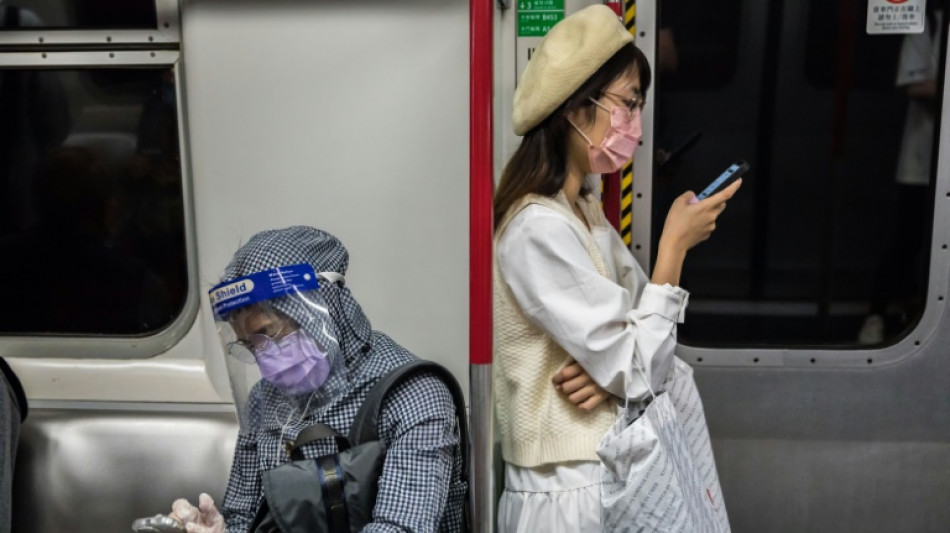
Nations fail to reach pandemic accord: talks to resume April / Photo: © AFP

 Alexander-Arnold and Palmer return to England squad for Nations League

 Russians vote as Ukraine war drags on for fifth year

 Backpackers fret over Australian visa crackdown
 Most Asian stocks track Wall St rally, yen drops after BoJ rate hike

 Russians begin voting in controlled election as war drags on
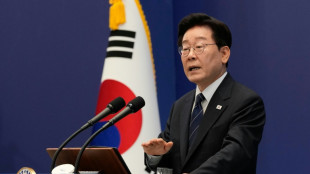 Trump 'clearly' wants dialogue with Pyongyang: South Korean President

 Bank of Japan hikes rates to 31-year high to battle inflation

 Thailand's Muslim separatists vow to fight to the end
 Mideast turmoil, AI set to dominate UN gathering of world leaders
 Australia to detain tourists who overstay visa, minister says

 Championship rivals brace for renewal of bitter feuds

 In Brazil's Amazon, the hunt for oil fuels hopes and fears
 Australian athlete who soiled herself apologises for continuing Hyrox race

 Baby orangutans in India expose 'frightening' scale of trafficking
 Doom Loop? Ed Sheeran struggles against Gaza tide
 Sudanese women hold fast to threatened henna body art

 Man Utd misery puts Carrick under pressure, Spurs feeling the heat
 Prized Mexican relic returns on loan, two centuries on

 Venezuela unblocks some censored news sites
 Samba stars on debut in Man City rout of Norwich
 Oversight Board blasts 'inadequate' Meta safeguards for AI deepfakes
 The Easter Island origins of buzzy Malkovich drama 'Wild Horse Nine'

 Third body recovered after Grand Canyon flash flood
 Harry makes first public appearance since return to UK

 Abhishek hits record T20 ton as India sweep series 3-0

Two years of talks aimed at striking a landmark global agreement on handling future pandemics failed to seal a deal in time on Thursday, and will restart next month for one final push.
Scarred by Covid-19, which shredded economies, overturned societies, crippled health systems and killed millions, countries are trying to craft an international accord on pandemic prevention, preparedness and response.
But while they largely agree on the principles of what should be done when the next pandemic strikes, nations are still at odds over how far they are prepared to go to turn those notions into binding commitments.
The ninth and supposedly final two-week round of talks therefore ended Thursday without finding a breakthrough.
"You are not far away from concluding a deal," World Health Organization chief Tedros Adhanom Ghebreyesus told countries as the talks petered out at the WHO headquarters in Geneva.
"I always keep hope alive and I am hopeful that you will.
"The treaty is a life-saving instrument, not merely a piece of paper," he added.
"It holds the power to transform our collective response to future pandemics, to protect lives and to safeguard the wellbeing of communities."
He urged nations to work towards getting a final agreement by the end of May.
- Call for courage -
Mindful that a pandemic could hit at any time, the plan was to finalise an agreement at these talks, so it could be approved by the WHO's 194 member states at their annual assembly, which starts on May 27.
Instead, fresh talks will run from April 29 to May 10.
The Intergovernmental Negotiating Body bureau conducting the talks will draw up a new draft text no later than April 18 and work to finalise talks by May 5.
The current draft has ballooned from 30 pages to nearly 100, with suggested amendments. Some participants want the INB to cut it down to 20 pages.
"It's just too long," said one Western diplomat.
"It's too detailed and too broad. Agreeing on 30 pages with such a level of uncertainty in such a short time is impossible."
Campaign groups have warned that the pressure to reach an agreement could lead to a watered-down text which does little to make the world safer than it was before the Covid-19 pandemic.
K. M. Gopakumar, senior researcher with the Third World Network NGO, told AFP the new text would likely be a lighter document, which could be added to at a later stage.
"They have climbed down from a full-fledged treaty to a much more concise document," he said at the WHO HQ.
"It's a face-saving exercise as of now, because they are so desperate to finish everything by May."
- Points of dispute -
The main issues of contention include shared access to emerging pathogens, better prevention and monitoring of disease outbreaks, reliable financing and transferring pandemic-fighting technology to poorer countries.
Ultimately, the talks have come to the crunch over the balance between richer and poorer nations.
Wealthier states want immediate information-sharing on new and emerging pathogens with pandemic potential, as well as strict -- and expensive -- preparedness obligations for all countries.
In return, developing countries want water-tight language on technology transfer and equitable access to vaccines, tests and treatments.
Y.Bouchard--BTB