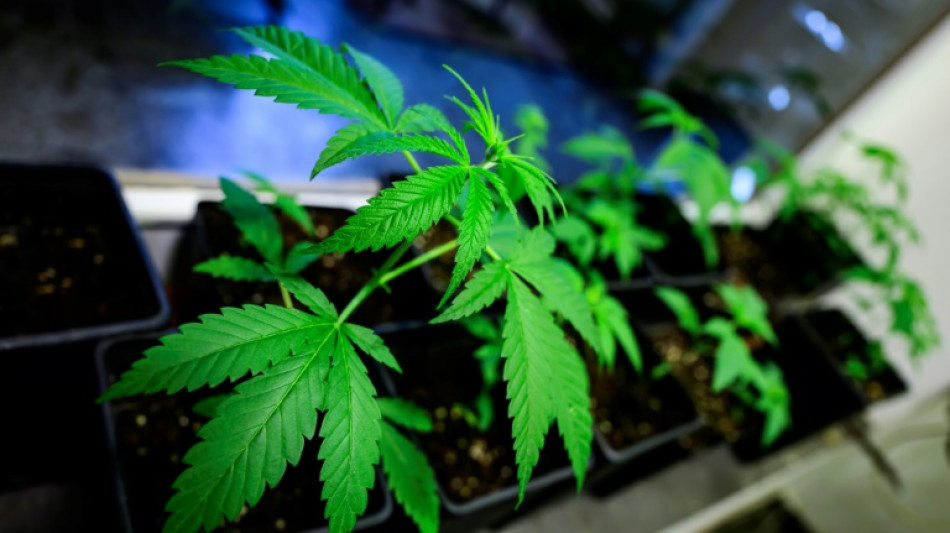
Germany gives controversial green light to cannabis / Photo: © AFP/File

 Russia seizes assets of Nestle, French firms over West's Ukraine support
 England can build on World Cup 'spirit', says Tuchel

 UNESCO can be 'moderator' in AI debate: chief to AFP

 Infantino 'must go', says German FA vice-president

 Russia seizes assets of Nestle, French firms

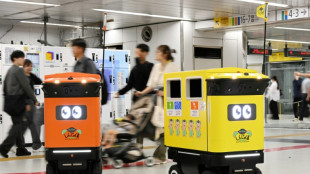 Japan's busiest rail station tests robot bins
 Anthropic says AI systems moving towards building themselves

 Asian stocks boosted by falling oil, yen weakens after BoJ rate hike
 Pakistan court blocks expulsion of Afghan medical college students

 Athletes 'can't take it any more' as Asian Games issues mount
 Allen lights up Bills' new stadium with 41-31 win over Lions

 Afghan medical students in Pakistan hope court stops college expulsions
 AI doomsday warnings unlikely to slow IPOs but questions linger
 ICC eyes China in bid to expand cricket

 Nkunku craving freedom and fun on RB Leipzig return
 Bhutan's traditional archers lose ground to development

 Asian stocks track Wall St rally as oil prices drop

 South Korea makes Asian Games complaint over Japan warlord ceremony

 US aid cuts are killing Kenyan sex workers

 October 7 survivors, families take centre stage in Israel vote
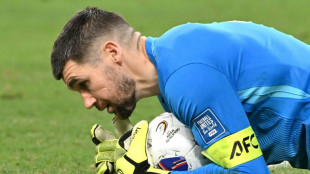 Captain Mat Ryan axed from Socceroos squad for Brazil games

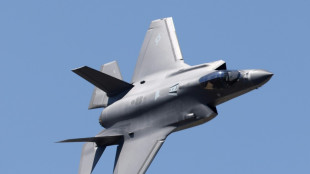 US approves sale of 48 F-35 jets to Saudi Arabia

 Juventus, Palace cruise to Europa League wins, Bournemouth beat Sociedad

 Stocks climb as oil retreats, Fed calms inflation fears

 Russians begin voting in controlled election as war drags

Germany on Monday became the biggest EU country to legalise recreational cannabis, despite fierce objections from opposition politicians and medical associations.
Under the first step in the much-debated new law, adults over 18 are now allowed to carry 25 grams of dried cannabis and cultivate up to three marijuana plants at home.
The changes leave Germany with some of the most liberal cannabis laws in Europe, alongside Malta and Luxembourg, which legalised recreational use in 2021 and 2023, respectively.
The Netherlands, known for its permissive attitude to the drug, has in recent years taken a stricter approach to counter cannabis tourism.
As the law took effect at midnight, hundreds of people cheered by Berlin's iconic Brandenbrug Gate, many of them by lighting up joints in what one participant, a very happy 25-year-old Niyazi, called "a bit of extra freedom".
As the next step in the legal reform, from July 1 it will be possible to legally obtain weed through "cannabis clubs" in the country.
These regulated associations will be allowed to have up to 500 members each, and will be able to distribute up to 50 grams of cannabis per person per month.
Until then, "consumers must not tell the police where they bought their cannabis" in the event of a street check, Georg Wurth, director of the German Cannabis Association, told AFP.
- 'Disaster' -
Initial plans for cannabis to be sold via licensed shops have been ditched due to EU opposition, though a second law is in the pipeline to trial the sale of the drug in shops in pilot regions.
The German government, a three-way coalition led by Chancellor Olaf Scholz's Social Democrats, argues that legalisation will help contain the growing black market for the popular substance.
But health groups have raised concerns that legalisation could lead to an increase in use among young people, who face the highest health risks.
Cannabis use among young people can affect the development of the central nervous system, leading to an increased risk of developing psychosis and schizophrenia, experts have warned.
"From our point of view, the law as it is written is a disaster," Katja Seidel, a therapist at a cannabis addiction centre for young people in Berlin, told AFP.
Even Health Minister Karl Lauterbach, a doctor, has said that cannabis consumption can be "dangerous", especially for young people.
The government has promised a widespread information campaign to raise awareness of the risks and to boost support programmes.
It has also stressed that cannabis will remain banned for under-18s and within 100 metres of schools, kindergartens and playgrounds.
- 'Responsible' -
The law has also led to criticism from police, who fear it will be difficult to enforce.
"From April 1, our colleagues will find themselves in situations of conflict with citizens, as uncertainty reigns on both sides," said Alexander Poitz, vice-president of the GdP police union.
Another potential issue is that the law will retroactively declare an amnesty for cannabis-related offences, creating an administrative headache for the legal system.
According to the German Judges' Association, the pardon could apply to more than 200,000 cases that would need to be checked and processed.
Conservative opposition leader Friedrich Merz has said he would "immediately" repeal the law if he and his party formed a government following nationwide elections in 2025.
But Finance Minister Christian Lindner, from the liberal FDP, said legalisation was a "responsible" move that was better than "directing people to the black market".
The new law "will not lead to chaos", Lindner told public broadcaster ARD.
W.Lapointe--BTB