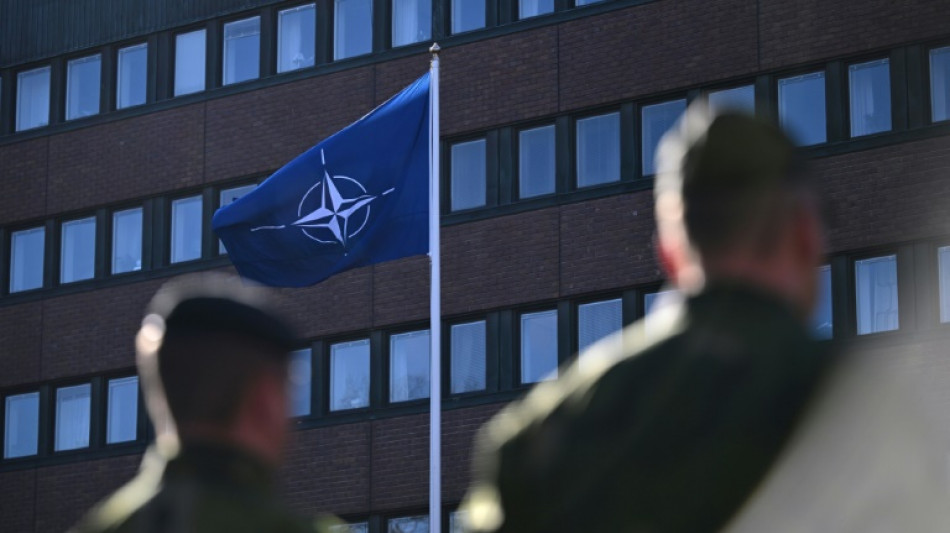
NATO at 75 is stronger -- but also under threat / Photo: © AFP/File

 Russia seizes assets of Nestle, French firms over West's Ukraine support

 England can build on World Cup 'spirit', says Tuchel

 UNESCO can be 'moderator' in AI debate: chief to AFP

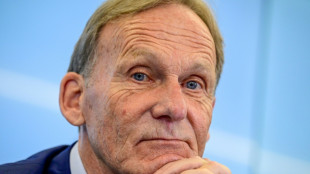 Infantino 'must go', says German FA vice-president
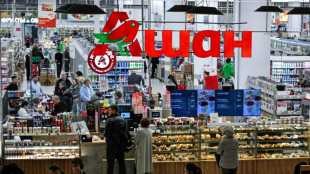 Russia seizes assets of Nestle, French firms
 Japan's busiest rail station tests robot bins

 Anthropic says AI systems moving towards building themselves

 Asian stocks boosted by falling oil, yen weakens after BoJ rate hike

 Pakistan court blocks expulsion of Afghan medical college students
 Athletes 'can't take it any more' as Asian Games issues mount
 Allen lights up Bills' new stadium with 41-31 win over Lions

 Afghan medical students in Pakistan hope court stops college expulsions
 AI doomsday warnings unlikely to slow IPOs but questions linger
 ICC eyes China in bid to expand cricket

 Nkunku craving freedom and fun on RB Leipzig return
 Bhutan's traditional archers lose ground to development

 Asian stocks track Wall St rally as oil prices drop

 South Korea makes Asian Games complaint over Japan warlord ceremony

 US aid cuts are killing Kenyan sex workers
 October 7 survivors, families take centre stage in Israel vote

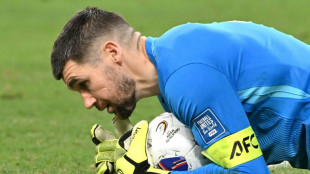 Captain Mat Ryan axed from Socceroos squad for Brazil games
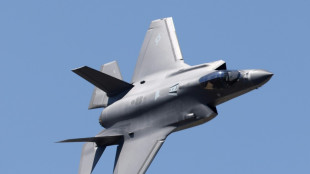 US approves sale of 48 F-35 jets to Saudi Arabia

 Juventus, Palace cruise to Europa League wins, Bournemouth beat Sociedad

 Stocks climb as oil retreats, Fed calms inflation fears

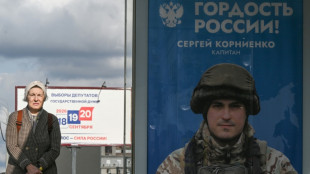
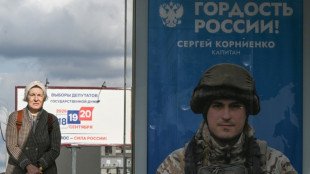 Russians begin voting in controlled election as war drags

The NATO military alliance marks its 75th anniversary on Thursday, reinvigorated by Russia's invasion of Ukraine -- but menaced by the growing threat from Moscow and the spectre of Donald Trump.
In 2019, French President Emmanuel Macron slammed the US-led alliance -- set up after World War II to face off against the Soviet Union -- as suffering from a "brain death".
Now, four-and-a-half years later, the alliance has grown to 32 members with the addition of Sweden and Finland after what Macron described as the "electroshock" of Russia's all-out assault in 2022.
In response, NATO has ramped up troop numbers on its eastern flank and put in place new plans to deal with any Russian attack.
"NATO has been re-energised after the invasion of Ukraine," said James Black, assistant defence and security director at RAND Corporation, a US think tank.
"In two years NATO has grown bigger, with more ambition in the scope of its activities, more forces in eastern Europe."
The refocus on its old nemesis Moscow has given the alliance a clear sense of purpose after some questioned whether it was still needed at the end of the Cold War.
That process started back in 2014 when Russia seized Crimea from Ukraine -- but it kicked up several gears with 2022's full-scale invasion.
Just six months before Russia piled its forces into Ukraine, NATO was still grappling with its disastrous US-led withdrawal from Afghanistan that allowed the Taliban to sweep to power.
Since the start of the war in Ukraine -- which is pushing to one day join NATO -- its members have sent weaponry worth tens of billions of dollars to Kyiv.
But the alliance has carefully avoided getting dragged into a direct conflict with Russia that risks turning nuclear.
With Moscow's forces now gaining the upper hand on the battlefield and Western weapons deliveries to Kyiv dwindling, there are fears NATO countries could be next in Russia's sights if the Kremlin manages to grind out a win in Ukraine.
"If aid decreases and Ukraine is under pressure to negotiate and accept a bad peace, that would increase the danger of an aggressive Russia," said Black.
"That's why it is essential to support Ukraine now. It's an investment for NATO tomorrow."
- Trump time-bomb? -
But Russian leader Vladimir Putin is not the only threat looming over NATO.
Last month former US president Trump rocked allies by saying he would encourage Russia to "do whatever the hell they want" to any NATO country not meeting its financial obligations.
The comments from the volatile Republican candidate in this year's US election unleashed a political firestorm as they plunged into doubt Washington's commitment to allies should Trump beat incumbent Joe Biden in November.
"The real problem with Trump is his unpredictability," said Camille Grand, a former senior NATO official and current fellow at the European Council on Foreign Relations, a think tank.
"The withdrawal of the US from NATO is not even necessary. All it takes is a tweet or a statement like: not a single American soldier will die for an ally like Lithuania."
In a pre-emptive move, NATO has showcased the steep increase in countries meeting their target of spending two percent of GDP on defence, up to an expected 20 nations this year from just three in 2014.
Diplomats at the alliance's headquarters in Brussels remain sanguine about Trump's prospective return having come out of his first term with NATO in better shape.
They say one way to convince the United States that NATO remains relevant is to step up the attention it pays to China, a key concern for Washington.
But, despite increased European spending on defence, many believe that NATO would not work without the might of the United States.
"If the US backs out of this then we can't manage it," said one European diplomat, on condition of anonymity.
"Europe is stepping up the pace but it will be some time before it could ever come close."
K.Brown--BTB