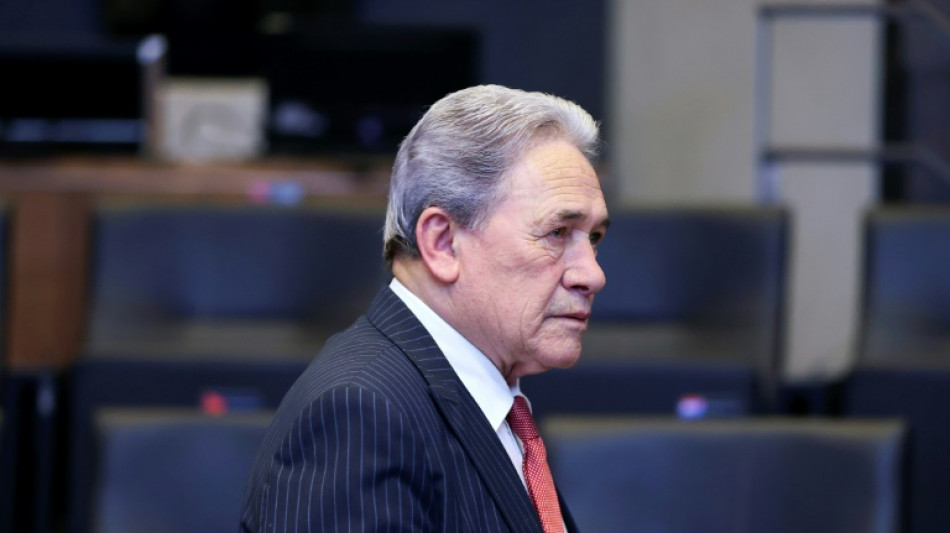
New Zealand eyes NATO deal amid security rethink / Photo: © POOL/AFP

 Stock markets retreat after central bank rate hikes
 Russia labels director of Cannes Grand Prix winner a 'foreign agent'

 Macron warns of Russian 'hybrid' threat after meeting presidential hopefuls

 UN holds third informal poll for new chief

 Kulusevski return can spark Spurs: De Zerbi

 Shakira to cap off world tour with Madrid 12-gig run

 Isolated Syrian-Druze city blames Damascus for shortages

 Isolated Syrian-Druze city shortages

 Dutch drop Depay for Germany match in Xavi's first pick

 Ronaldo named in Portugal squad for Nations League

 Stock markets diverge after central bank rate hikes

 Anti-Assad music star makes triumphant return to Syria

 In-form Fernandez included in Spain Nations League squad
 Arteta buries hatchet with Hurzeler ahead of Brighton clash

 Alexander-Arnold and Palmer return to England squad for Nations League

 Russians vote as Ukraine war drags on for fifth year

 Backpackers fret over Australian visa crackdown
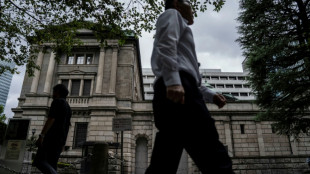 Most Asian stocks track Wall St rally, yen drops after BoJ rate hike

 Russians begin voting in controlled election as war drags on

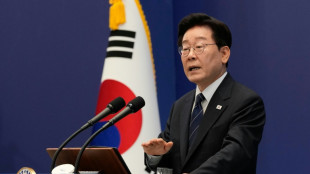 Trump 'clearly' wants dialogue with Pyongyang: South Korean President

 Bank of Japan hikes rates to 31-year high to battle inflation

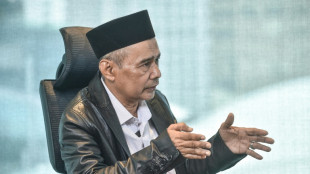 Thailand's Muslim separatists vow to fight to the end

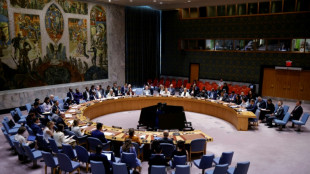 Mideast turmoil, AI set to dominate UN gathering of world leaders
 Australia to detain tourists who overstay visa, minister says

 Championship rivals brace for renewal of bitter feuds

New Zealand on Friday said it was ready to sign a new cooperation deal with NATO, as the country rethinks security in the face of regional tensions and growing Chinese military might.
Foreign minister Winston Peters said after a two-day visit to NATO headquarters in Brussels that a "partnership programme" with the alliance would be agreed "in the coming months".
Since the centre-right coalition was elected last October, steadfastly independent New Zealand has looked to deepen military ties with "traditional" Western allies.
"The coalition government has made clear the strong emphasis it places on cooperation with New Zealand's traditional partners, and NATO is a big part of that," Peters said.
New Zealand has had a partnership with NATO since 2012, but the new deal is expected to foster much closer strategic alignment.
Wellington is also looking at joining Australian, US and UK joint research into military use of artificial intelligence, hypersonic weapons and other emerging technologies.
Since World War II, New Zealand has been a part of the FiveEyes intelligence-sharing alliance with Australia, Canada, the United Kingdom and the United States.
But it has sometimes been an uneasy ally when it comes to military matters.
Objections to nuclear weapons caused a decades-long defence pact with the United States to be effectively mothballed in the 1980s.
- 'Dangerous game' -
And the country's dependence on trade with China -- New Zealand's largest commercial partner -- has forced Wellington to walk a fine diplomatic line between Beijing and Washington.
"New Zealand is playing a dangerous game," Geoffrey Miller, a geopolitical analyst at the Victoria University of Wellington told AFP.
Miller worries that signing a new tailored deal with NATO or joining with AUKUS could be seen as a "red flag" by key trade partner China.
"At some point, China may simply snap back", he said.
Beijing has been fiercely critical of the AUKUS pact, which includes supplying Australia with a fleet of nuclear-powered submarines.
There are already signs that tensions with China are building. In March, China's foreign minister Wang Yi made a rare visit to the country and spoke of shoring up diplomatic ties.
At the same time, the New Zealand government revealed a Chinese state-backed group hacked its parliamentary system back in 2021.
Beijing rejected the cyber-attack accusation as "groundless and irresponsible".
Peters is expected to meet US Secretary of State Antony Blinken next week.
New Zealand's desire to revamp its roughly 15,000-strong military and upgrade its armoury of ageing equipment is likely to be front of mind.
New Zealand's defence ministry last year admitted the forces were "not in a fit state to respond to future challenges".
Former New Zealand diplomat Marion Crawshaw said the government must beef up defence spending when the budget is announced next month.
"You only need to look around the world to think that we need to be doing and spending more," she told AFP.
L.Dubois--BTB