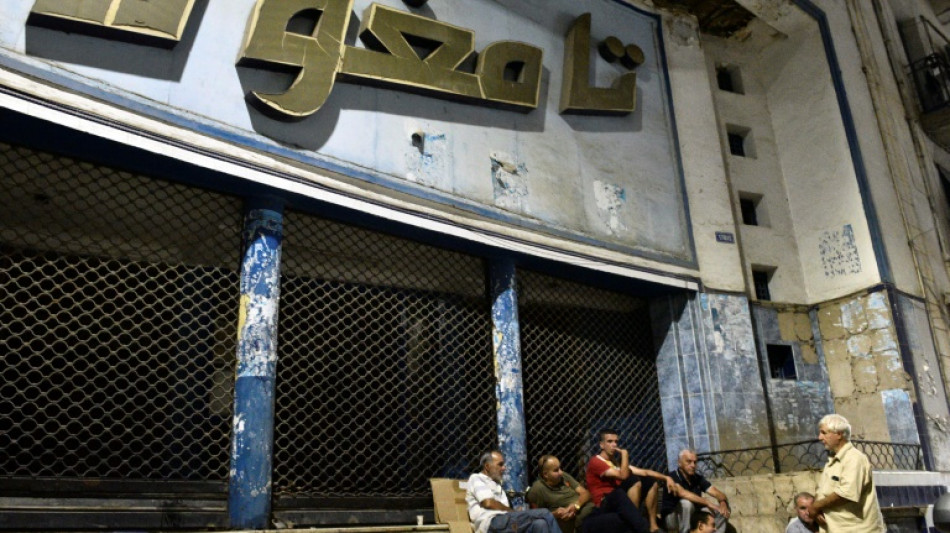
Algerian film industry vies for revival after decades of neglect / Photo: © AFP

 Stock markets retreat after central bank rate hikes
 Russia labels director of Cannes Grand Prix winner a 'foreign agent'

 Macron warns of Russian 'hybrid' threat after meeting presidential hopefuls
 UN holds third informal poll for new chief
 Kulusevski return can spark Spurs: De Zerbi

 Shakira to cap off world tour with Madrid 12-gig run
 Isolated Syrian-Druze city blames Damascus for shortages
 Isolated Syrian-Druze city shortages
 Dutch drop Depay for Germany match in Xavi's first pick
 Ronaldo named in Portugal squad for Nations League
 Stock markets diverge after central bank rate hikes
 Anti-Assad music star makes triumphant return to Syria
 In-form Fernandez included in Spain Nations League squad
 Arteta buries hatchet with Hurzeler ahead of Brighton clash
 Alexander-Arnold and Palmer return to England squad for Nations League

 Russians vote as Ukraine war drags on for fifth year

 Backpackers fret over Australian visa crackdown
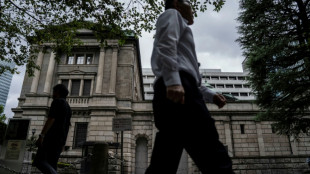
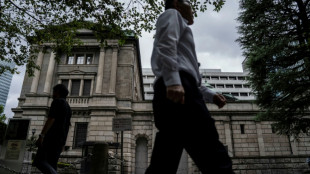 Most Asian stocks track Wall St rally, yen drops after BoJ rate hike
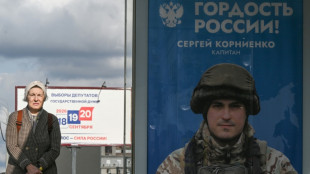 Russians begin voting in controlled election as war drags on
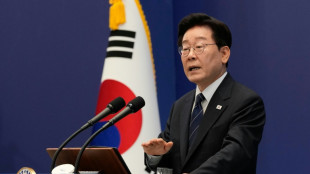 Trump 'clearly' wants dialogue with Pyongyang: South Korean President

 Bank of Japan hikes rates to 31-year high to battle inflation
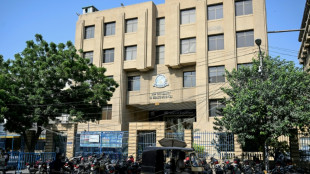
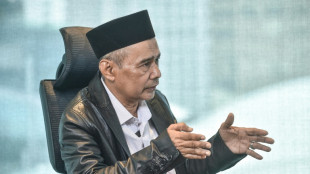 Thailand's Muslim separatists vow to fight to the end

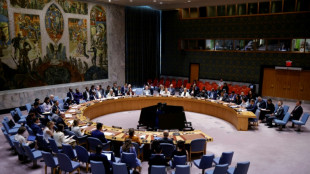 Mideast turmoil, AI set to dominate UN gathering of world leaders
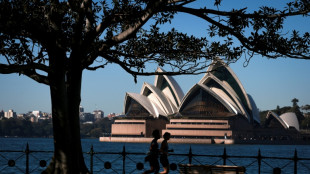 Australia to detain tourists who overstay visa, minister says

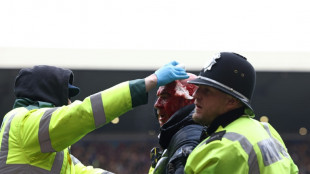 Championship rivals brace for renewal of bitter feuds
Algerian cinema is in search of a revival, decades after its 1970s heyday and steep decline, with authorities having blown hot and cold in their support.
Today, the country counts only a few dozen theatres against a backdrop of legal, bureaucratic and financial restraints.
"Algerian cinema is rich in its talents and poor in its means," said producer and film critic Ahmed Bedjaoui. "We need to give a little more freedom to filmmakers."
During the 1960s and 70s, the north African country was home to more than 450 cinemas and film libraries.
Its production then yielded cinematic gems like "Inspector Tahar's Holiday" (1973), "Omar Gatlato" (1976), and the Palme d'Or-winning "Chronicle of the Years of Fire" (1975).
In the 1980s, though, the industry fell into a tailspin.
"The industry and its talents started disappearing little by little," said Bedjaoui, who is also known as Algeria's "Mister Cinema".
The onset of dire economic and political crises then thrust the hydrocarbon-rich country into a long civil war between the government and Islamist rebel groups.
During the 1992-2002 conflict, which came to be known as the Black Decade, numerous artists and film professionals left the country.
Cinemas and other entertainment spaces, viewed as places of depravity by Islamists, were shut down one after another.
It was only in the diaspora, said Bedjaoui, that "filmmakers like Nadir Mokhneche or Rachid Bouchareb filled the void by producing works about Algeria".
- 'Political willingness' -
In a cabinet meeting last December, Algerian President Abdelmadjid Tebboune announced the creation of a body to oversee cinematic production amid an "emergence of young talents in acting and directing".
Bedjaoui said the announcement spoke to the president's "political willingness and determination to support cinema".
But prospects of reviving the industry soon proved to be short-lived.
Earlier this month, the Algerian parliament passed a law criminalising films that offend religion, morality, or the history of the 1954-1962 Independence War against France.
In a Facebook post, director Sofia Djama called it "a law of shame".
"Yesterday the press, today cinema, tomorrow literature, painting, and any form of creation and expression that does not suit them will be censored," she wrote.
Several journalists and activists are imprisoned in Algeria, which ranks 136 out of 180 countries and territories in the Reporters Without Borders World Press Freedom Index.
After taking office in December 2019, President Tebboune vowed to "place the film industry at the heart of his programme" by giving it its own state secretariat, said Bachir Derrais, a filmmaker and actor.
But the secretariat was dissolved only a year after its creation, owing to conflicts within the culture ministry, he added.
An example of these tensions is the ban, which lasted for almost six years, on Derrais' biopic of Larbi Ben M'hidi, the prominent Algerian Independence War leader killed by the French army in 1957.
The film was finally screened in Algeria for the first time on March 4, which marked the 67th anniversary of Ben M'hidi's killing.
- A new generation -
Amir Bensaifi, 39, is part of a new generation of Algerian filmmakers who say they must go to great lengths to create their films.
"I didn't have any funding, it's self-produced," said Bensaifi of a film he made in 2023, adding that he worked with self-starting "technicians who believed in the project and who are all producers".
His 34-year-old colleague, Imene Ayadi, said she had resigned herself to seeking funding from France to "film in Algeria in Arabic with Algerian technicians and actors".
Fouad Trifi, director and founder of Algeria's first-ever casting agency, is among those who continue to believe that Algeria is "a country of cinema".
"There is really an energy, a desire," Trifi told AFP. "There is an audience. We see it in festivals."
Yet his enthusiasm comes in the face of multiple challenges in production and distribution.
The country's silver screen is still "inchoate and confined to preview showings and extremely limited distribution", said Derrais, whose film was only screened once in a preview showing.
He also blamed "a glaring shortage of screening rooms".
Bedjaoui said a solution could be "investing in multiplexes" as well as "building new theatres".
Last August, a 990-square-metre multiplex cinema with four screens was opened in a suburb of Algiers within Garden City, a new state-of-the-art shopping centre.
The multiplex had a turnover of 90 million Algerian dinars (more than $660,000) within six months of opening, said its manager, Riad Ait-Aoudia.
"There were a lot of people at the opening," Rym Khaldi, the group's communications manager, told AFP.
"It’s the first theatre of this scale."
P.Anderson--BTB