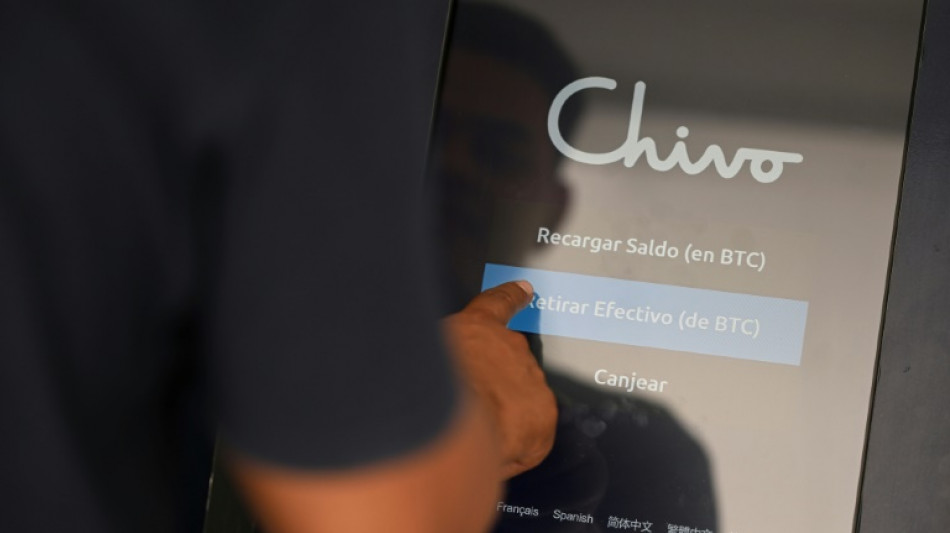
Record remittances provide lifeline in Central America / Photo: © AFP

 Mancini brings nine newcomers into the first squad of his Italy comeback

 Czechs level Davis Cup tie against USA as South Korea eye Finals

 New France boss Zidane confirms Mbappe as captain after naming first squad
 California governor signs order to explore AI 'kill switch'
 Head leads run spree as Australia win Zimbabwe ODI series

 In-form Raphinha wants to finish career at Barcelona

 Warren Buffett steps down as Berkshire Hathaway chairman
 Carrick confident Man Utd can 'work through' tough time

 Mbappe ends Nike partnership to join Swiss brand On

 Liverpool boss Iraola puts Bournemouth love affair on hold
 'A disaster' if Man City do not win says Maresca after flawless start
 Kerry James Marshall: American 'blackness' painter celebrated in Europe

 Spain coach De la Fuente offers 'full support' to people of Ceuta

 Russia seizes assets of Nestle, French firms over West's Ukraine support
 England can build on World Cup 'spirit', says Tuchel

 UNESCO can be 'moderator' in AI debate: chief to AFP

 Infantino 'must go', says German FA vice-president

 Russia seizes assets of Nestle, French firms

 Japan's busiest rail station tests robot bins

 Anthropic says AI systems moving towards building themselves

 Asian stocks boosted by falling oil, yen weakens after BoJ rate hike
 Pakistan court blocks expulsion of Afghan medical college students

 Athletes 'can't take it any more' as Asian Games issues mount
 Allen lights up Bills' new stadium with 41-31 win over Lions

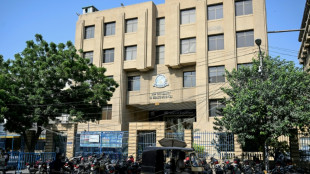 Afghan medical students in Pakistan hope court stops college expulsions
Money sent home by migrants in the United States to Central America has risen to record levels, providing a lifeline for many of their relatives like Salvadoran mother of three Marta Alvarado.
Such remittances are now equivalent to a quarter of the combined economic output of the poverty-afflicted nations of El Salvador, Guatemala, Honduras and Nicaragua.
Alvarado described the money transfers as "a blessing" for her family.
"What my brothers send month after month helps not only me but also my mother and father, who are now elderly," said the 54-year-old, who works as a secretary in a health clinic.
"It helps them to support themselves, buy their food, clothing and medicine, and to do home improvements," she told AFP.
El Salvador, Guatemala, Honduras and Nicaragua together received almost $42 billion in family remittances in 2023, according to official data from central banks and the intergovernmental Central American Monetary Council.
The remittances even exceed the amounts generated by foreign investment, tourism or exports.
They are a key factor in boosting trade and consumer spending in nations with high poverty rates, according to experts.
- 'Life preserver' -
Remittances to the four countries increased from $19.0 billion in 2017 to $41.8 billion in 2023 -- a rise that experts attribute to greater migration, in particular to the United States.
The exact number of Central Americans living abroad is unknown, since many are irregular migrants.
But according to estimates by international and non-governmental organizations, the figure is around 10 million, or a quarter of the combined population of El Salvador, Guatemala, Honduras and Nicaragua, where most migrants hail from.
"People who don't find opportunities in their country are forced to leave," Henry Rodriguez, an economist at the National Autonomous University of Honduras, told AFP.
Remittances now represent almost 27 percent of the gross domestic product (GDP) in Honduras, 26 percent in Nicaragua, 24 percent in El Salvador and almost 20 percent in Guatemala.
They are "and will continue to be a life preserver for the Salvadoran economy for a long time," economist Carlos Acevedo, a former president of El Salvador's central bank, said.
"Without remittances we would have sunk a long time ago," he told AFP.
"If dollars do not enter, the financial system does not work -- nothing works in the country. And remittances are one of the main sources of dollar inflows," Acevedo said.
- Breaking cycle of poverty -
In Nicaragua, 17-year-old student Ligia Hurtado receives money sent by two aunts from Spain, which she uses to pay for university fees, housing, food and transportation.
In El Salvador, 61-year-old retiree Emerita Coto said her brother sends her $400 every month from New York, money that she uses to pay for a plot of land that she acquired on credit.
In contrast, money transfers are less important for countries with little emigration, and represent only around one percent of GDP in Panama and Costa Rica.
Multilateral organizations such as the World Bank and the Inter-American Development Bank promote the productive use of remittances, rather than for consumption.
They encourage investment in small businesses to support the development of nations with small economies and high poverty rates.
It is a view shared by Guatemala's new president, Bernardo Arevalo.
"Remittances can contribute more efficiently to breaking the cycle of poverty that motivates migration," he said.
Gustavo Juarez, who heads an association of Guatemalans deported from the United States, agrees.
"It would be good for a remittance to be invested in a business or a small enterprise," he told AFP.
In El Salvador's capital, Alvarado's 71-year-old mother Ester plans to open a store with some of the money that her children send.
"Soon she will have a business that can help her to have other income," Alvarado said.
N.Fournier--BTB