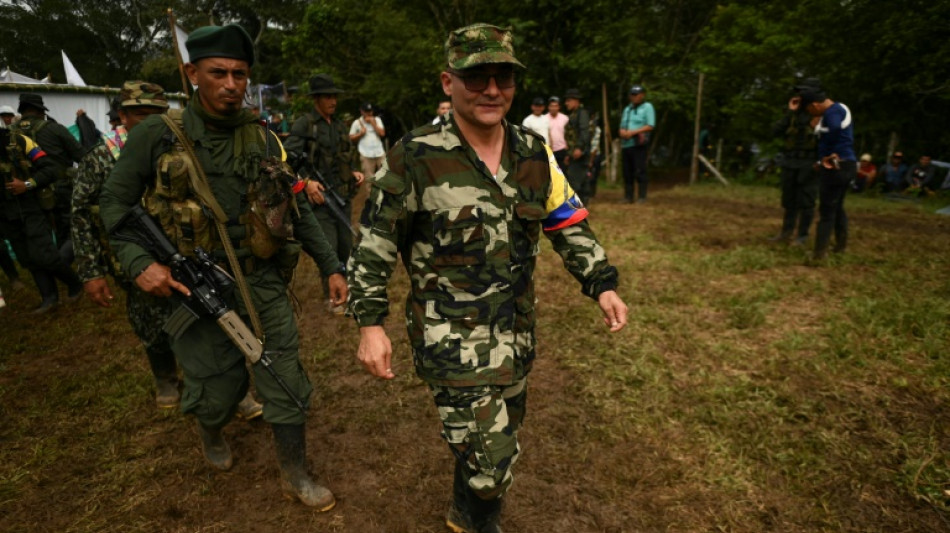
Divisions among Colombia's FARC dissidents complicate peace talks / Photo: © AFP/File

 Kennedy Center: future unclear for iconic Washington arts hub
 Trump claims 'infinite' Greenland security deal with Denmark

 Helicopters battle wildfire threatening Ecuador's capital
 Brentford batter Chelsea to undo Alonso's promising start
 Kane hits Bundesliga century as Bayern rout Union
 Trump says CNN, MS NOW, Politico banned from White House
 Hushing and hedging: US companies retreat on climate
 Springboks to face Fiji before 2027 Rugby World Cup
 Nigeria miners struggled to breathe in cell before 37 died: survivors
 McIlroy on the charge at PGA Championship as Reed withdraws
 McIlroy on the charge at PGA Championship
 Crisis-wracked Volkswagen warns of 10-bn-euro hit to profits
 Costa Rica's Grynspan tops third informal poll for UN chief: diplomat

 Stock markets retreat after central bank rate hikes
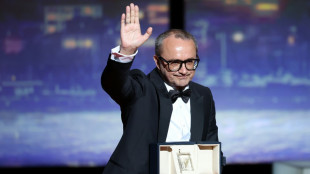 Russia labels director of Cannes Grand Prix winner a 'foreign agent'
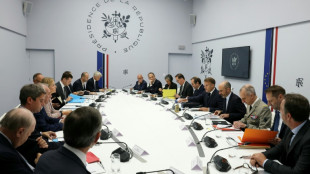 Macron warns of Russian 'hybrid' threat after meeting presidential hopefuls
 UN holds third informal poll for new chief
 Kulusevski return can spark Spurs: De Zerbi
 Shakira to cap off world tour with Madrid 12-gig run
 Isolated Syrian-Druze city blames Damascus for shortages
 Isolated Syrian-Druze city shortages
 Dutch drop Depay for Germany match in Xavi's first pick
 Ronaldo named in Portugal squad for Nations League
 Stock markets diverge after central bank rate hikes
 Anti-Assad music star makes triumphant return to Syria
One of Colombia's most powerful guerrilla groups has suffered an internal rupture expected to further complicate the country's troubled peace process.
The Central General Staff (EMC) is made up of thousands of rebels who refused to join in when the Marxist guerrilla group, the Revolutionary Armed Forces of Colombia (FARC), signed a 2016 peace deal with the government.
Since 2023, the government has attempted to negotiate with the EMC, but the process has suffered multiple setbacks.
On Tuesday, Bogota announced that the top guerrilla leader known by the alias Ivan Mordisco was no longer at the negotiating table after a split in the group.
This is what you need to know about the latest developments:
- What is the EMC? -
In 2016, when former president Juan Manuel Santos was finalizing a historic peace accord with the FARC, the country's biggest rebel group, some guerrilla factions announced they were breaking away from a process that they believed implied "military defeat."
Those factions were "regional structures, fronts and blocs with different names," said Jorge Mantilla, an independent expert in Colombia's conflict.
In 2017, FARC disarmed and transformed itself into a political party.
During the administration of president Ivan Duque (2018-2022), the dissidents "grew and began to become a very significant problem," said Mantilla.
And he said it was only when current President Gustavo Petro came to power in 2022, vowing to seek "total peace" with all the country's armed groups, that the disparate factions united under the name Central General Staff.
Military intelligence says the EMC has around 3,500 fighters. The group is involved in narcotrafficking and illegal mining, in areas of the Amazon on Colombia's borders with Venezuela and Ecuador.
"They define themselves as a decision-making body that unites different dissident schools of thought," said Juana Cabezas, from the independent research center Indepaz.
- Who is Ivan Mordisco? -
Nestor Gregorio Vera, alias Ivan Mordisco, had been considered the EMC's top commander.
Mantilla said he had served more than 20 years with the FARC where he was a "mid-level commander."
"His military experience and his early opposition to the negotiations gave him important legitimacy" among the dissidents, he said.
In 2022, Duque announced Mordisco had been killed in a military operation, but he reappeared a few months later expressing his willingness to join Petro's peace process.
Negotiations and a ceasefire got underway last year. However, a series of attacks on civilians and security tested Petro's patience, and the truce was suspended in three departments in March.
At the time, Petro called Mordisco a "mobster" and "drug trafficker disguised as a revolutionary," and ordered his capture.
On Tuesday, the government said Mordisco was "no longer at the (negotiating) table. We do not know where he is."
The government said it would now recognize EMC commander Andrey Avendano as its main interlocutor, even though he only commands about half its forces.
- Why have negotiations faltered? -
A year and a half after the launch of the peace process with the EMC, Bogota has made few advances and concedes the rebel group has expanded its territory and boosted recruitment.
"The main failure has been thinking that there was a unified Central General Staff. They were not unified, nor did all (the fronts) have the same capacity," said Cabezas.
Ceasefires, which have been agreed and suspended several times, are largely respected in some regions, such as on the Colombia-Venezuela border, while others such as one in the southwest have seen several attacks on civilians and security forces.
Mantilla attributes this to factional differences and the groups' relationships with the communities in which they operate.
Petro's ambitious "total peace" plan, which launched negotiations with a dozen diverse armed groups, has also turned out to be "a problem," he added.
"Much of the violence in Colombia occurs between these groups and not between these groups and the State. That is why displacement, confinement and massacres have been so difficult for this government to stop."
N.Fournier--BTB