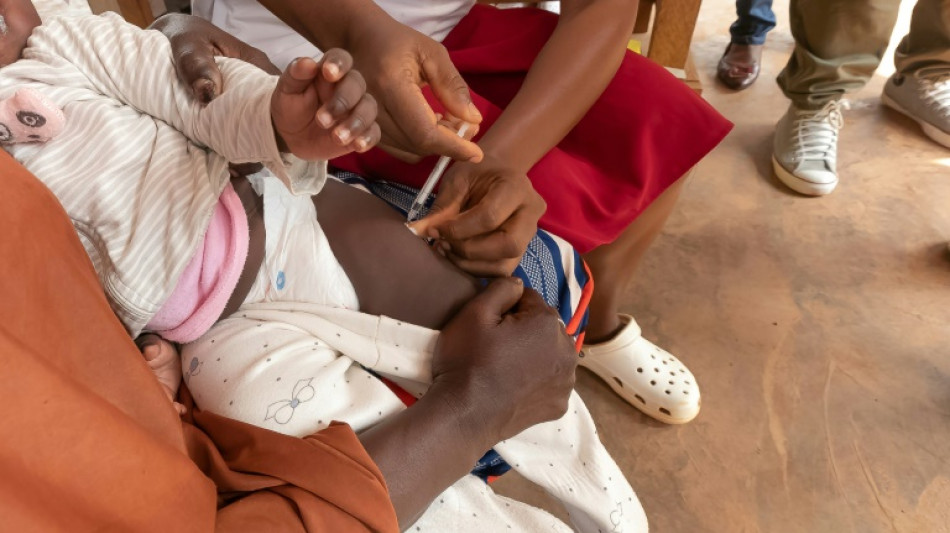
Slimmer draft pandemic agreement released ahead of fresh talks / Photo: © AFP

 Kennedy Center: future unclear for iconic Washington arts hub

 Trump claims 'infinite' Greenland security deal with Denmark

 Helicopters battle wildfire threatening Ecuador's capital

 Brentford batter Chelsea to undo Alonso's promising start
 Kane hits Bundesliga century as Bayern rout Union
 Trump says CNN, MS NOW, Politico banned from White House
 Hushing and hedging: US companies retreat on climate

 Springboks to face Fiji before 2027 Rugby World Cup
 Nigeria miners struggled to breathe in cell before 37 died: survivors

 McIlroy on the charge at PGA Championship as Reed withdraws

 McIlroy on the charge at PGA Championship

 Crisis-wracked Volkswagen warns of 10-bn-euro hit to profits

 Costa Rica's Grynspan tops third informal poll for UN chief: diplomat

 Stock markets retreat after central bank rate hikes

 Russia labels director of Cannes Grand Prix winner a 'foreign agent'

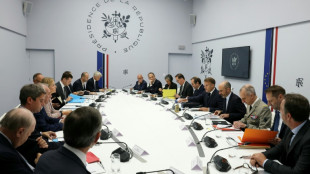 Macron warns of Russian 'hybrid' threat after meeting presidential hopefuls
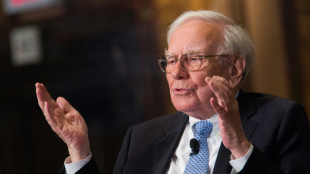
 UN holds third informal poll for new chief

 Kulusevski return can spark Spurs: De Zerbi

 Shakira to cap off world tour with Madrid 12-gig run

 Isolated Syrian-Druze city blames Damascus for shortages

 Isolated Syrian-Druze city shortages

 Dutch drop Depay for Germany match in Xavi's first pick

 Ronaldo named in Portugal squad for Nations League
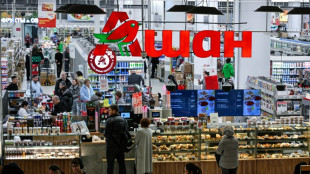
 Stock markets diverge after central bank rate hikes

 Anti-Assad music star makes triumphant return to Syria

The new draft of the global pandemic agreement has been released to countries ahead of Thursday's deadline, with a more streamlined take on how the world should handle future pandemics.
Rattled by Covid-19, which shredded economies, crippled health systems and killed millions, countries have spent two years trying to craft an international accord on pandemic prevention, preparedness and response.
The ninth and supposedly final round of talks among the World Health Organization's 194 member states, held at the WHO headquarters in Geneva, ended on March 28 without a deal.
The bureau of the Intergovernmental Negotiating Body conducting the talks therefore went away to reflect on the major sticking points and come up with a new, tighter draft, honing in on areas of common ground.
The new draft retains some provisions on equity -- which developing countries have been holding out for -- but kicks some aspects further down the road to 2026.
- What happened in March? -
Keen to prevent the trauma of Covid-19 ever happening again, countries started negotiating an accord two years ago.
But at the final two-week talks session, the text ballooned from 29 pages to more than 100 as countries inserted proposed amendments. Agreement between the main blocs seemed far off.
Western nations broadly want ramped-up surveillance and rapid sharing of all data and samples on emerging pathogens.
Meanwhile one bloc of countries that includes India, Mexico and Bangladesh, calling itself the Group for Equity, plus another group of African countries, is trying to ensure developing nations are not cut adrift again when it comes to accessing vaccines, tests and treatments.
- What comes next? -
Countries will now digest the new draft and return to the WHO headquarters for further talks, from April 29 until May 10.
They are up against the clock, with the aim being to adopt a final agreement at the annual assembly of WHO member states, which runs from May 27 to June 1.
- What's in the new draft? -
The new WHO Pandemic Agreement draft seen by AFP now runs to 23 pages.
It would commit countries to a more equitable geographical distribution and scaling up of the global production of pandemic-related health products.
The text also reflects efforts to battle the swirl of disinformation and conspiracy theories that have surrounded the negotiations, including allegations that WHO could take over countries' health policies.
The new draft retains a paragraph specifically saying the agreement cannot be interpreted as giving the WHO or its leader any authority to alter national laws, "impose vaccine mandates... or implement lockdowns".
- And on the key section? -
The main arguments revolve around the section titled access and benefit sharing.
The draft agreement calls for a WHO Pathogen Access and Benefit-Sharing System (PABS).
Under the PABS system, the sharing of material for public health risk assessment is placed "on an equal footing" with "timely, effective, predictable and equitable access to pandemic-related health products" arising from that sharing.
The system would include the "fair, equitable and timely sharing of benefits" arising from PABS material and information, which countries must share in a "rapid, systematic and timely" way.
During a pandemic this would include "real-time access by WHO to 20 percent (10 percent as a donation, and 10 percent at affordable prices to WHO) of the production of safe, efficacious and effective pandemic-related health products".
But it now says the modalities, operational dimensions, and terms and conditions of the system "shall be further defined in a legally-binding instrument, that is operational no later than May 31, 2026".
By shunting the arguments over deeper details another two years down the road, this new move could improve the chances of an agreement being approved and adopted at the World Health Assembly in six weeks' time.
M.Furrer--BTB