Media under watch on EU's frozen eastern frontier / Photo: ©

 Russia probes bear attacks, as official says town under 'siege'
 Robertson tells Spurs to 'forget' past woes
 Italy police find 3 million euros stashed in mobster's house
 Renard versus Queiroz in AFCON qualifying blockbuster
 Former Mexico boss Aguirre returns to Spain with Valencia
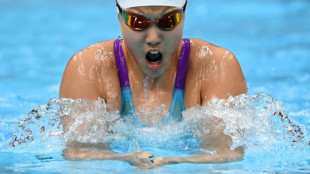
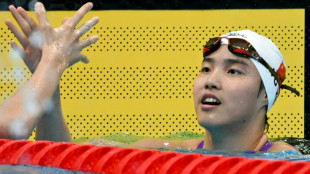 China swimmer, 13, seals Games hat-trick as North Korea win first gold
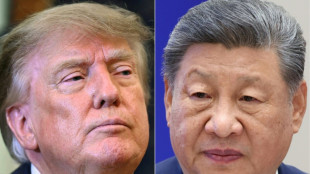 China's Xi heads to US for talks with Trump: state media
 Azerbaijan pardons Frenchman after EU lifts sanctions on oligarchs
 Hadjar extends Red Bull contract for 2027 F1 season
 Black Sea drone attacks spell terror for Turkish sailors
 Canada judge to decide prison term for suicide poison seller

 Weinstein faces resentencing in New York for 2006 sex assault

 Outgoing UN chief makes climate push at New York summit
 AI risks, Iran war to take center stage at UN
 Badminton no.1 An tells dad to keep it down at Asian Games
 Runaway leader Antonelli eyeing third straight win
 Schoolgirl Yu, 13, fastest again in bid for third Asian Games gold
 Oil prices fall after Trump hails 'good' talks with Iran
 AI political ads warp reality ahead of US midterms
 Kenneth Branagh embraces action hero role -- to get in shape

 'New one' Klopp promises fresh approach as Germany reign begins
 Milne returns to New Zealand squad for India T20 series
 Voting opens in Alaska's annual Fat Bear Week
 MLS coach axed for telling female ref 'It's a man's game'
 US refuses to give Sudan's de facto leader visa for UN
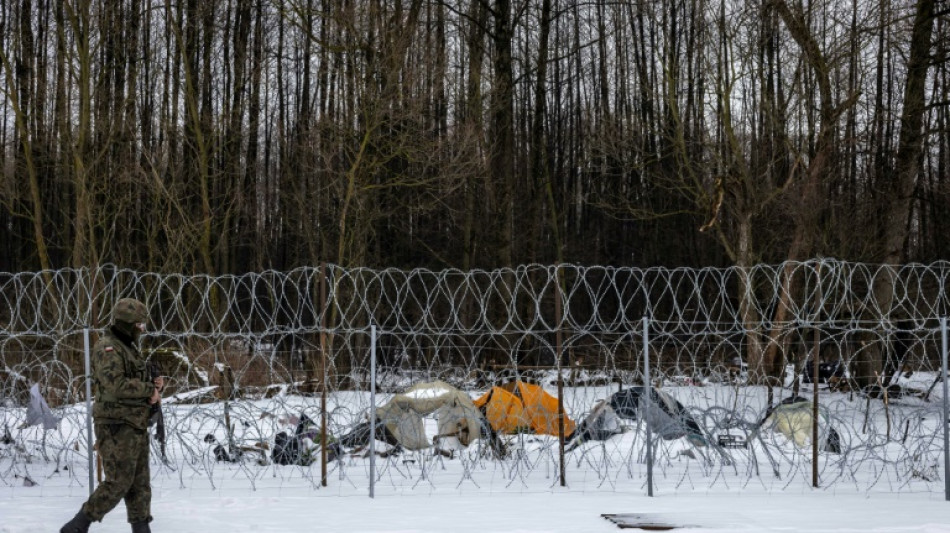
Squeezed into the back of a military jeep driving along frozen unpaved roads on the Poland-Belarus border, a group of journalists is being taken into a restricted zone under strict surveillance.
Soldiers with assault rifles slung over their shoulders can be seen spaced out along the EU's eastern border, patrolling lines of razor wire that stretch out as far as the eye can see.
A makeshift shelter partially covered in tarpaulin and wooden planks of wood offers some respite for the soldiers, who were deployed to the area following a sharp rise in migrant arrivals.
Nearby, a car mounted with speakers blares out a message in several languages urging migrants to stay on or return to the Belarusian side.
"Migrants are still trying to cross the border in groups of 10 or 20. Last year, it was groups of hundreds of people," said Krystyna Jakimik-Jarosz, a spokeswoman for the border guards.
The West accused the Belarusian regime of orchestrating a migrant crisis last year as a form of retaliation against EU sanctions.
Belarus has denied this and urged the EU to take the migrants in, although it has since repatriated several thousand back to the Middle East.
Confronted with a sharp increase in arrivals, Poland in September banned media and aid groups from the immediate border area citing security reasons, and put up razor wire and deployed soldiers.
Aid groups have since accused both Poland and Belarus of violating migrants' rights and media rights groups have criticised the restrictions.
The Polish Supreme Court has also declared the ban on the media "incompatible" with the law.
- 'Protect' from journalists -
Facing criticism, Poland's populist government in December began organising trips for journalists to the restricted area but only under strict controls.
"We want to show what the situation on the border looks like," Jakimik-Jarosz said, who shadowed the media group along with two border guards who hid their faces so as not to reveal their identity.
Around 100 journalists have so far been allowed in.
"At the beginning it was above all Polish media who could visit the zone. Foreign journalists had to be specially verified," the spokeswoman said.
Coverage of the start of construction this week of a border wall being built by Poland along 186 kilometres (115 miles) of frontier was also heavily restricted.
"This is about your security and ours. If something were to happen, we would be responsible," Jakimik-Jarosz said.
"But it is also to protect ourselves to ensure that we can do our job of protecting the border."
She said soldiers and border guards last year found themselves "having to protect themselves sometimes from journalists who pointed cameras in their faces and asked them to identify themselves".
Of the media ban, she added: "I understand that this is not always satisfactory for everyone".
O.Lorenz--BTB