How UK's biggest water supplier sank into crisis / Photo: © AFP

 Ed Sheeran returns to stage after Palestinian controversy

 Asian Games to open in Japan after troubled build-up

 Drone owners rush to offload devices ahead of Beijing ban
 Trump's beef policies irk Texas ranchers, testing their loyalty

 Nvidia, OpenAI CEOs to attend Xi dinner at White House
 Anthropic picks Accenture for in-house AI safety evaluation

 Balogun returns as Monaco beat Lens to continue strong Ligue 1 start

 'Pause' on overt repression in Venezuela, but reforms still needed: HRW

 Global stocks mixed as yen falls despite Bank of Japan rate hike
 Cuba hit with seventh major blackout of the year

 Murray out with concussion so Wentz will start for Vikings

 UN chief 'deeply regrets' US visa refusal to Abbas for annual meeting

 England quick Carse to face no charges over alleged nightclub assault

 Mancini brings nine newcomers into the first squad of his Italy comeback

 Czechs level Davis Cup tie against USA as South Korea eye Finals
 New France boss Zidane confirms Mbappe as captain after naming first squad

 California governor signs order to explore AI 'kill switch'
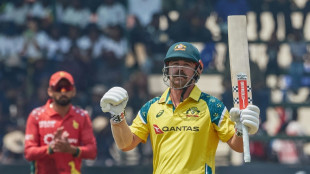 Head leads run spree as Australia win Zimbabwe ODI series

 In-form Raphinha wants to finish career at Barcelona

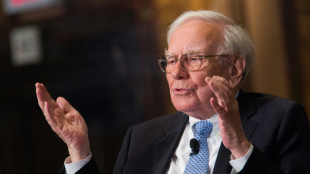 Warren Buffett steps down as Berkshire Hathaway chairman

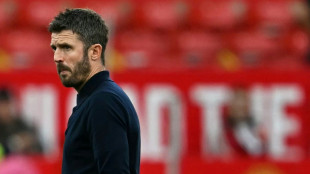 Carrick confident Man Utd can 'work through' tough time

 Mbappe ends Nike partnership to join Swiss brand On

 Liverpool boss Iraola puts Bournemouth love affair on hold

 'A disaster' if Man City do not win says Maresca after flawless start

 Kerry James Marshall: American 'blackness' painter celebrated in Europe

Thames Water, the UK's largest water supplier, has been ravaged since privatisation by soaring debts and chronic underinvestment, sinking into a deep financial crisis which has sparked bailout speculation.
So how did Thames Water, serving about 15 million people across London and surrounding areas, end up in such a perilous financial state?
In a controversial move, the group this week proposed a massive hike in water bills that would worsen Britain's cost-of-living crisis and prove unpopular ahead of a general election.
- Privatisation and debt -
Britain's publicly-owned water and sewage industry was privatised in 1989 under the Conservative government of then-Prime Minister Margaret Thatcher. At that point, the sector had no debt.
Thames Water was floated on the London stock exchange before being acquired by German power giant RWE in 2001.
It was then bought by Kemble Water, a holding company led by Australian investment fund Macquarie, in 2006.
Today's Thames Water, which comprises various holding companies including Kemble, has debts of almost £15 billion ($18.7 billion), stoking fears it could face renationalisation. Macquarie no longer owns a stake in Kemble.
"Debt levels... ballooned during Macquarie's time," said Katie Meehan, co-director of King's Water Centre at King's College London.
Currently, it "operates under a 'debt-driven' model", she told AFP.
- Dividends -
Critics accuse successive major shareholders of using debt to pay themselves generous dividends.
Macquarie divested its share of Thames Water parent Kemble Water in 2017. The utility's current biggest shareholders are two pension funds: Britain's Universities Superannuation Scheme and Canada's Ontario Municipal Employees Retirement System.
"It might be tempting to label Macquarie as the 'bad guy' in this scenario, but in fact all of these utility transformations and its infrastructure-finance model were approved and regulated by the UK government," noted Meehan.
- Underinvestment -
When faced with accusations of past under-investment, Macquarie insisted last year that it had "supported the company to invest more than £11 billion in its network", adding that increasing debt had also been offset by a doubling in the value of Thames Water's assets.
However, UK water companies face outrage after failing to reduce leaks and slash raw sewage discharges into beaches and rivers.
They blame a Victorian sewer system which was designed to release excess water into the sea during heavy rainfall to avoid blockages and flooding.
"Research has shown, the Victorian sewers are not to blame for our toxic water conditions -- it's due to a lack of investment," said Meehan.
- Collapse threat -
Thames Water's woes accelerated in early April when Kemble defaulted on a key interest payment on a debt of £400 million, sparking media speculation it was on the brink of collapse and renationalisation.
Thames, whose financing needs run into billions of pounds, had already announced in March that it failed to raise a £500-million cash injection from shareholders.
"The situation is very bad, and shows the total failure of Thatcher's experiment with water privatisation, and the failure of regulation... Thames Water is going to collapse," added law professor Ewan McGaughey at King's College London.
Such a collapse would spark a major political headache, either before or after this year's general election that Conservative Prime Minister Rishi Sunak is widely forecast to lose to the main opposition Labour Party.
- Water bill hikes? -
Thames Water on Monday wrote to industry regulator Ofwat to request a 44-percent jump in water bills, in return for greater investment in infrastructure and environmental practices over the next five years.
However, Sunak's finance minister Jeremy Hunt declared last week that it would be "utterly outrageous and totally unfair" if customers "were made to pick up the tab for poor management".
In the event of bankruptcy, the UK government could place Thames Water into "special administration" that would switch it back to public ownership, with taxpayers footing the cost and shareholders wiped out.
L.Janezki--BTB