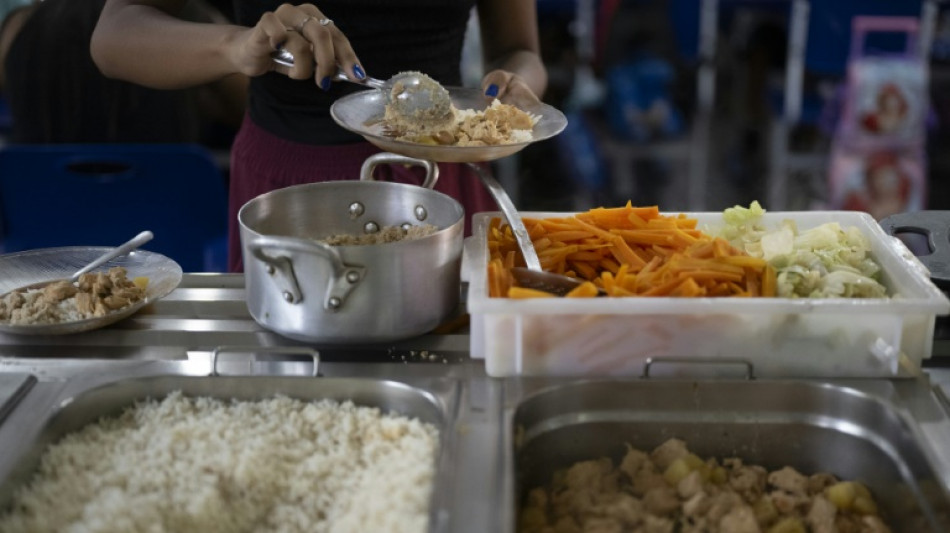
Rio de Janeiro tests new recipe against childhood obesity / Photo: © AFP

 Drones hit Moscow as Russians go to the polls

 New England boss Fleming says 'wrong' to ask Stokes to end retirement

 Germans vote in elections threatening fresh blow to Merz
 US fears rapid escalation in Mideast after Houthis attack Riyadh

 Japan triathlete Hojo wins first gold of Asian Games

 IOC president impressed by 'beautiful' Asian Games wooden huts

 First Asian Games gold goes to Japan as China's 13-year-old Yu lights up pool

 Data centre command hub keeps AI up and running
 Pope Leo in France: the issues on the table

 Packing for a pope: behind the scenes on foreign trips

 Republicans find transgender issues a powerful political weapon in midterm campaigning

 German state elections threaten new shock waves for Merz

 Chile's Bachelet quits race to be next UN chief

 Raphinha treble fires perfect Barca to win at Sevilla

 Thiam makes winning heptathlon return at Decastar meet

 Czechs beat USA to qualify for Davis Cup finals

 Dortmund sink Stuttgart to climb to Bundesliga summit

 Trump says will not tolerate attempts to slow AI growth

 'It has to stop': runners protest women's murders in S.Africa district

 Fire erupts near Riyadh airport as Houthis claim strikes

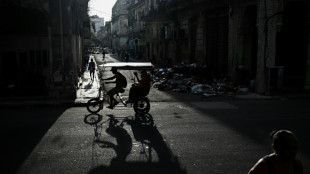 Cuba works to restore power after another blackout

 England thrash Sri Lanka again to return to top of T20 rankings

 Arsenal thrashed by Brighton, sorry Spurs lose again

 South Korea, Austria qualify for Davis Cup finals

 Seare shocks Ingebrigtsen to win world 5km gold

Chicken with potatoes, carrot-and-cabbage salad: it looks like a detox meal, but it's the menu at a school cafeteria in Rio de Janeiro, Brazil, which is seeking new ways to fight childhood obesity.
Nearly one-third of children in Brazil are obese, an epidemic city health officials and community leaders are seeking to address in innovative ways, enlisting school cafeterias and taking their message of healthful eating to the street.
"Cake? There's no cake here," laughs cook Neide Oliveira as she chops onions for the 650 students of Burle Marx public school in the Curicica neighborhood on Rio's west side.
Additive-packed snacks and cookies are also out, after city officials banned ultraprocessed foods from schools this year.
Instead, students are discovering classic Brazilian fruits and vegetables that are often overlooked these days, like yams, okra and persimmons -- which many kids initially mistook for tomatoes.
Judging from how students devour their lunch, the program is having an impact.
"I like everything they make here, and it's good for my health. At home I eat a lot of junk food, like pizza and hamburgers," says 15-year-old Guilherme.
- 'Epidemic' -
"Childhood obesity is an epidemic, not just in Brazil, but worldwide," says Marluce Fortunato, nutritionist for the Rio city government.
The city is responding with a program at public and private schools, asking teachers to educate students on healthful eating habits.
Thirty-one percent of Brazilian children and teens are overweight or obese. A recent study by the Desiderata institute found more than 80 percent of five- to 19-year-olds reported eating at least one ultraprocessed food the previous day, such as sausages, soda and pastries.
"Science has shown these products are very detrimental to our health and are responsible for 70 percent of chronic diseases worldwide," pediatrician Daniel Becker told AFP.
And in children, they can lead to a double-barreled problem: obesity combined with malnutrition, which can damage learning ability and attention span, he says.
- Temptation just outside -
But changing eating habits is a challenge.
Ultraprocessed foods are made with ingredients designed to "addict the tastebuds," and have a market advantage over natural products given their mass distribution and cheaper prices, says Becker.
Sitting next to Guilherme, his friend Lucas, 14, is feasting on his chicken, rice and beans. But he admits that after school he regularly buys chips outside.
Fortunato says schools need parents' help.
"It's easier to educate young children. Once a person's way of thinking is set, it's a challenge to introduce new concepts," she says.
She mentions the example of a father who complained to the school because his son started asking for natural juices at home, which are more expensive than their sugary, additive-heavy counterparts.
- 'Barbie eggs' -
Still, some adults manage to change.
At age 60, grandmother Vera Lucia Perreira discovered organic vegetables -- and fell in love.
"They're not just healthful, they're tasty," she says.
"My seven-year-old granddaughter already eats better" than previous generations, she beams.
Perreira is one of 160 women involved in a project called Organic Favela, launched 13 years ago to transform eating habits in the poor Babilonia neighborhood.
The project runs workshops for residents, and also uses creative approaches, like healthful recipes painted in graffiti on neighborhood streets.
Founder Regina Tchelly also works with schools. Her mission: get children to have five colors of natural foods on their plates.
"We teach people to make avocado butter" and "'Barbie eggs'" -- dyed red with beets, she says.
The 42-year-old entrepreneur is the author of a cookbook that won Brazil's top literary prize last year, the Jabuti, in the creative economy category.
- 'Sweet poison' -
At the national level, a high-visibility ad campaign launched in March seeks to raise awareness of the health risks of ultraprocessed foods, enlisting celebrities and experts to spread the word.
The campaign, called "sweet poison" ("doce veneno," in Portuguese), wants the government to tax ultraprocessed foods and use the proceeds to subsidize healthful ones.
"It's hard to change, but that doesn't mean people have to be prisoners of their ideas," says Perreira.
"We have to open their minds to look differently at food, for the sake of our future."
B.Shevchenko--BTB