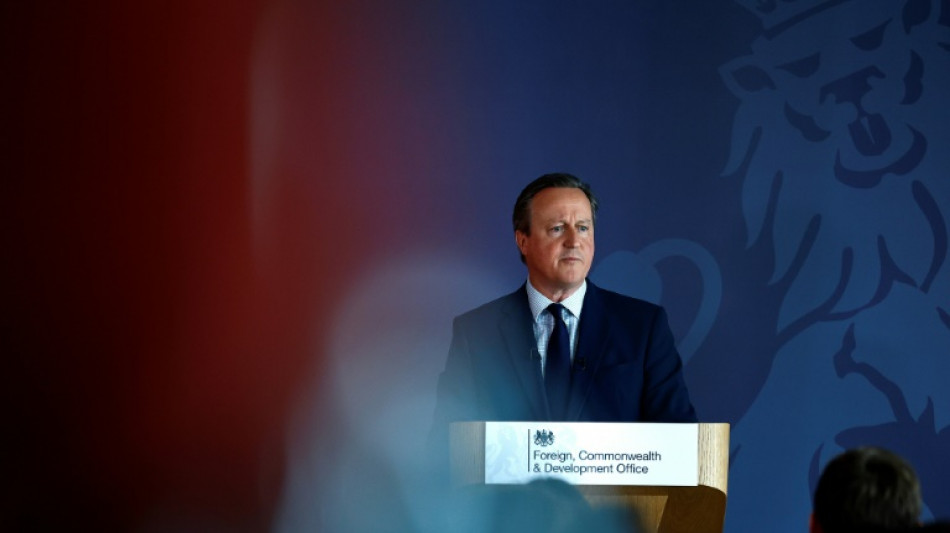
UK's Cameron urges NATO countries to boost defence spending / Photo: © POOL/AFP

 Macron welcomes Canada's Carney to French Atlantic territory
 Fiorentina frustrate Napoli with Serie A draw, Como upset

 Five-star Man City top Premier League after Sunderland thriller
 Ukrainian drones hit Moscow on last day of Russian elections
 Multi-Asset Trading Venue Monochrome Exchange Announces IEO of Its Native Token, $MCR
 South Korea break Japan hearts to win Asian Games basketball gold

 Acosta takes first victory at Austrian MotoGP

 PSG president Nasser al-Khelaifi under investigation in France for conflict of interest

 China swim sensation, 13, sets Games record after Japan win early
 Drones hit Moscow as Russians go to the polls

 New England boss Fleming says 'wrong' to ask Stokes to end retirement
 Germans vote in elections threatening fresh blow to Merz
 US fears rapid escalation in Mideast after Houthis attack Riyadh
 Japan triathlete Hojo wins first gold of Asian Games
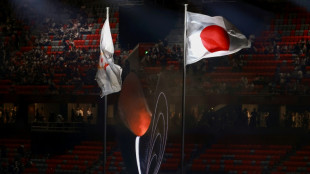
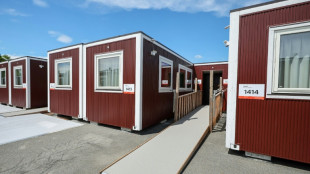 IOC president impressed by 'beautiful' Asian Games wooden huts
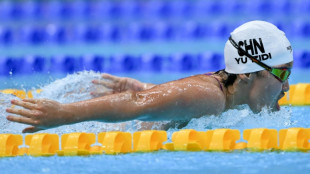
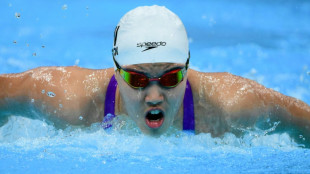 First Asian Games gold goes to Japan as China's 13-year-old Yu lights up pool
 Data centre command hub keeps AI up and running

 Pope Leo in France: the issues on the table
 Packing for a pope: behind the scenes on foreign trips
 Republicans find transgender issues a powerful political weapon in midterm campaigning

 German state elections threaten new shock waves for Merz
 Chile's Bachelet quits race to be next UN chief

 Raphinha treble fires perfect Barca to win at Sevilla

 Thiam makes winning heptathlon return at Decastar meet

 Czechs beat USA to qualify for Davis Cup finals
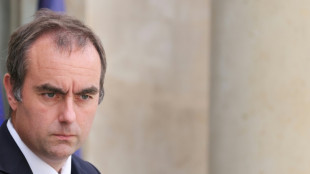
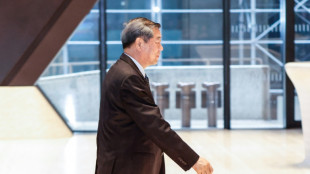
UK Foreign Secretary David Cameron on Thursday urged NATO partners to soon start spending 2.5 percent of GDP on defence, during a major speech in which he called for a more muscular approach to Western foreign policy.
Cameron -- a former UK prime minister -- said countries need to take more assertive action to protect their interests from emerging threats, including from Russia and Iran.
"We are in a battle of wills. We all must prove our adversaries wrong: Britain, and our allies and partners around the world," he added.
Cameron used the keynote address at the National Cyber Security Centre in central London to call for NATO countries to boost defence spending above a two percent target agreed 10 years ago.
He called on countries in the 32-member Western defence alliance to "out-compete, out-cooperate and out-innovate" adversaries.
"The upcoming NATO summit must see all allies on track to deliver their pledge made in Wales in 2014 to spend two percent on defence.
"And we then need to move quickly to establish 2.5 per cent as the new benchmark for all NATO allies."
Last month, UK leader Rishi Sunak announced during a visit to Poland that London would gradually boost defence spending to 2.5 percent of GDP by 2030.
He singled out "an axis of authoritarian states", including Russia, Iran, North Korea and China as being behind the increase in global threats.
Cameron argued that the UK needs to invest in old alliances, including the G7 of the world's richest nations and the Five Eyes intelligence-sharing network with the United States, Australia, Canada and New Zealand.
But he added that Britain also needs to forge new partnerships, like the AUKUS alliance with the US and Australia, post-Brexit.
"We need to adopt a harder edge for a tougher world. If Putin's illegal invasion teaches us anything, it must be that doing too little, too late, only spurs an aggressor on," he said.
"We need to be tougher and more assertive," he added, calling for Britain and the West to have "the courage to act".
Cameron, who resigned as prime minister in 2016 after Britons voted to leave the European Union, was last November plucked from the political wilderness by Sunak to be foreign secretary.
He has spent much of that time touring the globe, giving a higher profile to the UK on the world stage than in recent years, when the country's focus was on Brexit and its chaotic aftermath.
Cameron noted that the world was a more dangerous place than when he was last in office, particularly from malign foreign influence.
The UK has pointed the finger at China and Russia for meddling in domestic affairs, including this week when London said it would expel a Russian military attaché for being an "undeclared military intelligence officer".
H.Seidel--BTB