Measuring the Trump vote: a years-long headache for US pollsters / Photo: © AFP

 Macron welcomes Canada's Carney to French Atlantic territory

 Fiorentina frustrate Napoli with Serie A draw, Como upset
 Five-star Man City top Premier League after Sunderland thriller
 Ukrainian drones hit Moscow on last day of Russian elections
 Multi-Asset Trading Venue Monochrome Exchange Announces IEO of Its Native Token, $MCR

 South Korea break Japan hearts to win Asian Games basketball gold

 Acosta takes first victory at Austrian MotoGP

 PSG president Nasser al-Khelaifi under investigation in France for conflict of interest

 China swim sensation, 13, sets Games record after Japan win early

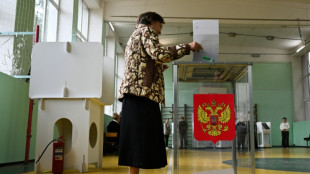
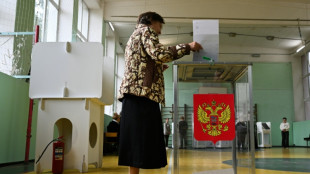 Drones hit Moscow as Russians go to the polls

 New England boss Fleming says 'wrong' to ask Stokes to end retirement
 Germans vote in elections threatening fresh blow to Merz
 US fears rapid escalation in Mideast after Houthis attack Riyadh

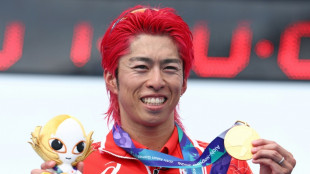 Japan triathlete Hojo wins first gold of Asian Games

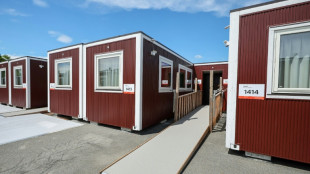 IOC president impressed by 'beautiful' Asian Games wooden huts

 First Asian Games gold goes to Japan as China's 13-year-old Yu lights up pool

 Data centre command hub keeps AI up and running

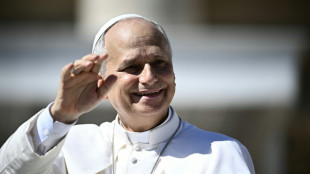 Pope Leo in France: the issues on the table
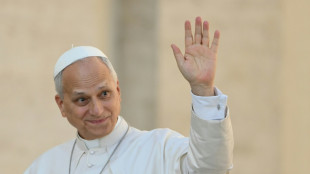
 Packing for a pope: behind the scenes on foreign trips
 Republicans find transgender issues a powerful political weapon in midterm campaigning
 German state elections threaten new shock waves for Merz
 Chile's Bachelet quits race to be next UN chief

 Raphinha treble fires perfect Barca to win at Sevilla
 Thiam makes winning heptathlon return at Decastar meet

 Czechs beat USA to qualify for Davis Cup finals
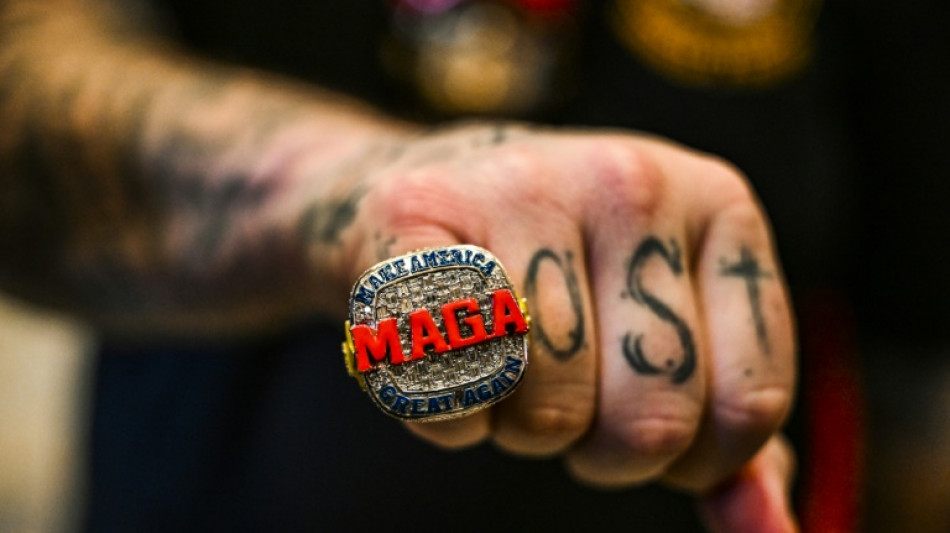
Can we believe the polls? Six months before the US presidential election, pollsters are scrambling to get an accurate read on the people voting for Donald Trump, a group that has systematically eluded them for eight years and counting.
The Republican's victory over Democrat Hillary Clinton in 2016 took the United States and the world by surprise. But it was above all the 2020 election, won by Joe Biden, that forced a reckoning for pollsters.
That vote produced polling errors of "unusual magnitude" -- the highest in 40 years for the popular vote, and 20 years for state-level estimates, according to a report by the American Association for Public Opinion Research (AAPOR).
Right up until the eve of the election, and despite corrective measures taken in the wake of 2016, polls overestimated the Biden vote and underestimated support for Trump.
The so-called "shy Trump voter" -- too timid to express their preference to pollsters -- does not explain the discrepancy, as was suggested in 2016 and again in 2020, says Don Levy, director of the Siena College Research Institute, which publishes surveys with The New York Times.
Levy believes that Trump supporters are simply more reluctant to answer pollsters' questions -- likely because for years, the Republican has been telling them that the media are conspiring against him.
"And like it or not ... we fall under that same umbrella of fake news, fake media," he told AFP.
Celinda Lake, whose influential polling company works for the Democratic Party, agrees.
"Donald Trump told his followers not to answer polls, and frankly, we've never had to face that before," she said.
Doug Schwartz, head of the reputable Quinnipiac University Poll, explained that in 2020, "respondents became more guarded in answering" the question of voter preference.
He said Quinnipiac's efforts had "helped reduce the refusals" in more recent surveys, but did not elaborate.
- 'The horse race question' -
Such efforts -- the methodology behind the polls, and how they seek to correct what is seen as an underrepresentation of Republican voters -- are at the heart of their accuracy.
The pollsters surveyed by AFP agree that reaching voters in the age of smartphones with built-in call screening is increasingly difficult and costly.
Levy, of Siena College, now asks "the horse race question" -- Biden or Trump? -- up front.
Trump supporters are less likely to complete the survey, but they may at least answer that first question, even if they then hang up, he explained.
His preferred method is the telephone interview, based on voter lists weighted towards potential Trump supporters in the samples -- such as rural white voters without a university degree.
Democrat pollster Lake, for her part, said she establishes reservoirs of potential Republican voters using statistical modeling techniques.
She refuses to confine herself to the telephone.
"You're going to get a sample that's older, for example, it's much harder to reach young people," she explains.
Phone interviews also skew "more upscale," she added. "You're going to get people that are working on regular shifts rather than irregular shifts and gig economy."
Instead, "we call, we go online, and we text, and we call both cell phones and hard lines... We try to reach people multiple times, multiple ways," she said.
Once they do reach voters, her staff are increasingly careful with how they open their questions, she said.
That means "making sure that our questionnaire does not sound biased or liberal in the beginning."
- Spotlight on swing states -
So far in 2024, the polls have largely had Trump and Biden neck and neck.
From now until November, pollsters will focus most intensely on the battleground states.
The United States uses the electoral college voting system: rather than relying on the national popular vote, each state holds its own ballot for the next commander-in-chief, and winning candidates are awarded "electors" from all 50 states, a number equal to each state's congressional delegation.
With candidates needing 270 electors to win the White House, elections tend to be decided in the hotly-contested "swing states."
This year, those crucial battlegrounds look set to be Arizona, Georgia, Michigan, Nevada, Pennsylvania and Wisconsin.
But casting the spotlight on voters there could do more harm than good, Levy fears.
"Some of those people are going to feel over-polled. And that could have an influence as well," he said.
S.Keller--BTB