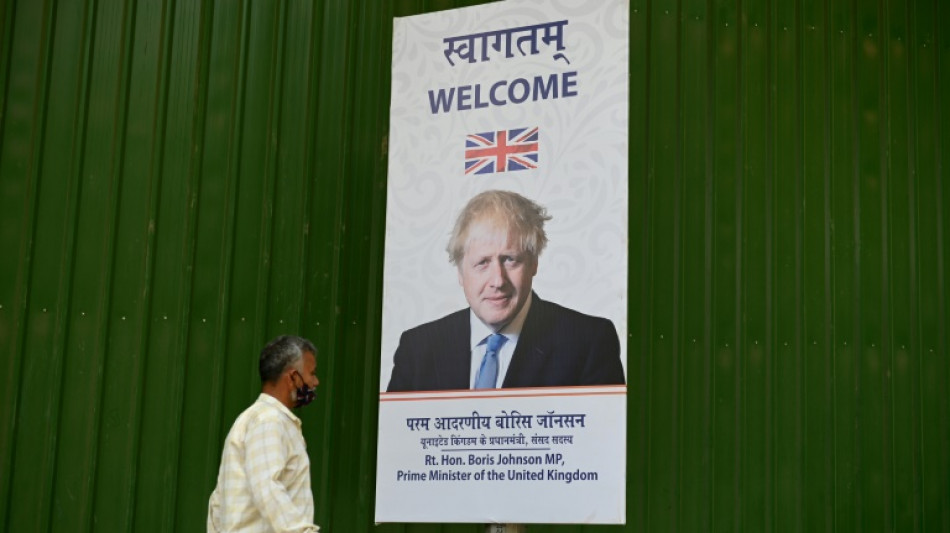
Britain's Johnson faces calls to apologise for India massacre / Photo: © AFP

 Alcaraz to return for US Open title defence

 China's rapid solar expansion hurt bird diversity: study
 President Paul Biya back in Cameroon after 73 days away
 Newcastle boss Jaissle unfazed by lack of respect
 US Open purse to top $100 mn as Grand Slams form player council
 Hull aim to silence critics after unexpected promotion to Premier League
 Pakistan hit back against England after Cox and Root fifties

 Walmart reports mixed results as gas prices drag on US sales growth
 Wang downs Sindhu to break Indian hearts at badminton worlds
 As Europe's rivers recede, shippers scramble to limit damage
 Alonso won't confirm Fernandez will remain at Chelsea after Man City link
 Milky Way's fastest star discovered spinning around black hole

 Kanye West planned concerts trigger frenzy in Russia
 Hungary music festival basks in post-Orban freedom
 Vatican says 'serious concerns' over Israel-Lebanon deal implementation
 Arteta confirms Arsenal want to sign defender after Konsa link

 What's behind the UAE's decision to cut Iran trade ties?
 Barca seal Cancelo return to bolster defence
 Germany reports record 14,000 heat-related deaths this summer
 Alvarez 'focused' says new Atletico team-mate Romero
 West Ham warn fans about 'offensive' Solomon chant

 Huge questions loom over Prince Harry's shock return to UK

 BYDFi Joins Coinfest Asia 2026, Connecting with Institutions, Builders and Traders in Bali
 Max Verstappen: Natural-born winner
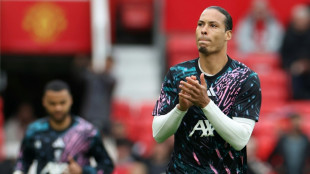 Van Dijk urges Liverpool to make amends for 'unacceptable' season
British Prime Minister Boris Johnson faces calls to apologise for a colonial-era massacre when he visits the Indian state of Gujarat Thursday, 100 years after as many as 1,200 people were killed protesting against imperial rule.
Last month saw the centenary of the Pal-Dadhvav massacre, when Indian historians say around 2,000 tribal people led by social reformer Motilal Tejawat gathered to protest against exploitation, forced labour and high taxes.
According to the Gujarat state government, British Major HG Sutton ordered his troops to open fire.
"Like a battlefield, the entire area was filled with corpses," it said. Two wells, it added, were "overflowing with bodies".
The state's official float at this year's annual Republic Day parade depicted the killings as the "untold story of bravery and sacrifice of the tribals", it said in a statement that put the death toll at 1,200.
Johnson -- who has been assailed by controversy over Downing Street parties during the coronavirus pandemic -- lands in the state's largest city, Ahmedabad, on Thursday at the start of a two-day visit to India.
"It was the British rule at the time when these killings happened so, if the British PM is coming here, he must apologise," Tejawat's grandson Mahendra told AFP.
"My grandfather was only running a campaign for the poor, harmless and illiterate tribals," added the 77-year-old.
"He must express regret if he feels what happened to the defenceless tribals was wrong."
- 'Killer government' -
Portraits of Johnson lined the streets of New Delhi ahead of his visit.
But relations between Britain and India have long been coloured by the legacies of colonial rule -- when London saw the world's second-most populous nation as the jewel in the crown of its empire but hundreds of millions of Indians chafed under its authority.
The Hindu nationalist government of Johnson's host, Prime Minister Narendra Modi, regularly emphasises the independence struggle as a vital component of India's national identity.
It has built giant statues of key independence leaders, and created a museum to one of them in Delhi's world heritage-listed Red Fort.
Modi is himself a former chief minister of Gujarat, under whose tenure a memorial was built to the massacre victims.
But Arun Vaghela, head of Gujarat University's history department, has little expectation the British prime minister would address the issue.
He has carried out field research at the site and said even 20 years ago residents were still finding old bullets lodged in trees and skeletons in deep wells, into which people had jumped to try and escape.
"The British records only show 40 to 50 deaths -- but when does any killer government, British or otherwise, ever truly reveal and acknowledge the number of people it has killed?"
Media reports say some of the protesters were armed and may have fired first, and that British authorities put the number of dead at 22.
According to Vaghela's figures, the toll is greater than the far better known Jallianwala Bagh massacre in Amritsar in 1919, when between 379 and 1,000 people were killed, which overshadowed a state visit by the Queen and Duke of Edinburgh to India in 1997.
But the Gujarat incident barely figures in India's independence narrative, and the victims' tribal status may have condemned them to a historical footnote.
Tribal people are outside Hinduism's caste system and many are still deeply poverty-stricken, living on the margins of society.
"Tribals are at the bottom of Indian social pyramid," said Vaghela. "Had something like that happened anywhere else, it would have been highlighted by the mainstream press and politicians for a long time."
And for some, the time has come to move on.
Veteran journalist Vishnu Pandya, author of a Gujarati-language book on revolutionary places in the state, has collected many oral accounts of the killings from the tribal community, where he says the incident is detailed in multiple folk songs.
"The British PM who is coming here wasn't even born at the time and he wouldn't know anything about the incident," he said.
"What is done is done, it's history and we need to look ahead."
K.Thomson--BTB