Dying for a pension: Haitian workers forsaken in Dominican Republic / Photo: © AFP

 COP31 host says AI climate footprint to be a summit priority

 Berlin's far-left vote winners reject anti-semitism charges

 Mancini eager for 'new adventure' on Italy return

 Mbappe says having Zidane as France coach 'like a film'
 Palmer, Rice out of England Nations League squad

 German auto workers stage mass protests in bid to save jobs
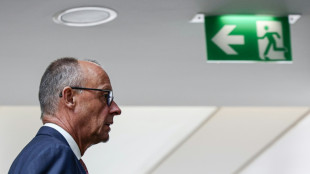
 Embattled Merz vows to keep ruling for 'democratic future' of Germany

 Merz vows to keep ruling coalition together for 'democratic future' of Germany

 Spain coach De la Fuente gets new deal after World Cup success

 Pressure grows on Germany's Merz after election defeats

 China's Zhang beats Japan rivals to Asian Games gymnastics gold

 Samlingen Haupt: Vad pengar avslöjar om oss människor

 Tens of thousands of German auto workers protest to save jobs

 हॉप्त् कलेक्शन: पैसा हमारे बारे में एक इंसान के रूप में क्या प्रकट करता है

 Συλλογή Haupt: Τι αποκαλύπτει το χρήμα για εμάς τους ανθρώπους

 TradersYard Shifts Focus to Futures Trading

 ハウプト・コレクション:お金が人間について明かすこと

 하우프트 컬렉션: 돈이 우리 인간에 대해 드러내는 것

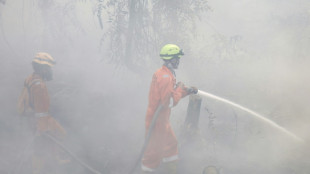 Indonesia doing 'everything' but struggling to curb fires
 Sbírka Haupt: Co o nás lidech prozrazují peníze
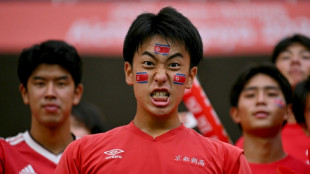 North and South Korea fight out draw in niggly Asian Games clash

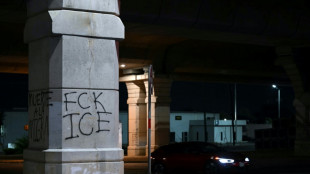 Officials say man shot, wounded by ICE agent in Texas

 豪普特收藏:金錢如何揭露人類的本質

 Kolekcja Haupta: Co pieniądze mówią o nas, ludziach
 The Haupt Collection: What Money Reveals About Us as Human Beings

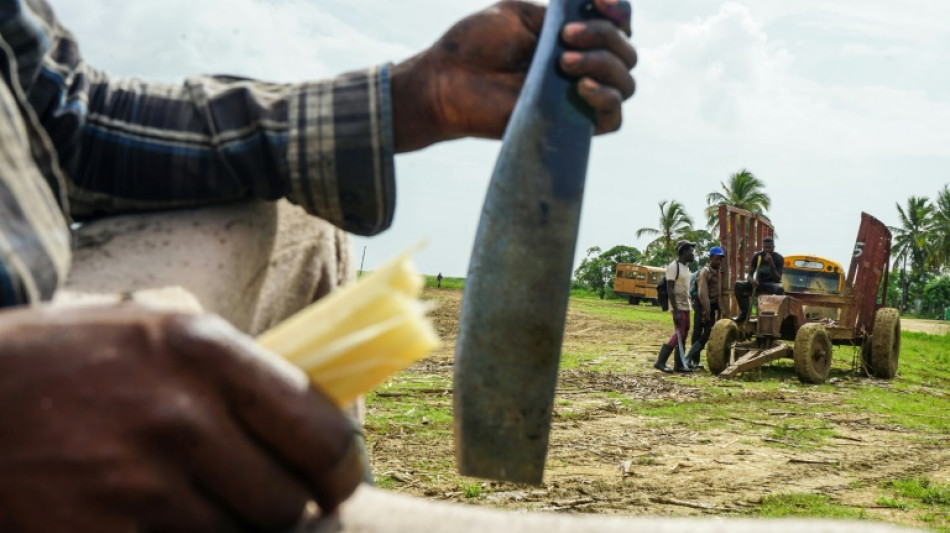
Ilek Santiago, born in Haiti, worked for decades in the cane fields of neighboring Dominican Republic, but he never qualified for nationality, a pension or medical care.
He died in March of untreated prostate cancer, aged 73, and his plight has become a rallying cry for cane field laborers who have long demanded access to basic benefits.
Most of the cane cultivation in the Dominican Republic is done by Haitians or their descendants who say they work 70-hour weeks for the equivalent of about $10 a day.
They all work illegally, a better option than none in poverty-riddled and gang violence-torn Haiti, which shares the island of Hispaniola with the Dominican Republic.
Under a special dispensation, separate from Dominican citizens, Haitian workers contribute to a social welfare system in the hopes of benefiting from access to healthcare and a pension.
However, when they need it, many, like Santiago, have their applications denied.
"It is sad because comrade Santiago died without health insurance," said Jesus Nunez, leader of the UTC cane workers union, to which Santiago had also belonged.
With medical care, "comrade Santiago would have lasted a bit longer," Nunez told AFP at a memorial held by colleagues and loved ones in the zinc and cardboard house where he died.
The government did not respond to AFP's requests for comment.
- 'Living in misery' -
Haitian cane workers live in bateyes, precarious settlements of makeshift homes without electricity or potable water erected among the Dominican cane fields.
Santiago, who arrived in the country at age 17, lived in the eastern province of Monte Plata.
Two smiling photographs of him stand on a plastic table that serves as an improvised altar, with messages reading: Your family and friends will never forget you" and "Rest in peace."
Some who attended his memorial wore caps reading: "Without cane there is no sugar."
Fired up by Santiago's death, the UTC has called a demonstration for next month in the capital.
While about 3,700 cane workers have already qualified for pensions, some had theirs canceled without explanation.
"I am living in misery," one of them, Telmi Confidente, told AFP.
He arrived in the Dominican Republic in 1969, worked in the cane fields for decades, and had his pension abruptly canceled in 2014.
Confidente is too old to go back to work and lives on handouts from his children, saying without them "I would have dropped dead a long time ago."
- 'Forced labor' -
Despite a long history of Haitian labor, the issue of migrant rights is a controversial one in the Dominican Republic -- a much more prosperous country keen to shield itself from its troubled neighbor's many problems.
A 2013 Constitutional Court ruling stripped tens of thousands of Dominicans born to foreign parents -- mainly Haitians -- of their birthright citizenship.
The ruling was applied retroactively to all people born between 1929 and 2010, creating a "situation of statelessness of a magnitude never before seen in the Americas," according to the Inter-American Commission on Human Rights.
Tens of thousands have since been expelled.
Dominican President Luis Abinader was re-elected this month to a second term in office, riding a wave of popularity based largely on his tough approach to Haitian migration.
Since taking office in 2020, Abinader's government has been building a 164-kilometer (102-mile) concrete wall along the border with Haiti.
The sugar cane industry, which notoriously relied on slave labor in the colonial-era, currently accounts for about two percent of GDP in the Dominican Republic, home to 11 million people.
Yet, the United States -- a key client -- last year restricted imports of Dominican sugar cane and its derivatives from a top Dominican producer for its use of "forced labor."
E.Schubert--BTB