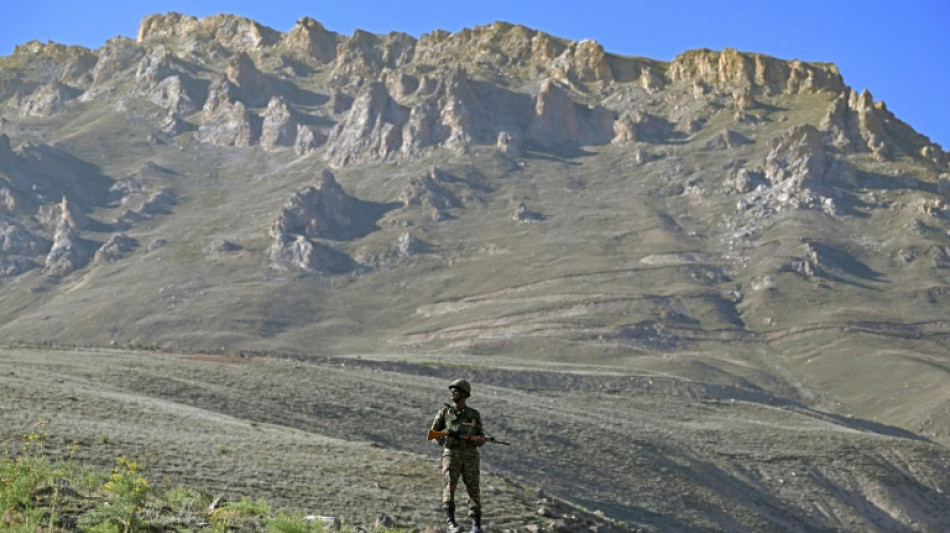
India marks last Pakistan conflict at Himalayan frontier / Photo: © AFP

 Iran airlines cancel flights as US sanctions hit
 Meta launches camera-free AI glasses amid privacy pushback
 Australian PM says OpenAI hacked government health website

 Xi arrives in US to personal Trump welcome
 Morocco elects new parliament amid social frustration, youth discontent
 Scheffler and Burns to face Im and Lee in Presidents Cup opener
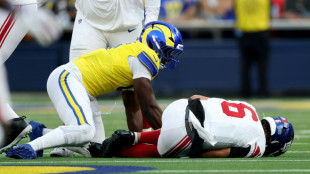
 Crushing wins for Lyon and Barca in women's Champions League
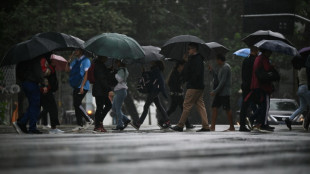 Rio breaks record for rainiest September amid powerful El Nino
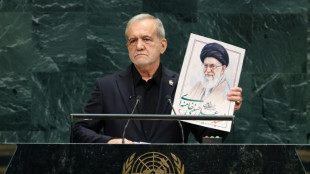
 At UN, tech chiefs urge caution in AI development
 Russian strikes kill seven in Ukraine, Zelensky vows winter campaign
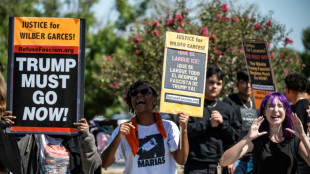 Venezuelan shot by ICE needs urgent medical care, mother tells AFP
 Zelensky says Putin using fighters from 47 countries in Ukraine war
 Klopp calls on Germany to 'rise above ourselves' as new era begins

 Russian strikes kill seven in Ukraine as Russia vows no 'pause' to war

 ArcPoint Expands Globally with Institutional Intelligence Platform for Modern Investors

 Ronaldo focussing on 'present' ahead of Wales test

 Outgoing UN chief makes final climate push at New York summit
 Grief and pain flow at hearing for Canadian suicide poison vendor

 Ireland boss Hallgrimsson says timing of Israel remarks 'not clever'
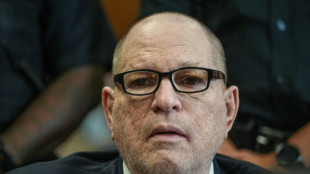 Weinstein resentenced to 15 years in prison for 2006 sex assault
 Fendi brings disco bling, Italian style, to Milan Fashion Week
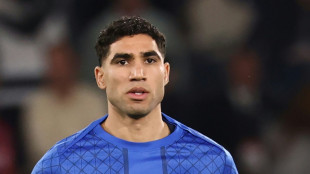 French court confirms rape trial for PSG and Morocco star Hakimi
 President tells Trump that Iran will never 'bend at the knee'

 أليكس بودي والبروفيسور الدكتور شتيفان هاوبت يتفقان على التعاون من أجل مجموعة فنية أسطورية في رومانيا

 U2 at 50: Irish rockers reveal anniversary album

Indian soldiers and top brass gathered Friday in the remote Himalayan foothills to commemorate a battle fondly remembered among compatriots for imposing a humiliating military defeat on arch-rival Pakistan.
The 1999 Kargil conflict was the last major battle between two nuclear-armed foes who have fought numerous wars since their partition into two nations on independence from British colonial rule.
It came just a year after tit-for-tat atomic weapons tests by the neighbours spurred international alarm that the confrontation risked tipping into all-out nuclear war.
Friday's ceremony marks the 25th anniversary of the conflict's end, when sustained diplomatic pressure from Washington and elsewhere forced Pakistan's withdrawal.
"Times change, seasons change, but the names of those who give their lives for the country live forever," Prime Minister Narendra Modi, who laid a wreath for India's fallen soldiers, told the crowd at a memorial for the conflict in the town of Drass.
"India was trying for peace at the time. But Pakistan once again showed its untrustable face."
The high-altitude confrontation began when Pakistan-backed militants crossed into Indian territory at Kargil, a remote and high-altitude outpost on the countries' shared frontier.
At least 1,000 people were killed over the following 10 weeks, but the conflict ended with no changes to the status quo along the border.
Pakistan withdrew after severe pressure from Washington, alarmed by intelligence reports showing Islamabad had deployed part of its nuclear arsenal nearer to the conflict.
The aftermath roiled Pakistan's establishment, with then-prime minister Nawaz Sharif blaming his army chief Pervez Musharaf for igniting the conflict without his knowledge or approval.
Months later, Musharaf overthrew Sharif in a coup in one of Pakistani military's periodic political interventions.
- 'We are stronger' -
India and Pakistan have fought three major wars and countless border conflicts since they were partitioned out of the Indian subcontinent in 1947.
They remain deeply at odds over control of the restive territory of Kashmir, divided between the two countries and claimed in full by both.
Kargil is feted as one of India's greatest military triumphs over its perennial foe.
"We are stronger economically, military-wise and technologically," General Ved Prakash Malik, India's army chief at the time of the conflict, told AFP.
"They have to realise the difference that has come about the way they are being ruled by the army and the way we are being ruled as a democracy."
Asked about the likelihood of a conflict similar to the Kargil confrontation in the future, Mailk said Pakistan would not "dare to try that again".
R.Adler--BTB