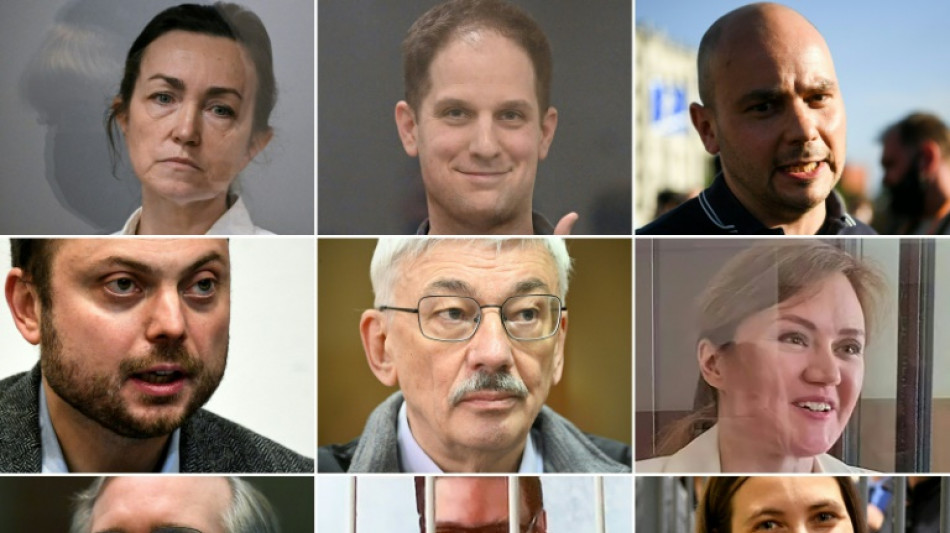
What now for Russian opposition after prisoner swap? / Photo: © AFP/File

 Thailand slams chaotic Asian Games organisation as 'musical chairs'

 North Korea to keep nuclear weapons 'forever': foreign minister
 Markets mixed as China's Xi arrives for US talks
 Swiss voters expected to shun stricter neutrality
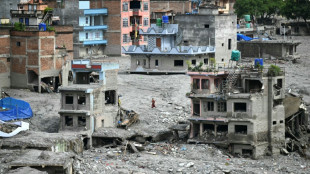
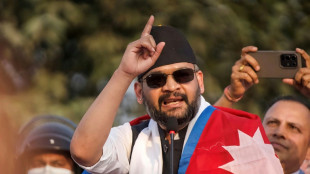 Rapper-turned-PM faces first big test after Nepal disaster
 Tuchel seeks tonic to England World Cup 'scar' in Spain showdown

 'Helps me cope': Catholic baptisms rise among French youth
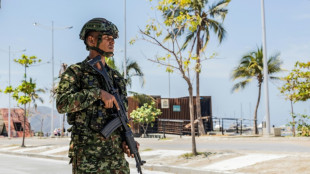 Colombians in Santa Marta stay inside after violence wracks the city
 Iran airlines cancel flights as US sanctions hit
 Meta launches camera-free AI glasses amid privacy pushback
 Australian PM says OpenAI hacked government health website

 Xi arrives in US to personal Trump welcome

 Morocco elects new parliament amid social frustration, youth discontent
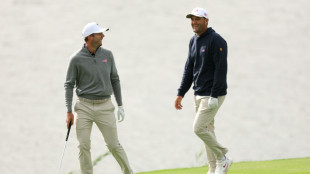 Scheffler and Burns to face Im and Lee in Presidents Cup opener

 Crushing wins for Lyon and Barca in women's Champions League
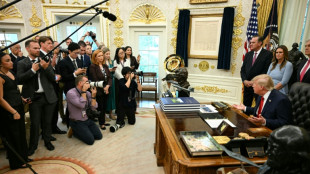
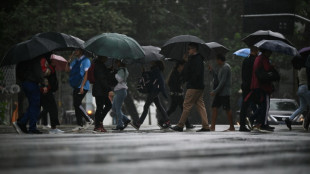 Rio breaks record for rainiest September amid powerful El Nino
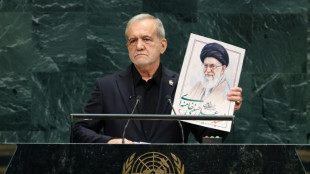
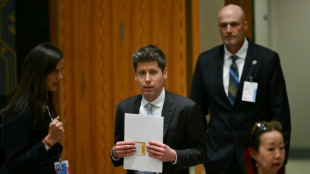
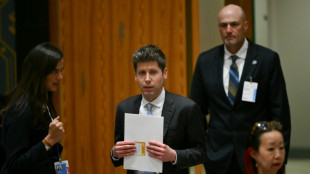 At UN, tech chiefs urge caution in AI development
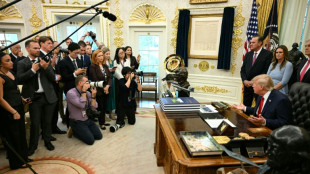
 Russian strikes kill seven in Ukraine, Zelensky vows winter campaign
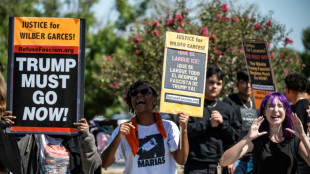 Venezuelan shot by ICE needs urgent medical care, mother tells AFP
 Zelensky says Putin using fighters from 47 countries in Ukraine war
 Klopp calls on Germany to 'rise above ourselves' as new era begins

 Russian strikes kill seven in Ukraine as Russia vows no 'pause' to war

 ArcPoint Expands Globally with Institutional Intelligence Platform for Modern Investors

 Ronaldo focussing on 'present' ahead of Wales test

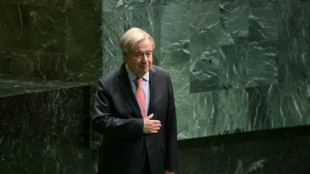 Outgoing UN chief makes final climate push at New York summit
Eight Russian opposition activists, including some very influential ones, are among the people who were released by Moscow in a historic prisoner exchange with the West.
Now away from their homeland, could they help strengthen the ranks of opponents to President Vladimir Putin?
One of those released, Ilya Yashin, had said in the past that he did not want to be exchanged, arguing that the voice of a Kremlin critic is more powerful in Russia than outside.
"Conversations in a Parisian cafe and in a Russian prison do not have the same political weight," he said in a letter from prison published by the Russian channel Dozhd in June.
"I stayed in Russia to be a Russian voice against the war (in Ukraine) and the dictatorship," he said, adding that he wanted to "share the destiny of my country and its people".
His friend Alexei Navalny, a key figure for the opposition, made the momentous decision to return to Russia after being poisoned in 2020 and receiving treatment in Germany.
The decision turned out to be fatal.
Jailed and then held in ever more trying conditions, he died in an Arctic prison colony in February.
In the past, several Russian dissidents who chose -- or were forced -- to emigrate have gradually disappeared from public attention.
The opposition to Putin is notoriously fractious and there is a rivalry between Navalny supporters and other groups such as that of former oligarch Mikhail Khodorkovsky, who spent a decade in prison.
Political expert Konstantin Kalachev, who is based in Moscow, said it was therefore not a given that the liberation of eight opponents would consolidate the movement.
"There is a schism between those who left and those who stay. If the exchange could have significantly strengthened the opposition, then it would definitely not have happened," Kalachev told AFP.
- 'Major moral authority' -
Other experts take a different view.
"Some of the people freed... have major moral authority, some have political experience and are well-known in Russia and beyond," said Ekaterina Schulmann, an expert living in exile.
"They could become leading representatives of the anti-war movement... for those who are in Russia or outside and for foreign governments," she said.
One of those released, Vladimir Kara-Murza, had excellent contacts with Western governments before he was arrested and sentenced to 25 years for condemning Russia's invasion of Ukraine.
Another key figure is Oleg Orlov, a veteran rights campaigner and member of the Memorial group -- a co-winner of the Nobel Peace Prize in 2022.
Schulmann said there was "some disparity" in the exchange.
"Russia gets back failed employees, people who did not do their work duties and got caught," she told AFP.
The Kremlin confirmed on Friday that at least three of the people returned to Russia were spies.
- 'Lobbying capacity' -
Schulmann said that the Russian opposition, by managing to obtain the liberation of several leading members, has gained greater legitimacy on the international stage.
"The fact that Western governments are ready to expend negotiating resources to save people with whom they have no direct link, shows the importance of Russians opposed to the war for the international community," she said.
The expert said that Navalny's team, which had three members released, had shown "serious lobbying capacity".
"It's a signal for those in prison and for those who are afraid to be jailed in Russia, that if there is a problem they won't be forgotten," she said.
By the same logic, politics expert Abbas Gallyamov told AFP there was "enthusiasm" among dissidents over the swap because although Western governments negotiated the deal, they were effectively acting on behalf of the opposition.
This means "the opposition engaged with the Kremlin on an equal basis", he said.
O.Krause--BTB