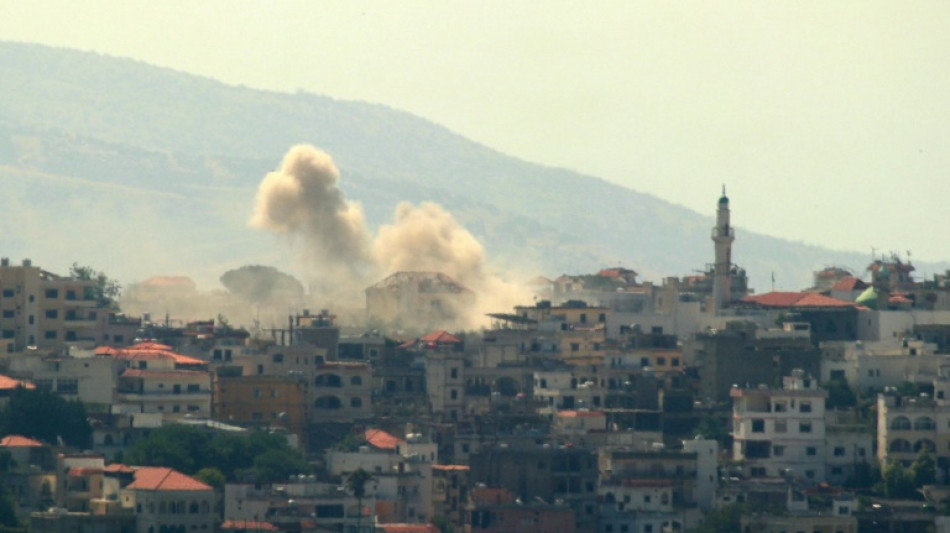
Lebanese on edge amid fears of all-out Israel-Hezbollah war / Photo: © AFP

 알렉스 보디와 슈테판 하우프트 교수, 루마니아의 전설적인 미술품 컬렉션을 위한 협력 합의

 BaazEX Enters the Asian Trading Market With a New Approach to Online Forex Trading.

 Asian markets fall on US-China jitters as leaders meet
 Thais hail teen rocker Nene for 'America's Got Talent' win

 Zverev, Agassi defend 'spectacular' Laver Cup
 Eel-powered Japan whizz-kid, 11, dominates in historic Games debut

 Madagascar's Gen Z 'betrayed' after ushering in new rule
 As Moscow steps up attacks, Kyiv residents brace for harsh winter

 Comic inspires unlikely kabaddi dreams for Japan's Asian Games amateurs

 Thailand slams chaotic Asian Games organisation as 'musical chairs'

 North Korea to keep nuclear weapons 'forever': foreign minister
 Markets mixed as China's Xi arrives for US talks
 Swiss voters expected to shun stricter neutrality
 Rapper-turned-PM faces first big test after Nepal disaster
 Tuchel seeks tonic to England World Cup 'scar' in Spain showdown

 'Helps me cope': Catholic baptisms rise among French youth

 Colombians in Santa Marta stay inside after violence wracks the city
 Iran airlines cancel flights as US sanctions hit
 Meta launches camera-free AI glasses amid privacy pushback
 North Korean IT contractor found remote work in New Zealand: agency

 Anthropic touts AI-led biology discovery
 Giants QB Dart to have season-ending surgery
 Venezuelan shot by ICE needs urgent surgery, mother tells AFP

 Giants QB Dart to have season-ending surgery: reports

 Judge urged to lift Trump's White House ban on media outlets
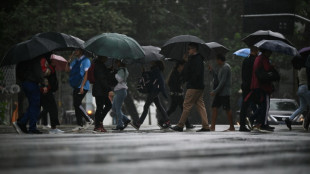
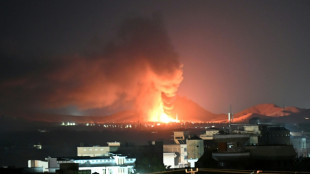
Fears of a major escalation between Israel and Hezbollah have left many Lebanese on edge, exacerbating mental health problems and reviving traumas of past conflicts in the war-weary country.
One 29-year-old woman, who lives near the southern city of Sidon, said she dreaded the thunderous, explosive boom of Israeli jets regularly breaking the sound barrier.
"I feel the house will fall down on top of me... Sometimes I freeze... or start crying," said the woman, a contract worker for a non-governmental organisation.
She was 11 years old when Israel and Lebanese militant group Hezbollah went to war in the summer of 2006, and said bombs fell near her house.
"Sometimes, unconsciously, you remember it," said the woman, requesting anonymity in a country where mental health issues are often stigmatised.
"These sounds give you flashbacks -- sometimes you feel you're back at that time," she said.
Since Hamas's October 7 attack on Israel sparked the Gaza war, Hezbollah has traded near daily cross-border fire with the Israeli army in support the Palestinian militant group, sending tensions soaring.
Lebanon has been on a knife's edge since a strike on Beirut's southern suburbs last week killed Hezbollah's top military commander, just hours before the assassination, blamed on Israel, of Hamas's political leader Ismail Haniyeh in Tehran.
Iran and Hezbollah have vowed revenge, amid fears that retaliatory attacks could spiral into all-out war, with airlines suspending flights to Lebanon and countries imploring foreign nationals to leave.
- Panic attacks -
"I already had been suffering from anxiety and depression... but my mental health has deteriorated" since October, said the woman, who can no longer afford therapy because her work has slowed due to the hostilities.
"You feel afraid for the future", she said.
Before the 2006 Israel-Hezbollah war, Lebanon endured a gruelling 1975-1990 civil conflict in which Israel invaded the south and in 1982 besieged Beirut.
The current cross-border violence has killed more than 560 people in Lebanon, most of them fighters but also including at least 116 civilians, according to an AFP tally.
On the Israeli side, including in the annexed Golan Heights, 22 soldiers and 26 civilians have been killed, according to army figures.
Laila Farhood, professor of psychiatry and mental health at the American University of Beirut, said "cumulative trauma" has left many Lebanese with stress, anxiety, depression and post-traumatic stress disorder.
"Individuals transmit their anxieties to their children as cross-generational trauma," she told AFP.
"What is happening now triggers previous traumas," causing some people to have panic attacks, said Farhood, who specialises in war trauma and its impact on Lebanese civilians.
On Tuesday, Israeli jets broke the sound barrier over central Beirut, causing intense sonic booms that rattled windows and nerves, just two days after the anniversary of a catastrophic blast at Beirut's port in 2020.
"I had my first panic attack," said Charbel Chaaya, 23, who studies law in France and is living with his family near Beirut.
"I couldn't breathe, my legs felt numb... in that very first moment, you don't know what the sound is -- just like what happened on August 4," he said.
- 'Uncertainty' -
Layal Hamze from Embrace, a non-profit organisation that runs a mental health centre and suicide prevention hotline, said people in Lebanon now are "more susceptible to any sound".
"Baseline, the adrenaline is already high. It's a stressful situation," said Hamze, a clinical psychologist.
"It's not only the Beirut blast," Hamze added.
"The natural or automatic response" is to be frightened, she said, and while "maybe the older generation... are a bit more used to" such sounds, they could trigger "the collective trauma".
Some on social media have urged people to stop letting off fireworks -- a ubiquitous practice for celebrations -- while humorous skits making light of difficulties like flight cancellations have also circulated.
With coping mechanisms varying greatly, some people are "going partying", while others "are reaching out to the community more", which helps them feel they are not alone, Hamze said.
Dancer Andrea Fahed, 28, whose flat was damaged in the port blast, said she panicked when she heard this week's sonic booms.
She said she felt "lucky" to be a dancer, because with her community "we laugh together, we move together... you let go of a lot of things".
But she said the "uncertainty" was a constant struggle, and now leaves her windows open, fearing another blast could shatter everything.
"Anything can happen," Fahed said.
"If it's happening with that intensity in Gaza, why wouldn't it come here?"
J.Fankhauser--BTB