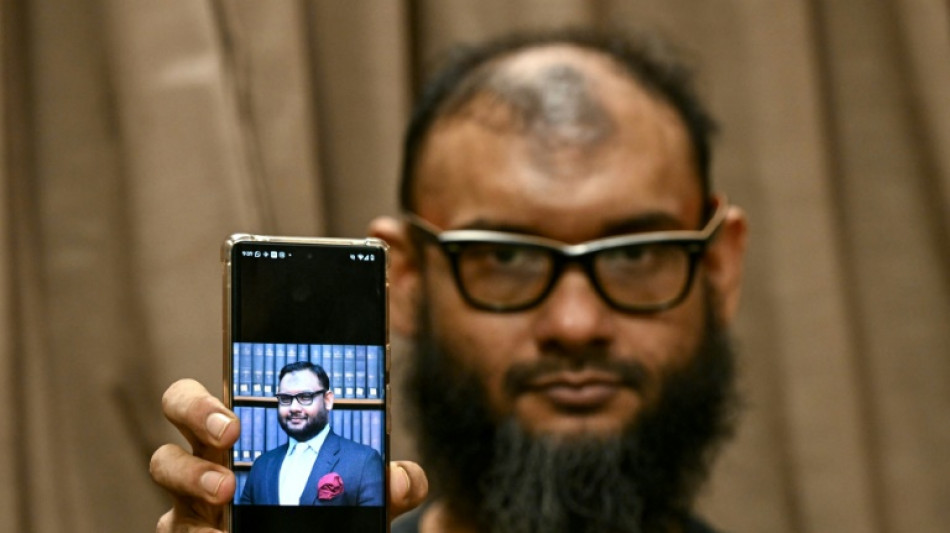
Disappeared Bangladeshi lawyer recounts Hasina's secret jail / Photo: © AFP

 England cannot imitate Spain's success, says Gordon

 Hungary detects invasive spotted lanternfly for first time in EU
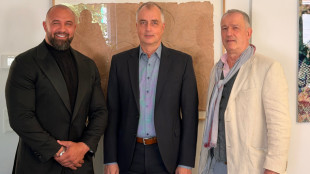
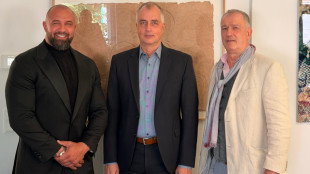
 Ο Alex Bodi και ο καθηγητής Δρ. Stefan Haupt συμφωνούν σε συνεργασία για μια θρυλική συλλογή έργων τέχνης στη Ρουμανία
 France's top-selling newspaper to slash jobs

 Tigray rebels in 'full-blown' war with govt

 Alex Bodi och prof. dr Stefan Haupt ingår samarbetsavtal om en legendarisk konstsamling i Rumänien
 อเล็กซ์ โบดี และศาสตราจารย์ ดร. สเตฟาน ฮาปท์ ตกลงร่วมมือกันในการจัดตั้งคอลเลกชันศิลปะอันเป็นตำนานในโรมาเนีย
 Alex Bodi a prof. dr. Stefan Haupt se dohodli na spolupráci na legendární umělecké sbírce v Rumunsku
 알렉스 보디와 슈테판 하우프트 교수, 루마니아의 전설적인 미술품 컬렉션을 위한 협력 합의

 BaazEX Enters the Asian Trading Market With a New Approach to Online Forex Trading.

 Asian markets fall on US-China jitters as leaders meet
 Thais hail teen rocker Nene for 'America's Got Talent' win

 Zverev, Agassi defend 'spectacular' Laver Cup
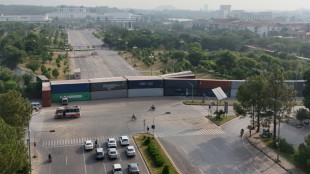
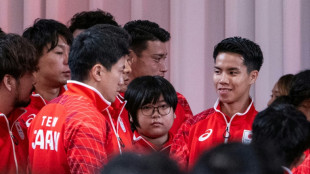 Eel-powered Japan whizz-kid, 11, dominates in historic Games debut

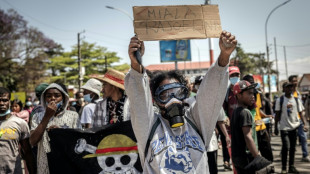 Madagascar's Gen Z 'betrayed' after ushering in new rule
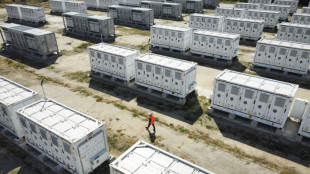
 As Moscow steps up attacks, Kyiv residents brace for harsh winter

 Comic inspires unlikely kabaddi dreams for Japan's Asian Games amateurs

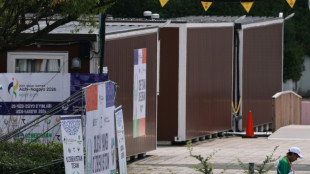
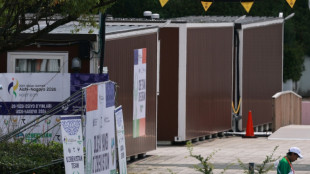 Thailand slams chaotic Asian Games organisation as 'musical chairs'

 North Korea to keep nuclear weapons 'forever': foreign minister

 Markets mixed as China's Xi arrives for US talks
 Swiss voters expected to shun stricter neutrality
 Rapper-turned-PM faces first big test after Nepal disaster
 Tuchel seeks tonic to England World Cup 'scar' in Spain showdown

 'Helps me cope': Catholic baptisms rise among French youth

 Colombians in Santa Marta stay inside after violence wracks the city

Blindfolded, handcuffed and bundled out of his secret prison for the first time in eight years, Bangladeshi barrister Ahmad Bin Quasem held his breath and listened for the sound of a cocked pistol.
Instead, he was tossed from a car and into a muddy ditch on Dhaka's outskirts -- alive, at liberty, and with no knowledge of the national upheaval that had prompted his abrupt release.
"That's the first time I got fresh air in eight years," Quasem, 40, told AFP. "I thought they were going to kill me."
Sheikh Hasina, the premier responsible for Quasem's abduction and disappearance, had fled the country hours earlier.
Her August 5 departure brought a sudden curtain down on 15 years of autocracy that included the mass detention and extrajudicial killing of her political opponents.
But Quasem was in the dark.
He had been confined in the "House of Mirrors" (Aynaghar), a facility run by army intelligence, given its name because its detainees were never supposed to see any other person besides themselves.
Throughout his long incarceration, Quasem was shackled around the clock in windowless solitary confinement.
His jailers were under strict instruction not to relay news from the outside world.
- 'Screaming' -
Elsewhere in the detention centre, guards blared music throughout the day that drowned out the Islamic call to prayer from nearby mosques.
It prevented Quasem, a devout Muslim, from knowing when he should offer his prayers -- and from keeping track of how long had elapsed since his abduction.
When the music was off, he heard the anguished sounds of other detainees.
"Slowly, slowly, I could realise that I am not alone," he said. "I could hear people crying, I could hear people being tortured, I could hear people screaming."
Human Rights Watch last year said security forces had committed "over 600 enforced disappearances" since Hasina came to power in 2009.
Rumours abounded of a secret black site housing some of that number, but Aynaghar was unknown to the public until the publication abroad of a 2022 whistleblower report.
Hasina's government consistently maintained afterwards that it did not exist.
It also denied committing enforced disappearances, claiming some of those reported missing had drowned in the Mediterranean while trying to reach Europe.
- 'Days before my father's execution' -
Quasem is certain of the reason for his abduction.
His father, Mir Quasem Ali, a senior member of Bangladesh's largest Islamist party Jamaat-e-Islami, was on trial that year.
Ali was accused of running a paramilitary group that tortured pro-independence Bangladeshis during the country's 1971 liberation war against Pakistan.
He and several others were indicted by a war crimes tribunal, ostensibly to bring justice to the victims of that devastating conflict, but widely seen as a means for Hasina to eliminate political opponents.
Whether or not Ali was guilty, there was no way of knowing from the mockery of justice that accompanied his prosecution.
Quasem, called to the bar in London and then aged 32, was running his father's defence.
His regular media briefings on procedural lapses and judicial bias at the tribunal, echoed by rights groups and UN experts, put a target on his back.
Plainclothes men entered his house one night, snatched him from his family, dragged him down the stairs and threw him in a waiting car.
"I never could believe in my wildest dreams that they would subject me to disappearance just days before my father's execution," Quasem said.
"I kept telling them, "Do you know who I am? I need to be there to conduct my case. I need to be there with my family.'"
Quasem's father was hanged four weeks later. Quasem did not know until about three more years had passed, when one of his jailers accidentally let it slip.
- 'It felt like eight lifetimes' -
After the car that had carried him out of prison sped away, Quasem walked through the night to try and find his way home.
By sheer coincidence, he came across a medical clinic operated by a charity for which his father had once been a trustee.
He was recognised by a staff member and a phone number was frantically tracked down to contact his family, who came rushing to be with him.
But first, the excited chatter of those around him filled Quasem in on the weeks of student protests that had resulted in his release.
"This entire thing, it was made possible by few teenagers," he said.
"When I see these children, these kids, leading the way," he added. "I am really hopeful this will be the opportunity where Bangladesh finds a new direction."
Quasem and his family received AFP warmly into their home -- but the trauma of his detention was immediately apparent.
The thick, coiffed hairdo he sported before his detention has receded into a few wild tufts, and he has lost an alarming amount of weight.
His wife Tahmina Akhter said the publicity around Quasem's case left her feeling ostracised by other mothers at their children's school.
The family was reliably hounded every anniversary of his disappearance and warned to stop publicising it.
His two young daughters were three and four years old when he was taken away.
The elder witnessed his abduction and is still scared of certain authority figures, such as the private security guard posted outside her school.
The younger did not remember him at all.
"It didn't feel like eight years for us," Quasem's mother Ayesha Khatoon told AFP.
"It felt like eight lifetimes."
M.Odermatt--BTB