
EU consumer groups slam 'manipulative' video game spending tactics / Photo: © AFP/File

 South Africa arrests three more suspects, after nine women murdered

 Carse needs time away from England, says captain Brook

 NOWPayments Releases Cross-Chain Payout Data Revealing Key Performance Benchmarks Across TRON, BNB Chain, and Solana

 British Museum bans photos of Bayeux Tapestry as crowds linger

 COP31 host says AI climate footprint to be a summit priority

 Berlin's far-left vote winners reject anti-semitism charges

 Mancini eager for 'new adventure' on Italy return

 Mbappe says having Zidane as France coach 'like a film'

 Palmer, Rice out of England Nations League squad

 German auto workers stage mass protests in bid to save jobs

 Embattled Merz vows to keep ruling for 'democratic future' of Germany

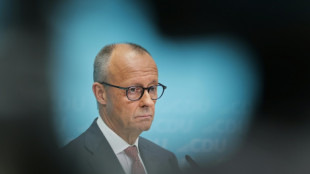 Merz vows to keep ruling coalition together for 'democratic future' of Germany

 Spain coach De la Fuente gets new deal after World Cup success

 Pressure grows on Germany's Merz after election defeats

 China's Zhang beats Japan rivals to Asian Games gymnastics gold

 Samlingen Haupt: Vad pengar avslöjar om oss människor

 Tens of thousands of German auto workers protest to save jobs

 हॉप्त् कलेक्शन: पैसा हमारे बारे में एक इंसान के रूप में क्या प्रकट करता है

 Συλλογή Haupt: Τι αποκαλύπτει το χρήμα για εμάς τους ανθρώπους

 TradersYard Shifts Focus to Futures Trading

 ハウプト・コレクション:お金が人間について明かすこと

 하우프트 컬렉션: 돈이 우리 인간에 대해 드러내는 것

 Indonesia doing 'everything' but struggling to curb fires

 Sbírka Haupt: Co o nás lidech prozrazují peníze

 North and South Korea fight out draw in niggly Asian Games clash

European consumer groups on Thursday accused the world's biggest video game companies of "purposefully tricking" consumers, including children, to push them to spend more.
Video games are wildly popular in Europe where more than half the population are players, according to industry figures published last month.
Europe's BEUC umbrella consumer rights group on Thursday filed a complaint with the European Commission, with support from member organisations in 17 European countries including France, Germany and Italy.
The groups said companies behind games such as Fortnite, EA Sports FC 24 and Minecraft are guilty of "manipulative spending tactics" involving in-game virtual currencies, which they said children "are even more vulnerable to".
The video game giants named were Activision Blizzard, Electronic Arts, Epic Games, Mojang Studios, Roblox Corporation, Supercell and Ubisoft.
Virtual currencies are digital items -- such as gems, points or coins -- that can be bought with real money, often in the games themselves or in an app marketplace.
When the digital currency is then used to buy options or objects within a game, the consumer groups say players lose sight of the true sums involved, making them vulnerable to "overspending."
"Today, premium in-game currencies are purposefully tricking consumers and take a big toll on children. Companies are well aware of children's vulnerability and use tricks to lure younger consumers into spending more," said BEUC head Agustin Reyna.
The groups called for items to "always be displayed in real money (eg euro), or at least they should display the equivalence in real-world currency".
According to BEUC, 84 percent of those aged 11 to 14 play video games in Europe, while the in-game purchases market was worth around $50 billion worldwide in 2020.
Children in Europe spend on average 39 euros ($43) a month on in-game purchases, BEUC said. "While they are among the ones playing the most, they have limited financial literacy and are easily swayed by virtual currencies," it said in a statement.
The groups claim the companies are breaching European Union consumer protection laws.
"Regulators must act, making it clear that even though the gaming world is virtual, it still needs to abide by real-world rules," Reyna said.
D.Schneider--BTB

