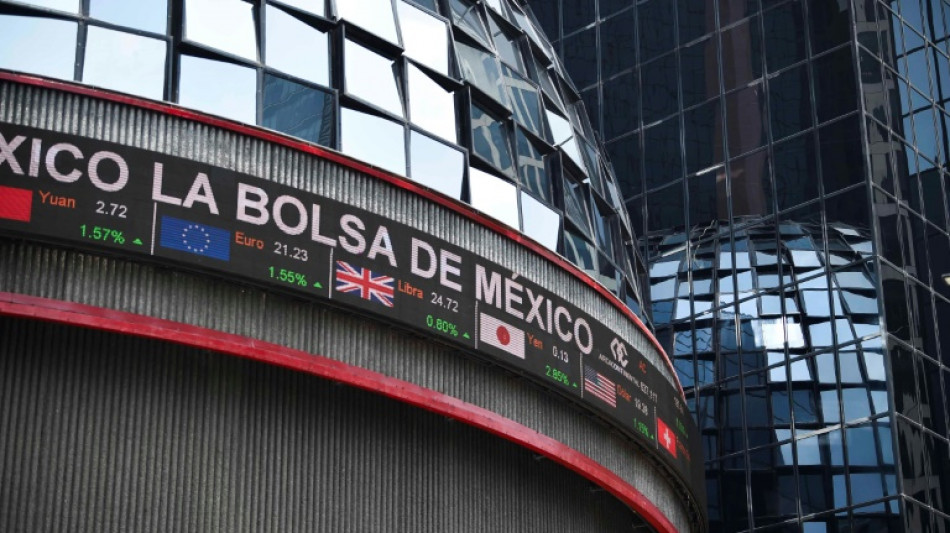
Mexico's new president takes reins of shaky economy / Photo: © AFP/File

 Battered Duerer masterpiece up for five-year revamp
 Trump met with Venezuela's interim leader at UN

 Malaysia furore after Najib wins conditional house arrest
 Italy hope for new dawn under Mancini

 Mongolian herders enlist new tech against harsher, drier climate
 Tata turmoil shines light on India succession woes
 World Cup 'not enough' as Spain begin next chapter

 Meta acts against 3.7 mn scammers' accounts with Singapore police help

 Australia PM says draft social media rules about taking back control

 Voting opens in Alaska's annual Fat Bear Week
 MLS coach axed for telling female ref 'It's a man's game'

 US refuses to give Sudan's de facto leader visa for UN
 Man City hold Bayern to start Women's Champions League, Arsenal win late
 Trump threatens Iran with 'hell' but reveals fresh talks
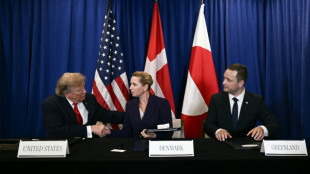 Trump signs security deal with Greenland, Denmark at UN
 Trump threatens Iran with 'hell' but unveils fresh talks

 Chile's Atacama Desert blossoms with life after El Nino rains

 Sri Lanka hands 220-year jail terms to 15 convicted of Easter bombings
 Typhoon Dujuan leaves 7 dead in Japan from landslides, flooding: media

 Ganna and Borghini lead Italy to mixed relay gold at cycling worlds

 Drug cocktail killed former child star Hayden Panettiere: coroner
 Moldova declares energy, water emergency
 French Holocaust denier jailed for eight months
 Oil prices slide, AI stock buzz fades

 Trump threatens to 'annihilate' Iran in bombastic UN speech

Mexico's incoming president Claudia Sheinbaum will inherit an economy plagued by uncertainty after reforms pushed through by her predecessor upset investors and key regional trading partners.
Riding high after a landslide June election victory, Sheinbaum's Morena party has passed constitutional changes making Mexico the only country to elect all its judges -- despite warnings they could be more easily influenced by politics and organized crime.
The reforms have raised fears among some experts that Sheinbaum's presidency will be "stillborn" after she takes office on October 1, said Jesus Carrillo, head of economics at the Mexican Institute for Competitiveness (IMCO), a public policy think tank.
"I don't know if we've gotten that far, but it seems to me that the economy's potential has been reduced a lot," he said.
Even before lawmakers approved the reforms this month, Mexico's central bank lowered its forecast for economic growth this year from 2.4 percent to 1.5 percent.
The United States, Mexico's main trading partner, has warned that the reforms threaten a relationship that relies on investor confidence in the Mexican legal framework.
The changes could pose "a major risk" to Mexican democracy and enable criminals to exploit "politically motivated and inexperienced judges," US Ambassador Ken Salazar said last month.
Even before she takes office, Sheinbaum has found herself engulfed in a diplomatic row with Spain, another key economic partner, over her refusal to invite King Felipe VI to her inauguration.
Sheinbaum, who will be Mexico's first woman president, accused the king of failing to acknowledge harm caused by the former colonial ruler's conquest five centuries ago.
Before voters went to the polls in June, Latin America's second-largest economy had been gearing up for a major influx of foreign investment and basking in a sharp decline in the number of people in poverty.
That optimism has since dimmed somewhat, with the Mexican currency falling by around 13 percent since the election.
Experts have compared the economic damage caused by outgoing President Andres Manuel Lopez Obrador's reforms to his cancellation of a multibillion-dollar Mexico City airport project at the beginning of his term.
That decision in 2018 paralyzed private investment for months and required paying millions in compensation, Carrillo recalled.
- Trade frictions -
Experts warn that the reforms have set Mexico on a collision course with the United States and Canada, its partners in a regional trade agreement coming up for review by 2026.
While the treaty does not include specific rules on the member countries' judicial system, "it does require that it be impartial and independent," according to IMCO.
The agreement stipulates "fair and equitable treatment" must be used to resolve judicial disputes, a condition that may not be met if elected judges depend on political parties or interest groups, it added.
The first round of elections of judges and Supreme Court justices -- accused by Lopez Obrador of serving the interests of corrupt politicians and organized crime -- is scheduled for June 2025.
Other planned reforms not yet passed by lawmakers, such as the elimination of a number of independent regulators, have deepened investor unease.
Scrapping those bodies "would increase uncertainties over rules and procedures and would make Mexico's infrastructure sector less attractive for private investment, despite robust demand prospects," credit ratings agency Moody's said.
The changes have reduced expectations for how many companies serving US markets will relocate manufacturing operations from Asia to Mexico, a phenomenon known as "nearshoring," Carrillo said.
"If Mexico's ability to comply with and honor its agreements is called into question, it seems to me that nearshoring will disappear," he said.
A slowing economy would hit tax collection at an already challenging time, since Lopez Obrador oversaw an increase in public debt and a widening fiscal deficit in his last year in office.
Debt as a percentage of national economic output rose above 50 percent this year, from 46.8 percent in 2023.
Seeking to ease the concerns of foreign businesses, Sheinbaum's pick for economy minister, Marcelo Ebrard, announced the incoming president will meet executives from major US companies next month to present the reforms.
"We will respect their investments," he pledged.
A.Gasser--BTB