Embattled Netanyahu buoyed by Hezbollah chief's killing: analysts / Photo: © AFP

 Pope warns against losing humanity in 'paradise of machines'

 From FBI warning to literary acclaim: the Russian journalist who took on Putin

 China swimmer in Asian Games first as North Korea lifters reign
 French literary prize removes novel from longlist after AI claims

 China's Zhang wins record seventh Asian Games swimming gold

 Verstappen edges Russell in final practice in Azerbaijan
 English, Spanish, Italian, German football leagues call for FIFA reform

 Pope arrives in France on first official visit in 18 years

 Pope arrives in France on first state visit in 18 years

 Heavy fighting, internet disruption as Ethiopia conflict rages

 From transit to consumption: drug use surges in Mozambique

 Chicago teams, Guardians and Padres all book MLB playoff berths

 Bijan Robinson destroys Packers in 35-14 win for Falcons

 Harimoto hails new era as Japan dethrone table tennis kings China

 India rape cases turn focus back onto women's safety
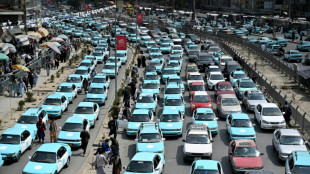 Rebellious Afghan taxi drivers defy ban on music

 Brazil candidates mount digital armies for fierce online campaign

 Nepal PM says floods 'a warning to the world' about climate change

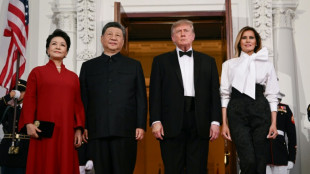 Trump hosts Xi for state dinner as pomp masks tensions
 Karbon-X (OTCQB:KARX) to Present Global Growth Strategy and Showcase SkyXero at 26th MK-Equity Investment Conference in Munich

 US 'must choose' whether to end war: Iran president to Fox News

 UN approves resolution on dealing with rising sea levels
 Yalcouye makes dream debut as Ivory Coast beat Ghana in AFCON qualifier
 Chicago's White Sox and Cubs book MLB playoff berths
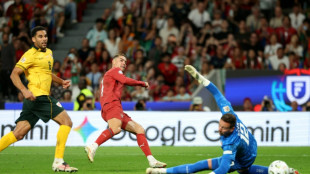
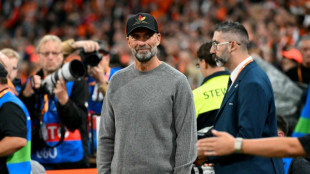 Last-gasp Gakpo strike snatches Dutch draw to sour Klopp debut
The killing of Hezbollah chief Hassan Nasrallah is a major boost for embattled Israeli Prime Minister Benjamin Netanyahu, who has faced huge protests at home and growing criticism from abroad, analysts said Saturday.
Yet Israeli officials stressed their fight against the Lebanese militant group was not over, again teasing the possibility of a ground incursion even as they crowed about the death of one of their country's "greatest enemies".
Hezbollah confirmed on Saturday afternoon that Nasrallah, the group's leader for more than three decades, died in an Israeli strike on its bastion in Beirut's southern suburbs on Friday.
It is by no means Israel's first high-profile targeted killing since Hamas's October 7 attack on southern Israel triggered war in Gaza.
In July, a bombing widely blamed on Israel killed Hamas leader Ismail Haniyeh in a Tehran guesthouse, shortly after another Israeli strike in Beirut killed Fuad Shukr, a top Hezbollah operations chief.
Major powers including the United States, Israel's most important military backer, have pointed to the risks of all-out war, but Nasrallah's death can only strengthen Netanyahu's position domestically, analyst Kobi Michael said.
"There is very broad consensus among the vast majority of the Israeli society for finalising the problem with Hezbollah," said Michael, researcher for the Institute for National Security Studies and Misgav think tanks.
"And if it requires an all-out war, then let it be an all-out war."
The killing has the added benefit of providing a stark warning to Israel's foes, said Middle East expert James Dorsey.
"The killing of Nasrallah is icing on the cake," he said.
"If you are Iran, if you are Syria, if you are the Huthis, if you are an Iraqi Shiite group and frankly a lot of other groups in the Middle East, you are going to look into your security very closely."
- 'Common enemy' -
In recent months, Netanyahu has faced mounting pressure from domestic critics who accuse him of not doing enough to seal a truce deal that would free hostages seized on October 7.
Far-right coalition partners, whose support he depends on to stay in power, have rejected any such agreement, demanding the prime minister stick to his stated war aim of destroying Hamas.
Fierce opposition from the same far-right parties and others forced him into an 11th-hour U-turn Thursday on a proposed 21-day ceasefire with Hezbollah which had been coordinated between Israel and the United States, the left-leaning Haaretz newspaper reported.
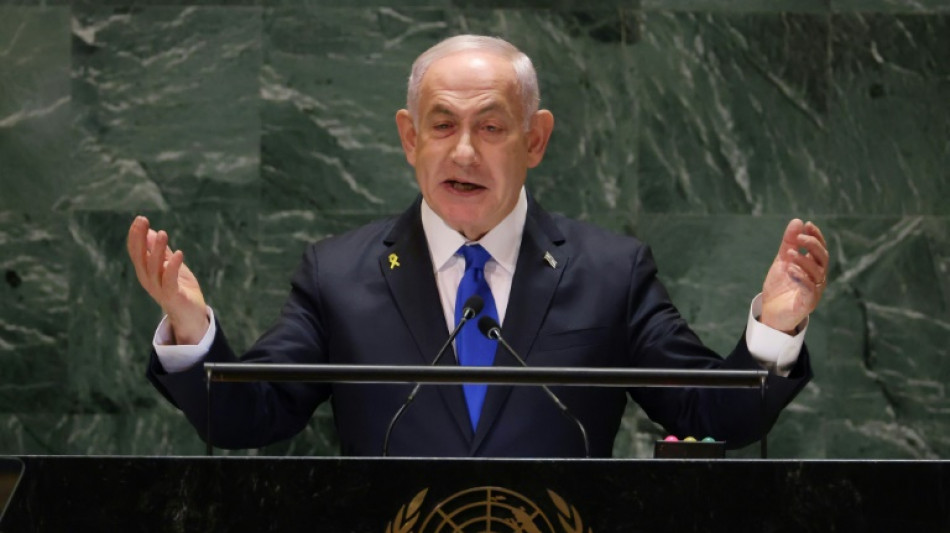
Netanyahu has also faced growing isolation on the world stage, which was on vivid display at the United Nations General Assembly, where a host of other world leaders used their speaking time to condemn the Israeli military's actions in Gaza.
A defiant Netanyahu brushed off the criticism in his own address on Friday, saying the Israeli military's campaign against Hamas would ultimately benefit even some of his country's harshest critics.
"Yes, we're defending ourselves, but we're also defending you against a common enemy that, through violence and terror, seeks to destroy our way of life," he said.
"So there should be no confusion about this, but unfortunately, there is a lot of it in many countries and in this very hall, as I've just heard."
Israeli officials sounded similar notes before and after Nasrallah's killing.
A landmark normalisation deal with Saudi Arabia -- seen as a real possibility just a year ago -- has been at least temporarily derailed by the widespread death and destruction in Gaza.
Yet an Israeli security official pushed back on the notion that the war was undermining Israel's partnerships in the Middle East, saying many of the region's rulers were grateful Israel was going after militant groups.
"The region is watching the war... They watch very, very carefully," said the official, who briefed journalists on condition of anonymity.
"They know that we are now fighting their war."
Retired Colonel Miri Eisen, a senior fellow at Israel's International Institute for Counter-Terrorism at Reichman University, told AFP on Saturday that Nasrallah's death should be welcomed by "every single person who is against terrorism worldwide".
She added: "This isn't about Israel and Israelis."
- Job not done -
Just as Israel's 1992 attack which killed Nasrallah's predecessor Abbas al-Musawi did not eliminate the Hezbollah threat, Friday's air strike does little to address the group's considerable arsenal, Israeli officials said on Saturday.
"We've seen Hezbollah carry out attacks against us for a year, and it's safe to assume that they are going to continue carrying out their attacks against us, or try to," military spokesman Nadav Shoshani told journalists.
Lieutenant Colonel Shoshani did not rule out the possibility of a ground incursion into Lebanon, describing it as one of "a wide set of tools" that could be used even with Nasrallah gone.
Eisen similarly described Nasrallah's death as "a game-changer at the command level" while noting that ground operations still might be necessary.
"Hezbollah still has many many assets. They don't disappear because of the disappearance of the top command," she said.
"They have lots of other commanders who are going to step in. They built themselves for the long term."
T.Bondarenko--BTB