US duo win Nobel for gene regulation breakthrough / Photo: © AFP

 Spotting AI writing: how reliable are the detectors?
 French youth await pope after AI 'paradise of machines' warning
 Man City found guilty of Premier League charges, set to appeal: reports

 Embolo follows Xhaka out of Swiss squad over fake Covid documents
 Trump, Xi inspect founding documents of US democracy to close summit

 'Bottle Claus': Kipchoge's 'hero' helping runners chase Berlin marathon glory
 Olympic medallist Samba-Mayela handed provisional doping ban
 First US trial against TikTok to open Monday
 Palmer misses 'too many' England games, says Tuchel
 UN refugees chief warns conditions in W.Sahara 'deteriorating'

 Antonelli 'mad' about crash in Azerbaijan qualifying
 'Perfect lap' gives Russell pole for Azerbaijan GP as Antonelli crashes out
 UN Security Council condemns Houthi attacks on Saudi Arabia

 China swimmer makes Asian Games history as Thai wins 100m sprint
 Top French literary prize drops best-selling novel over AI claims

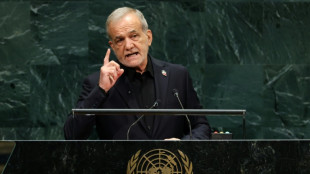 US 'must choose' whether to end war: Iran president
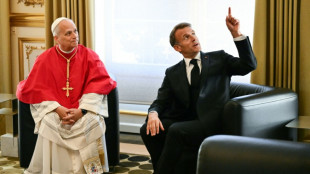 Pope warns against losing humanity in AI-driven 'paradise of machines'
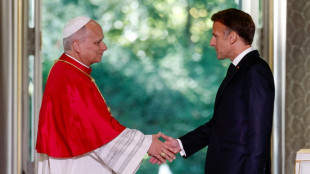 Pope warns against losing humanity in 'paradise of machines'

 From FBI warning to literary acclaim: the Russian journalist who took on Putin
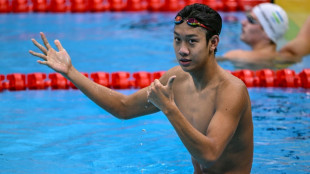 China swimmer in Asian Games first as North Korea lifters reign
 French literary prize removes novel from longlist after AI claims

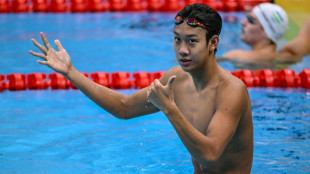 China's Zhang wins record seventh Asian Games swimming gold

 Verstappen edges Russell in final practice in Azerbaijan
 English, Spanish, Italian, German football leagues call for FIFA reform

 Pope arrives in France on first official visit in 18 years

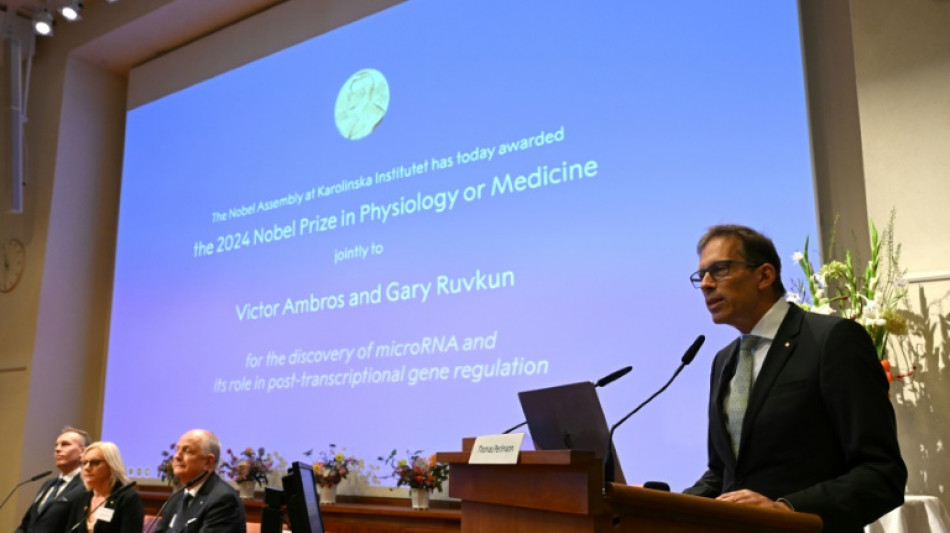
US scientists Victor Ambros and Gary Ruvkun won the Nobel Prize in Medicine on Monday for their discovery of microRNA and its role in how genes are regulated.
Understanding the regulation of gene activity has been an important goal for decades, the Nobel jury said.
If gene regulation goes awry, it can lead to serious diseases such as cancer, diabetes, or autoimmunity.
"Their groundbreaking discovery revealed a completely new principle of gene regulation that turned out to be essential for multicellular organisms, including humans," the jury said.
Collaborating but working separately, the pair conducted research on a 1 millimeter roundworm, C. elegans, to determine why cell mutations occurred and when.
They discovered microRNA, a new class of tiny RNA molecules that play a crucial role in gene regulation, which in turn allows each cell to select only relevant instructions.
Their findings were published in two articles in 1993.
"The seminal discovery of microRNA has introduced a new and unexpected mechanism of gene regulation," Thomas Perlmann, secretary general of the Nobel Assembly, told reporters.
"MicroRNAs are important for our understanding of embryological development, normal cell physiology and diseases such as cancer," he said.
Ambros, 70, is a professor at the University of Massachusetts medical school while Ruvkun, 72, is a professor at Harvard Medical School.
The pair will receive their Nobel prize, consisting of a diploma, a gold medal and a $1 million cheque, from King Carl XVI Gustaf in Stockholm on December 10, the anniversary of the 1896 death of scientist Alfred Nobel who created the prizes in his last will and testament.
Last year, the medicine prize went to Katalin Kariko and Drew Weissman for work on messenger RNA (mRNA) technology that paved the way for Covid-19 vaccines.
The Nobel season continues this week with the announcement of the winners of the physics prize on Tuesday and the chemistry prize on Wednesday.
They will be followed by the much-anticipated prizes for literature on Thursday and peace on Friday.
The economics prize winds things up on Monday, October 14.
Awarded since 1901, the Nobel Prizes honour those who have, in the words of Alfred Nobel, "conferred the greatest benefit on humankind", highlighting encouraging advances as the world currently witnesses devastating wars in the Middle East and Ukraine and a climate on the brink of collapse.
- Who deserves Peace Prize? -
For Tuesday's Nobel Prize in Physics, Swedish public radio SR's science experts suggested the honour could go to Swiss physicist Christoph Gerber, a pioneer in the development of the atomic force microscope.
"This is a microscope that gives 3D images on such an incredibly small scale that they sometimes are even atomic resolution," said SR science reporter Camilla Widebeck.
The tool has become indispensable in nanotechnology and nano research, she added.
The Clarivate analytics group also highlighted David Deutsch and Peter Shor for their work on quantum algorithms and quantum computing.
Speculation is also rife for the literature prize, to be announced on Thursday and perhaps the most highly anticipated Nobel after the peace prize.
Several pundits believe Chinese author Can Xue will be the Swedish Academy's choice this year -- and she has the lowest odds on several betting sites.
An avant-garde fiction writer often likened to Kafka, her experimental style flips between utopia and dystopia and transforms the mundane into the surreal.
"I think it will be a woman from a language zone outside Europe," Bjorn Wiman, culture editor at Sweden's newspaper of record, Dagens Nyheter, told AFP.
Others suggest it could go to Australian novelist Gerald Murnane, Britain's Salman Rushdie or Kenya's Ngugi wa Thiong'o.
The climax of the week comes Friday when the Nobel Peace Prize laureate is announced, but experts say predictions are harder than ever this year due to the growing number of crises in the world.
The UN agency for Palestinian refugees UNRWA, the International Court of Justice and Afghan women's rights activist Mahbouba Seraj have been mentioned as possibilities.
Given the existential risks to humanity posed by weapons systems that can operate autonomously without human control, several Nobel-watchers have also cited the Campaign to Stop Killer Robots as a potential laureate.
L.Dubois--BTB