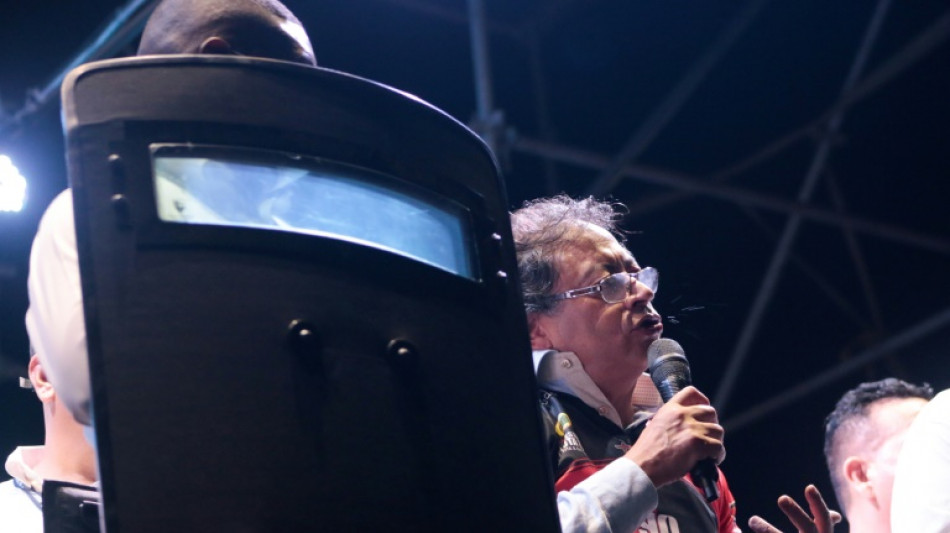
Colombia elections: the spectre of political assassination / Photo: © AFP/File

 UK court orders Prince Harry, others to pay Daily Mail £9.5mn

 Aligned Launches $ALIGN, the Native Token of Its Full Ethereum Stack
 Bitcoin jumps, stocks bounce as traders weigh US Treasury action

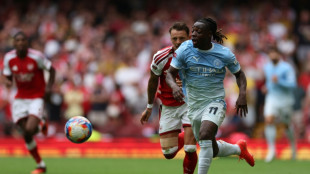 Man City boss Maresca hit with Doku injury blow

 Iraola wants to sign wingers to boost Liverpool's attacking options
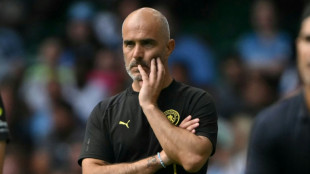 Maresca needs time to succeed after 'big changes' at Man City

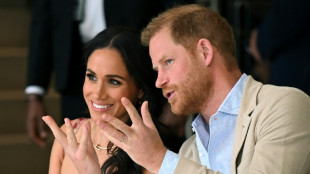 Meghan faces difficult return to the UK

 Archer double strengthens England's grip on first Test against Pakistan

 MEXC Lists Ondo Tokenized Stock Moderna (MRNAON), Expanding Access to U.S. Biotech Exposure

 Japan axes Netflix collaboration after outcry over dating show
 Stocks tread cautiously as traders weigh US Treasury action
 STARTRADER Launches XAUUSD247, Extending Gold CFD Access Across the Full Week

 Spurs agree deal to sign Man City's Savinho: reports

 US-sanctioned ICC head warns against 'demise of international rule of law'
 Top India court orders new steps to protect threatened elephants
 Djibouti football federation accused of misusing funds

 Australia charges man with trying to pass Ukraine military intel to Russia
 Ex-Pakistan PM Khan taken back to jail after hospital checks: govt

 China, Indonesia hold talks on security, defence
 Train to nowhere? South Korea's lonely push for peace with the North

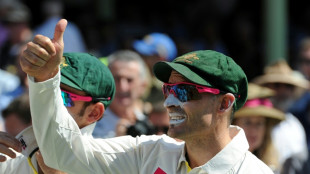 Australia's Hussey mulls role with England for Ashes series

 Indian captain 'scapegoat' in Britain's Russia shadow fleet case, wife says

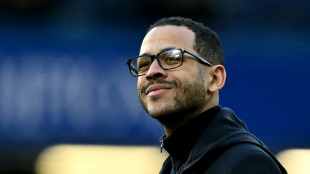 Rosenior seeks to match Paris FC's capital ambition as Ligue 1 returns

 Inter set for Serie A title defence as Milan get Amorim reboot

 'Greatest' Springboks face All Blacks in clash of juggernauts

Every time Colombian leftist presidential candidate Gustavo Petro, who leads opinion polls, steps out in public the scene is striking: he is surrounded by a wall of nervous-looking bodyguards brandishing bullet-proof shields.
The spectre of assassination is haunting the electoral campaign in which the left has a real chance of taking power for the first time in a country that has a history of political careers ending in a hail of bullets.
In the 20th century, five presidential candidates were assassinated by opponents, drug traffickers or paramilitaries working in complicity with the state.
Three were from the left or far left, and the other two were liberals.
The country was gripped by more than five decades of conflict between the state and the Revolutionary Armed Forces of Colombia (FARC) that ended with a 2016 peace deal.
And while the level of violence has dropped since then, Colombia remains wracked by a multi-faceted conflict involving drug traffickers and a multitude of armed groups.
- 'Very high' risk -
"The spectre of death accompanies us," Petro told AFP in February. "It does not stop appearing to me like a flash, when I'm in a crowd, when I'm on a platform and there is a full square, someone could shoot from anywhere."
Earlier this month, the 62-year-old senator, a former left-wing guerrilla, had to call off a public appearance after his team received "first-hand information" about an assassination plot by two paramilitaries.
Two days later he did appear in the northern city of Cucuta behind the bullet-proof shields.
His 60-strong bodyguard has since been beefed up while local security forces have provided extra officers for his numerous trips to provincial areas that have contributed to his successful campaign.
The assassination risk "is very high", according to Felipe Botero, a political science professor at the Andes University.
"They won't just (try to) kill Petro the candidate but it is also highly likely they will try to assassinate him if he wins the presidency," Botero told AFP.
His running mate Francia Marquez, a black environmentalist, has also received threats.
Conservative candidate Federico Gutierrez has spoken of his concern, not just for Petro but also himself, having claimed to have been threatened by the Marxist National Liberation Army (ELN), the last remaining recognized rebel group in the country.
"Take care of Federico Gutierrez," said former president Alvaro Uribe, who escaped a FARC assassination attempt using explosives in 2002.
- Fear of the left -
In the history of modern Colombia a date that stands out is April 9, 1948 when liberal presidential candidate Jorge Eliecer Gaitan was shot dead on a street in Bogota.
His murder inflamed the city and set off a bloody internal conflict that, more than a half century later, has still not been extinguished.
Four decades later, communist Jaime Pardo Leal (1987), liberal Luis Carlos Galan (1989), and leftists Bernardo Jaramillo and Carlos Pizarro (1990), all presidential hopefuls, were assassinated.
Alexander Gamba, a professor at the Saint Thomas University, says there are three reasons for a "possible" attack on Petro.
Firstly, Colombia has "violence professionals" like the almost two dozen mercenaries who took part in the assassination of Haiti's president last year.
Secondly, Petro's opponents have claimed his victory would be "a huge national catastrophe", which has contributed to an atmosphere in which his assassination would almost be presented as a "patriotic act."
Lastly, the country has "never had political change" involving the left wing, which conservatives continue to link to the armed rebellion.
"In a country like Colombia, marked by political violence and with the record for the murder of social leaders, we obviously take all threats against Mr Petro seriously," said Alfonso Prada, one of the candidate's advisors.
"If we hope to run the country, we need to be capable of looking after our own security," he added.
For its part, the outgoing government of President Ivan Duque, has said Petro "is one of the best protected people" in the country.
L.Janezki--BTB