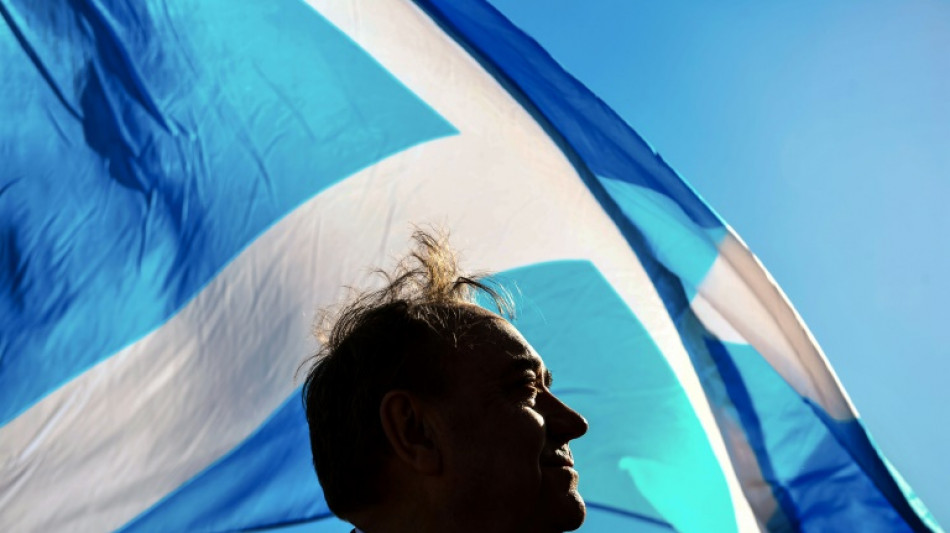
Alex Salmond: the man who took Scotland to the brink of independence / Photo: © AFP/File

 Mancini finds positives in Italy loss, accepts fans' jeers
 Alcaraz helps Europe into Laver Cup lead
 Six missing after building collapses in historic Athens district
 Mbappe scores but suffers knee injury as Zidane gets debut France win
 Mancini's Italy return spoiled by Belgium defeat

 Rodri confident in Man City innocence despite reported charges
 Jay-Z rape accuser says she made 'false accusations'
 Senegal draw first match under Vieira and Nigeria survive scare

 Trump, Xi end summit long on pomp, but short on progress
 Russia not preparing for conflict with Europe, Putin says
 Trump's photo of Xi greeting carries signs of AI
 Six missing after building blast in historic Athens district
 Millions in US northeast brace for powerful storm
 Assefa seeks 'better than my best' at Berlin marathon
 US court refuses to overturn Pentagon ban on Anthropic
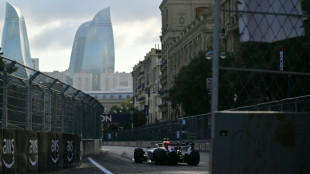 Verstappen and Norris blame slow cars as Mercedes tops qualifying

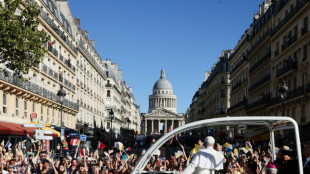 Crowds cheer pope in Paris after AI 'paradise of machines' warning
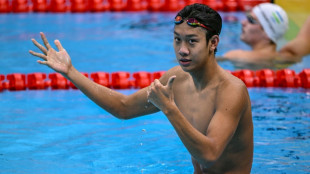 Teen swimmer makes Games history as Thai, Chinese sprinters win gold
 Man City found guilty of 114 Premier League charges - reports
 Concerns over 'missing' UK explorer Ranulph Fiennes
 Suspected Paris killer of Argentine rugby star begs forgiveness
 Oil prices fall on cautious hopes for US-Iran progress
 Noskova, Muchova take Czech Republic into BJK Cup final
 Thai sprinter Puripol breaks own Asian Games record to win 100m gold
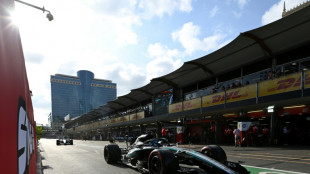 Russell takes pole for Azerbaijan GP, Antonelli crashes out
Alex Salmond, who died on Saturday aged 69, was for years the figurehead of Scottish independence, a wily political operator who divided opinion as he took the nationalist movement from the political fringes to the mainstream.
He never got to see his beloved Scotland break away from the rest of the United Kingdom, but he was making the case for the country to go its own way right to his last breath.
Salmond, who died after falling ill after making a speech in North Macedonia, stepped down as Scotland's first minister after losing the 2014 independence referendum, handing power to his deputy and one-time protegee Nicola Sturgeon.
But he remained a larger-than-life presence in the background, prompting some former colleagues in the Scottish National Party to suspect he was plotting a political comeback.
Just before the Scottish parliamentary elections in 2021, they were proved correct, as Salmond launched what he claimed would be a complementary nationalist movement -- Alba -- to deliver a "supermajority" for independence in the Edinburgh parliament.
With the SNP and Alba in Holyrood, he argued, the UK government in London could not ignore Scots' backing for independence -- or at least another referendum.
Alba, though, failed to win a seat in the devolved parliament, leaving Salmond out in the cold.
The SNP had already cast him adrift: a year earlier he fought for his personal reputation in the courts after being charged with sexual offences, including attempted rape.
With Scotland more than most a place of political skullduggery, the acquitted Salmond quickly pointed the finger at his enemies for having pushed for the prosecution.
Sturgeon had already pointedly distanced herself from her former mentor, and the bad blood reinforced rifts in the SNP between those loyal to the former leader and his successor.
- Pragmatist -
Alexander Eliott Anderson Salmond was born in 1954 in Linlithgow, near Edinburgh. Appropriately, he arrived on Hogmanay -- the Scots term for New Year's Eve, a night of whisky, song and dance beloved of Scots around the world.
After studies in economics and medieval history at St Andrews University, he became an economist with the Royal Bank of Scotland before entering the UK parliament.
In 1990 he took over the leadership of the SNP, moving it to the centre ground, four years before Labour's Tony Blair did the same.
David Torrance, author of "Salmond: Against the Odds", said both Salmond and Blair were more pragmatic than dogmatic and their slogan could be summed up as: "Whatever works".
In the first elections for the re-established Scottish parliament in 1999 -- created under Blair's leadership -- the SNP lost to Labour and Salmond quit as leader, claiming it was "forever".
But he was re-elected in 2004. "I changed my mind," he said.
Three years later, he was elected first minister of a minority SNP government in Edinburgh, then in 2011 won an absolute majority -- then the promise from London of a referendum.
- Regrets -
For loyal supporters, Salmond, who often sported tartan scarves and ties with the blue and white Saltire of Scotland, had unflagging determination and canny political know-how.
Detractors branded him arrogant and misogynistic with a penchant for populism.
From 2017, he presented a talk show on the Kremlin-funded channel RT, for which he was also criticised.
But both sides agreed that Salmond was one of the most talented politicians of his generation.
Just last month, Salmond, who had a passion for horse racing, fine wine, Indian curry, football and golf, said he regretted standing down as first minister, with independence seemingly off the table.
Sturgeon stepped down unexpectedly early last year. Labour's progress in Scotland at this year's UK general election could imperil the SNP's grip on power in the 2026 Scottish parliamentary vote.
For their critics, Salmond, Sturgeon and the SNP's push for independence came at the expense of addressing the day-to-day issues Scotland's parliament controlled: health, education, housing and transport.
"I thought to make a point of departure for the referendum in the future was a right thing for the national movement," Salmond told an ITV documentary in September. "Looking back, that was a mistake.
"Now, in retrospect, that was a daft thing to do. But then... I thought we were set for independence in a reasonable timescale.
"If you'd told me then that 10 years later, we'd still be waiting despite the manifest opportunities there have been, then I would have said, 'well, I'll just hang about then and see the matter through'."
Salmond leaves a wife, Moira, 87, whom he married in 1981. The couple had no children.
G.Schulte--BTB