UN nuclear chief in Iran to 'reach diplomatic solutions' / Photo: © AFP

 AI startup urges optimism from Europe despite safety fears

 'Godlike, invincible': Japan hails 11-year-old Games history-maker
 Nepal's hydropower ambitions face climate reality check

 Power cuts, rubble: millions come home to find Sudan's capital unlivable
 Internationals keep Presidents Cup lead with late fightbacks
 Tuchel to 'keep pushing' England to reach Spain's level

 Alcaraz saves match points to keep Europe ahead in Laver Cup
 Spain success driven by hunger to improve, says De La Fuente
 Lyon collapse at Stade Francais to suffer first Top 14 loss
 Oyarzabal and Spain sink England again as Modric shines for Croatia
 Housing protesters camp in central Madrid after mass demonstration
 Louise Trotter expands her palette at Bottega Veneta
 Pope prays at Lourdes after huge Paris mass

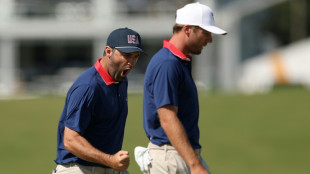 USA trims International lead after Presidents Cup four-balls

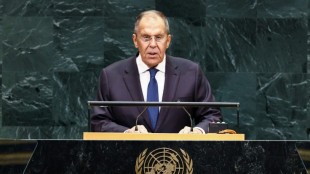 Russia accuses Europe of blocking Ukraine talks, as strikes drag on
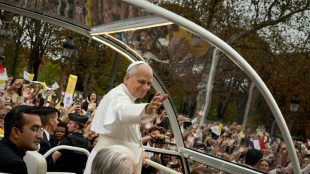 'He said hello': Families pray with pope on Paris avenue
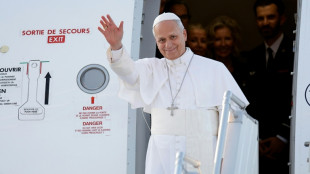 Pope celebrates giant Paris mass, flies to Lourdes
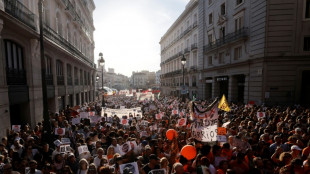 Thousands march in Madrid over eviction of 87-year-old woman
 England women back to winning ways with last-gasp defeat of New Zealand
 Trump rejects Iran proposal for deal to reopen Hormuz
 England's Cox says injured Buttler leaves 'big shoes to fill'
 Ruthless Perpignan upset sloppy Bordeaux-Begles
 Deadly abbey attack feeds anti-Ukrainian sentiment in Poland
 Antonelli says he drove 'safety-first' on his worst weekend of season
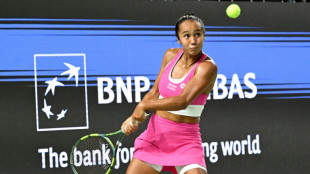 Fernandez fights back to reach Singapore Open final

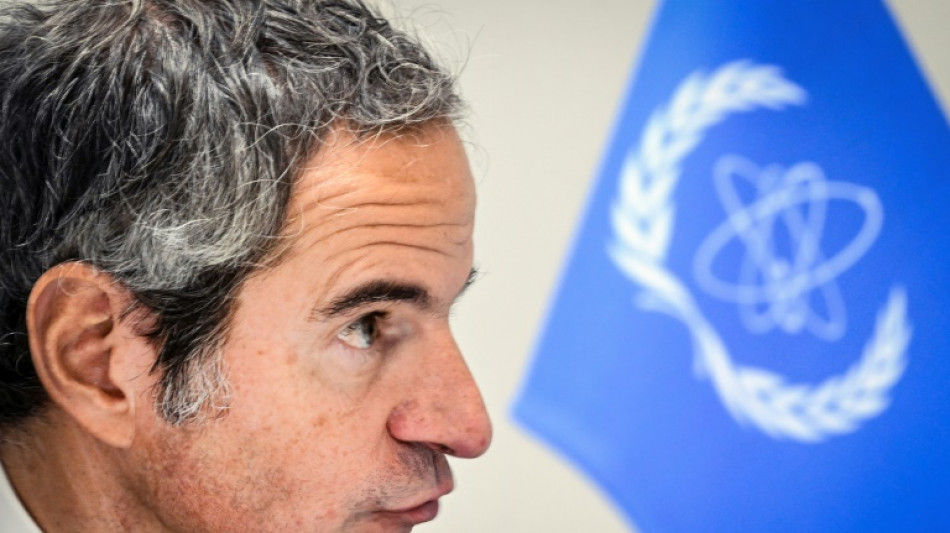
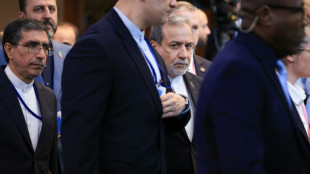
International Atomic Energy Agency chief Rafael Grossi was to hold talks with top Iranian officials Thursday on Tehran's nuclear programme, a week after Donald Trump's re-election as US president.
During his first term in the White House from 2017 to 2021, Trump was the architect of a policy called "maximum pressure" which levied against Tehran biting sanctions that had been lifted through a landmark nuclear agreement in 2015.
Grossi, who is the director general of the UN agency, arrived at Tehran airport on Wednesday evening and was greeted by Behrouz Kamalvandi, the spokesman for the Atomic Energy Organization of Iran (AEOI).
Grossi is set to meet Thursday in Tehran with AEOI chief Mohammad Eslami as well as Foreign Minister Abbas Araghchi, who was chief negotiator in the nuclear talks between Tehran and the major powers that resulted in the 2015 deal formally called the Joint Comprehensive Plan of Action or JCPOA.
The deal, reached after 21 months of negotiations between Iran and world powers, gave Tehran sanctions relief in exchange for curbs on its nuclear programme to guarantee that it could not develop a nuclear weapon -- something it has always denied wanting to do.
Three years later, then-president Trump unilaterally withdrew the United States from the agreement and reimposed heavy sanctions against Iran.
- Search for solutions -
A year later, Iran started to gradually roll back its commitments to the nuclear deal, which only allowed Tehran to enrich uranium to 3.65 percent purity.
The IAEA says Iran has considerably increased its reserves of enriched uranium to 60 percent, close to the 90 percent needed to develop an atomic bomb.
The head of the IAEA "will do what he can to prevent the situation going from bad to worse" given the significant differences between Tehran and Western capitals, analyst Ali Vaez, an Iran expert for the Crisis Group, a US-based think tank, told AFP.
"The one who left the agreement was not Iran, it was America," Iran's government spokeswoman Fatemeh Mohajerani said on Wednesday.
"Mr. Trump once tried the path of maximum pressure and saw that this path did not work."
Grossi's visit comes only two days after the defence minister of Iran's arch enemy Israel warned that the Islamic republic was "more exposed than ever to strikes on its nuclear facilities".
The two countries have exchanged missile fire in recent months in a context of high tensions in the Middle East due to the war waged by Israel in the Gaza Strip against Hamas and in Lebanon against Hezbollah, two militant groups allied with Iran.
Trump's return to the White House in January also raises fears of rising tensions between Iran and his country.
"The margins for manoeuvre are beginning to shrink," Grossi warned in an interview with AFP on Tuesday, adding that "it is imperative to find ways to reach diplomatic solutions".
- Religious decree -
Grossi has said that while Iran does not have any nuclear weapons at this this moment in time, it does have plenty of nuclear materials that could be used eventually to make a weapon.
Iranian President Masoud Pezeshkian, who came to office in July with hopes of improving ties with the West and having sanctions lifted, favours a revival of the nuclear deal.
But all efforts to get the nuclear agreement off life support have so far failed.
The IAEA chief has repeatedly called for more cooperation from Iran.
In recent years, Tehran has decreased its interaction with the UN agency by deactivating surveillance devices needed to monitor the nuclear programme and effectively barring its inspectors.
The foundations of Iran's nuclear programme date back to the late 1950s, when the United States signed a civil cooperation agreement with Iran's then Shah Mohammad Reza Pahlavi.
In 1970, Iran ratified the Non-Proliferation Treaty (NPT), which requires signatory states to declare and place their nuclear materials under the IAEA control.
But with Iran threatening to hit back at Israel for its latest missile strikes, some lawmakers in the Islamic republic have called on the government to revise its nuclear doctrine to pursue nuclear weapons.
The parliamentarians called on supreme leader Ayatollah Ali Khamenei, who wields ultimate authority in Iran, to reconsider his long-standing religious edict or fatwa banning nuclear weapons.
The Islamic republic has maintained its policy against acquiring nuclear weapons, insisting its nuclear activities are entirely peaceful.
C.Kovalenko--BTB