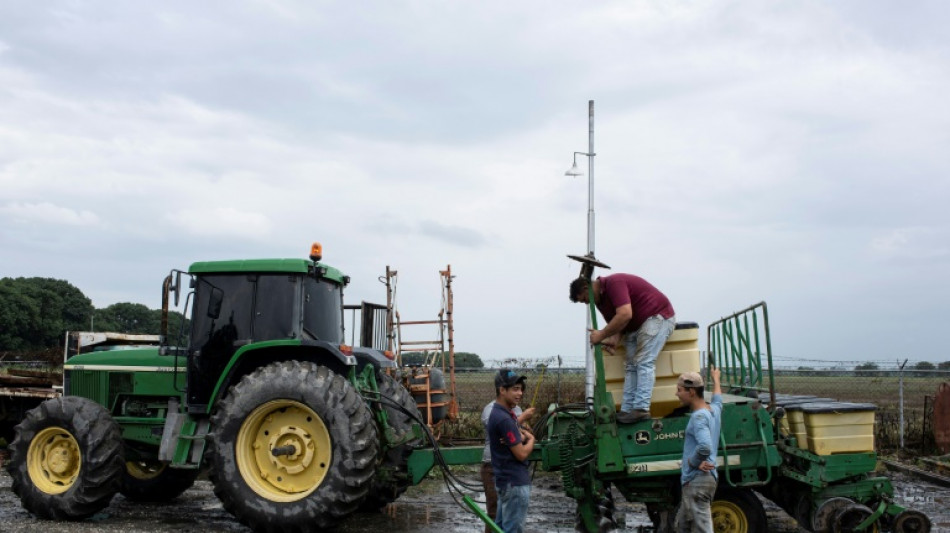
Russia's invasion of Ukraine sets off Latin American fertilizer race / Photo: © AFP

 A-Rod ups T-Wolves stake in $4.5bn ownership change
 UK court orders Prince Harry, others to pay Daily Mail initial £9.5mn

 'Grateful' ex-world champion Alaphilippe retires from cycling

 US, Canada work to wrap up trade deal ahead of looming deadline

 Malaysia's JDT claim unbeaten run world record

 At least 2 teens seriously wounded in sword attack at Swedish school
 Popular forest near Paris to reopen after wildfire
 UN holds second informal poll of secretary-general candidates
 Shakhtar Donetsk to play Champions League home games at Chelsea

 Arsenal sign Villa centre-back Konsa as champions bolster defence
 The 'hedgehogs' leading Poland's defences on Russian border

 England thrash Pakistan by an innings and 103 runs in first Test

 Fury says Joshua fight 'doesn't look like it's going to happen'
 Argentina's Paredes suspended 10 matches by FIFA for World Cup fight

 Watkins and Martinez could join Villa exodus says Emery

 UK court orders Prince Harry, others to pay Daily Mail £9.5mn

 Aligned Launches $ALIGN, the Native Token of Its Full Ethereum Stack

 Bitcoin jumps, stocks bounce as traders weigh US Treasury action

 Man City boss Maresca hit with Doku injury blow

 Iraola wants to sign wingers to boost Liverpool's attacking options

 Maresca needs time to succeed after 'big changes' at Man City

 Meghan faces difficult return to the UK

 Archer double strengthens England's grip on first Test against Pakistan
 MEXC Lists Ondo Tokenized Stock Moderna (MRNAON), Expanding Access to U.S. Biotech Exposure

 Japan axes Netflix collaboration after outcry over dating show
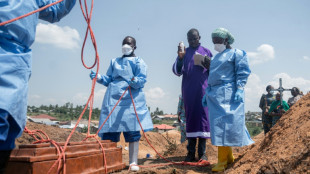
The first rainy season downpour in Venezuela's western region of Portuguesa has fallen and now it's time to plant corn, a staple in this South American country known for its traditional arepas.
But just like much of Latin America, the race is on to find enough fertilizer for the crops.
Russia's invasion of Ukraine 10,000 kilometers away has limited the supply of the key agricultural supplement throughout the region.
Some 80 percent of the 180,000 metric tons of fertilizers used annually in Venezuela are imported, mostly from Russia but also from Ukraine and Belarus, according to the Fedeagro union of agricultural producers.
Western sanctions against Russia and Belarus, as well as Ukraine's difficulties in exporting while under siege, has left the whole of Latin America scrambling to find replacements.
Russia is the world's largest exporter of fertilizers with more than 12 percent of the global market, but its sales have been virtually paralyzed by sanctions.
"Thank God we managed to buy Russian fertilizers in business talks in October and November, paid in December and they were able to arrive in February and March," Celso Fantinel, the Fedeagro president, told AFP.
However, Fantinel said they are still short by about a third of their needs -- but the weather waits for no-one, and there is no time to find alternatives.
As it is "we're producing 30 percent of our capacity" due to Venezuela's economic crisis that saw the country suffer eight years of recession and four years of hyperinflation, said Ramon Bolotin, president of the PAI independent agricultural producers.
"Even so, there aren't enough fertilizers for this 30 percent."
"Chemical fertilizers are essential," he said, for a country where three percent of the 30 million population works in agriculture "to feed the other 97 percent."
"We'll work with what we have ... although in some places they will need to underdose."
- Massive shortage -
For Venezuelan farmers, it is yet another headache in a country already suffering fuel shortages due to the collapse of its vital oil industry.
In Portuguesa, an agricultural region known as Venezuela's "granary," petrol station queues stretch for kilometers.
Venezuela's farming sector was expecting to sow 250,000 hectares of corn, 50,000 of rice, 60,000 of sugarcane and 70,000 of other products such as coffee and cacao, according to Fedeagro.
The fertilizer shortfall is a massive obstacle. One hectare of corn crops can produce 10 tons of harvest, but that figure can fall to as low as three or four tons if the conditions are not right.
The whole of Latin America faces the same issue, particularly its two agricultural giants.
Last year, Brazil imported almost 81 percent of the 40.5 million tons of fertilizer it used, and 20 percent of that came from Russia, according to the government.
Argentina imported 60 percent of its 6.6 million tons, of which 15 percent came from Russia.
Mexico, Ecuador, Colombia and Peru are also, to a greater or lesser extent, dependent on Russian fertilizers.
In March, Ecuador President Guillermo Lasso said his government would subsidize fertilizer imports due to the "increase in the price of agricultural materials" sparked by the international crisis.
Horst Hobener, a corn grower in Turen, Portuguesa, told AFP prices have risen 120 percent in a matter of months.
- Alternatives sought -
The collapse of Venezuela's oil industry has affected the petrochemical industry, which in the past covered the internal demand for fertilizers.
"This has been felt a lot," said Fedeagro vice-president Osman Quero.
"In the last three years we have been sourcing the fertilizers ourselves" through intermediaries.
Farmers have asked the government to reactivate its petrochemical complex in the northern Carabobo state, which has been semi-paralyzed since 2017.
According to state oil company PDVSA, it has the capacity to produce 150,000 metric tons of nitrogenous and phosphate fertilizers a year.
Russian fertilizers used by farmers in Turen are made up of 10 percent nitrogen, 26 percent phosphorus and 26 percent potassium.
"We have two fundamental ingredients: urea (nitrogen) and phosphorus and we would only need to import potassium chloride," said Fantinel.
They are exploring other options but the global shortfall has meant many exporters have suspended sales due to their own domestic needs.
Ruben Carrasco from the Lima Chamber of Commerce told AFP that Russia is looking for ways to use third parties such as Norway to return to the market.
"Who knows, maybe next year other alternative sources will be tried," said Bolotin.
O.Bulka--BTB