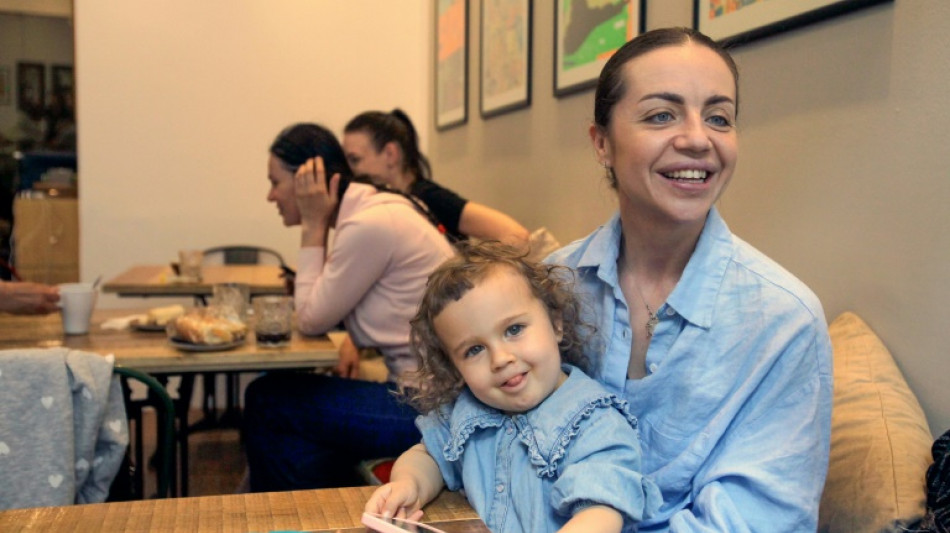
Hungary's neutral war stance puts off Ukraine refugees / Photo: © AFP

 A-Rod ups T-Wolves stake in $4.5bn ownership change

 UK court orders Prince Harry, others to pay Daily Mail initial £9.5mn
 'Grateful' ex-world champion Alaphilippe retires from cycling

 US, Canada work to wrap up trade deal ahead of looming deadline

 Malaysia's JDT claim unbeaten run world record

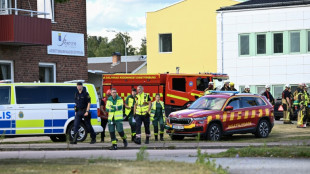 At least 2 teens seriously wounded in sword attack at Swedish school
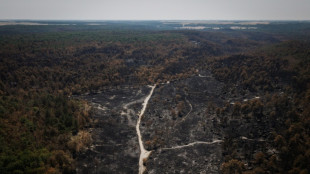 Popular forest near Paris to reopen after wildfire

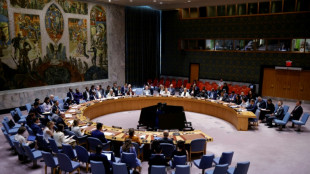 UN holds second informal poll of secretary-general candidates

 Shakhtar Donetsk to play Champions League home games at Chelsea

 Arsenal sign Villa centre-back Konsa as champions bolster defence

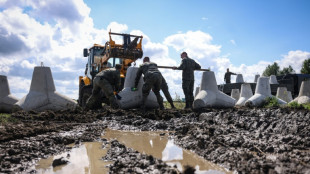 The 'hedgehogs' leading Poland's defences on Russian border
 England thrash Pakistan by an innings and 103 runs in first Test
 Fury says Joshua fight 'doesn't look like it's going to happen'
 Argentina's Paredes suspended 10 matches by FIFA for World Cup fight

 Watkins and Martinez could join Villa exodus says Emery

 UK court orders Prince Harry, others to pay Daily Mail £9.5mn

 Aligned Launches $ALIGN, the Native Token of Its Full Ethereum Stack
 Bitcoin jumps, stocks bounce as traders weigh US Treasury action

 Man City boss Maresca hit with Doku injury blow

 Iraola wants to sign wingers to boost Liverpool's attacking options

 Maresca needs time to succeed after 'big changes' at Man City

 Meghan faces difficult return to the UK

 Archer double strengthens England's grip on first Test against Pakistan
 MEXC Lists Ondo Tokenized Stock Moderna (MRNAON), Expanding Access to U.S. Biotech Exposure

 Japan axes Netflix collaboration after outcry over dating show
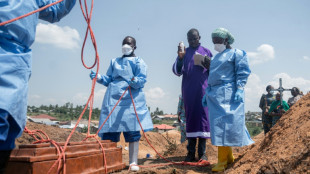
Like Kristina Novytska, most Ukrainian refugees in Hungary are keen to leave the country, whose nationalist leader's neutral stance on the war is an exception in the EU.
"I like Hungary so much... but I also saw how the Hungarian government thinks about us," Novytska told AFP at The Workshop, a shelter for refugees run by a Budapest resident.
The 39-year-old fashion designer fled Kyiv with her two-year-old daughter soon after Russia invaded Ukraine and now wants to look for work in an English-speaking country.
Despite Hungarian government claims of providing for hundreds of thousands of refugees, only an estimated 10 to 20 percent of Ukrainians stay more than a few days, according to relief organisations.
Personal networks abroad, language and job prospects are key in refugees' decisions where to go, aid organisations say.
But nationalist Prime Minister Viktor Orban's neutral stance on the war, as well as his moves to dismantle the system supporting asylum seekers and refugees are additional push factors.
- 'Uncomfortable' -
"It's as if the government would like refugees in general to avoid Hungary," said Viktoria Horvath of Migration Aid, which runs a help desk in the government-run BOK aid centre in Budapest.
In the vast centres, dozens of volunteer staff outnumber refugees by far.
United Nations data estimates that more than 620,000 Ukrainian refugees have crossed into Hungary since the invasion on February 24.
But according to official Hungarian data, only around 20,000 have applied for "temporary protection" that grants them access to the local health and social insurance systems.
In the days after the invasion, Orban described Hungary as "a good friend of Ukraine" and said his government would help Ukrainians -- contrary to its usual anti-refugee stance that has seen the country push back on asylum seekers, mostly from the Middle East and Africa.
At the same time, Orban, who has sought close ties with Vladimir Putin in recent years, has avoided naming the Russian leader as being responsible for the war.
Orban has sent aid to Ukraine, but he has refused to send weapons, saying it could draw Hungary into the conflict.
This "stay out" approach is seen as having propelled him to a fourth straight term in office in another landslide win last month.
His stance has not won him praise among the leadership in Kyiv.
Ukrainian President Volodymyr Zelensky told Orban in a video message in March that "once and for all, you should decide who you are with".
Hitting back during an election day victory speech on April 3, Orban described Zelensky as an opponent, a remark met by cheers from his supporters.
Most recently, Orban has said he would not be able to support an EU oil embargo, citing Hungary's dependence on Russian imports.
"Ukrainians do tend to feel uncomfortable here," said Anya Yelina, a university dance and choreography teacher from Kyiv, who came to Hungary in early March.
"The problem is that Orban is pro-Russian, and everyone among the refugees is talking about it constantly," added the 25-year-old, whose brother has worked in Hungary for three years but now also wants to leave.
- 'Demolished' asylum system -
Some of the animosity is rooted in the two countries' recent history.
Budapest has in recent years complained about what it sees as discrimination of a large Hungarian minority in western Ukraine, discouraging them to speak their language.
Since the invasion, pro-Russian narratives relativising Moscow's aggression have also been prominent on Hungary's heavily pro-Orban public media.
"There are millions of people (in Hungary) watching TV channels or reading news that are actually following the Kremlin line," Patrik Szicherle, an analyst, told AFP.
In a poll last month, market researcher Ipsos found that 67 percent of Hungarians agree that "the problems of Ukraine are none of our business, and we should not interfere".
It was among the highest of the 27 countries polled, and well above the average of 39 percent.
Unlike in nearby Poland or the Czech Republic, there have also been no large solidarity rallies against Russia's invasion.
The problem for Ukrainian refugees is also institutional.
Hungary "demolished" its asylum system in recent years, which makes it harder for Ukrainians to integrate, according to Aniko Bakonyi of the Hungarian Helsinki Committee, a refugee rights group.
Since 2015, fences were built on Hungary's southern borders, and refugee camps shuttered.
Police are also obliged by law to physically "push back" migrants across the borders, while asylum seekers since 2020 can only submit applications at embassies abroad.
"The open border with Ukraine and humanitarian aid is the right way, but refugees need to see a perspective, and a holistic system of services to integrate in a new home," Bakonyi said.
O.Bulka--BTB