Iraqis face tough homecoming a decade after IS rampage / Photo: © AFP

 How young is too young as child prodigies win big at Asian Games

 UK Labour party meets buoyed by Burnham but eager for concrete plans
 Thousands protest ahead of Mexican president's report on missing students
 Bangkok floods force thousands into shelters
 AI startup urges optimism from Europe despite safety fears

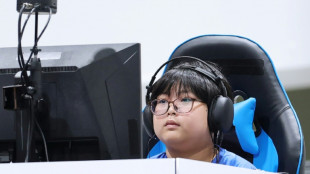 'Godlike, invincible': Japan hails 11-year-old Games history-maker
 Nepal's hydropower ambitions face climate reality check

 Power cuts, rubble: millions come home to find Sudan's capital unlivable

 Internationals keep Presidents Cup lead with late fightbacks

 Tuchel to 'keep pushing' England to reach Spain's level

 Alcaraz saves match points to keep Europe ahead in Laver Cup
 Spain success driven by hunger to improve, says De La Fuente

 Lyon collapse at Stade Francais to suffer first Top 14 loss
 Oyarzabal and Spain sink England again as Modric shines for Croatia
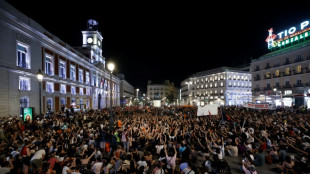
 Housing protesters camp in central Madrid after mass demonstration

 Louise Trotter expands her palette at Bottega Veneta
 Pope prays at Lourdes after huge Paris mass

 USA trims International lead after Presidents Cup four-balls

 Russia accuses Europe of blocking Ukraine talks, as strikes drag on

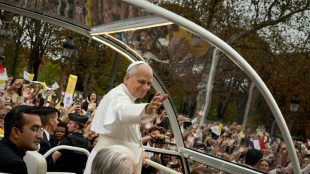 'He said hello': Families pray with pope on Paris avenue

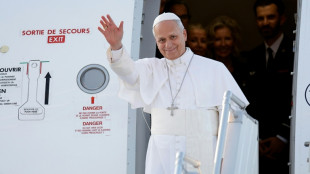 Pope celebrates giant Paris mass, flies to Lourdes

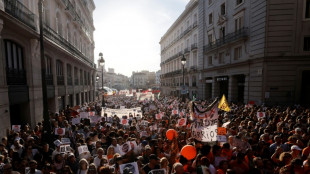 Thousands march in Madrid over eviction of 87-year-old woman
 England women back to winning ways with last-gasp defeat of New Zealand

 Trump rejects Iran proposal for deal to reopen Hormuz
 England's Cox says injured Buttler leaves 'big shoes to fill'
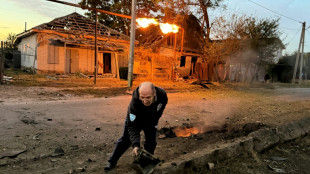
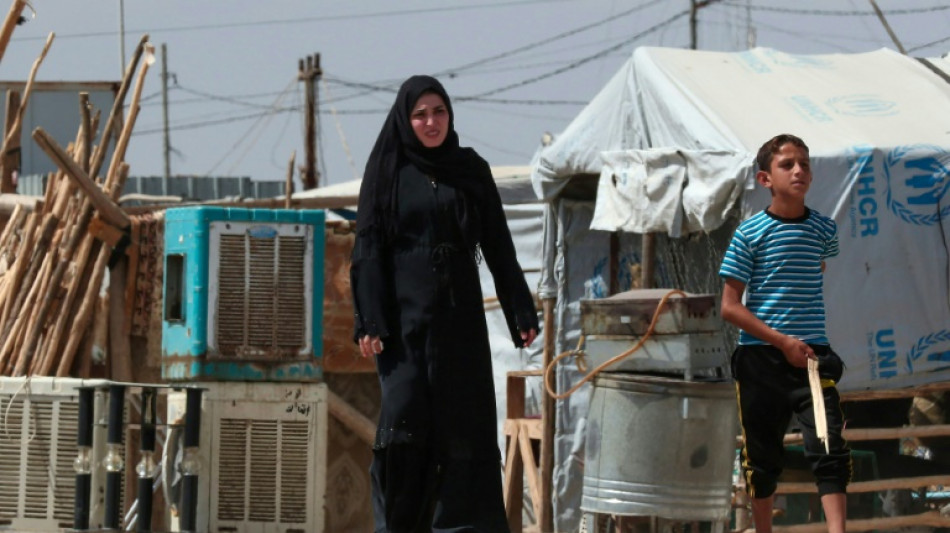
A decade after Islamic State group extremists rampaged through northern Iraq, Moaz Fadhil and his eight children finally returned to their village after languishing for years in a displacement camp.
Their home, Hassan Shami, is just a stone's throw from the tent city where they had been living, and it still bears the scars of the fight against IS.
The jihadists seized a third of Iraq, ruling their self-declared "caliphate" with an iron fist, before an international coalition wrestled control from them in 2017.
Seven years on, many of the village's homes are still in ruins and lacking essential services, but Fadhil said he felt an "indescribable joy" upon moving back in August.
Iraq -- marred by decades of war and turmoil even before the rise of IS -- is home to more than a million internally displaced people.
Baghdad has been pushing for the closure of the displacement camps, with the country having attained a degree of comparative stability in recent years.
Most of the camps in federal Iraq have now been closed, but around 20 remain in the northern autonomous Kurdistan region, which according to the United Nations house more than 115,000 displaced people.
But for many, actually returning home can be a difficult task.
After getting the green light from Kurdish security forces to leave the camp, Fadhil moved his family into a friend's damaged house because his own is a complete ruin.
- 'Beautiful memories' -
"Water arrives by tanker trucks and there is no electricity," said the 53-year-old.
Although the rubble has been cleared from the structure he now lives in, the cinder block walls and rough concrete floors remain bare.
Across Hassan Shami, half-collapsed houses sit next to concrete buildings under construction by those residents who can afford to rebuild.
Some have installed solar panels to power their new lives.
A small new mosque stands, starkly white, beside an asphalt road.
"I was born here, and before me my father and mother," said Fadhil, an unemployed farmer.
"I have beautiful memories with my children, my parents."
The family survives mainly on the modest income brought in by his eldest son, who works as a day labourer on building sites.
"Every four or five days he works a day" for about $8, said Fadhil.
In an effort to close the camps and facilitate returns, Iraqi authorities are offering families around $3,000 to go back to their places of origin.
To do so, displaced people must also get security clearance -- to ensure they are not wanted for jihadist crimes -- and have their identity papers or property rights in order.
But of the 11,000 displaced people still living in six displacement camps near Hassan Shami, 600 are former prisoners, according to the UN.
They were released after serving up to five years for crimes related to membership of IS.
- Not that simple -
For them, going home can mean further complications.
There's the risk of ostracism by neighbours or tribes for their perceived affiliation with IS atrocities, potential arrest at a checkpoint by federal forces or even a second trial.
Among them is 32-year-old Rashid, who asked that we use a pseudonym because of his previous imprisonment in Kurdistan for belonging to the jihadist group.
He said he hopes the camp next to Hassan Shami does not close.
"I have a certificate of release (from prison), everything is in order... But I can't go back there", he said of federal Iraq.
"If I go back it's 20 years" in jail, he added, worried that he would be tried again in an Iraqi court.
Ali Abbas, spokesperson for Iraq's migration ministry, said that those who committed crimes may indeed face trial after they leave the camps.
"No one can prevent justice from doing its job", he said, claiming that their families would not face repercussions.
The government is working to ensure that families who return have access to basic services, Abbas added.
In recent months, Baghdad has repeatedly tried to set deadlines for Kurdistan to close the camps, even suing leaders of the autonomous region before finally opting for cooperation over coercion.
Imrul Islam of the Norwegian Refugee Council said displacement camps by definition are supposed to be temporary, but warned against their hasty closure.
When people return, "you need schools. You need hospitals. You need roads. And you need working markets that provide opportunities for livelihoods," he said.
Without these, he said, many families who try to resettle in their home towns would end up returning to the camps.
M.Furrer--BTB