N. Korea's latest weapon? Bombarding South with noise / Photo: © AFP

 How young is too young as child prodigies win big at Asian Games

 UK Labour party meets buoyed by Burnham but eager for concrete plans

 Thousands protest ahead of Mexican president's report on missing students

 Bangkok floods force thousands into shelters
 AI startup urges optimism from Europe despite safety fears

 'Godlike, invincible': Japan hails 11-year-old Games history-maker

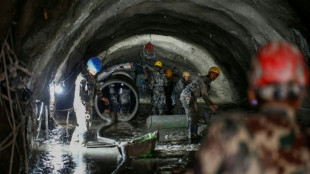 Nepal's hydropower ambitions face climate reality check

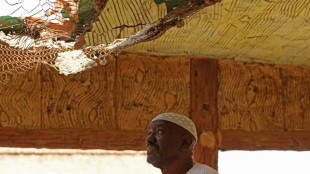 Power cuts, rubble: millions come home to find Sudan's capital unlivable

 Internationals keep Presidents Cup lead with late fightbacks

 Tuchel to 'keep pushing' England to reach Spain's level

 Alcaraz saves match points to keep Europe ahead in Laver Cup
 Spain success driven by hunger to improve, says De La Fuente

 Lyon collapse at Stade Francais to suffer first Top 14 loss
 Oyarzabal and Spain sink England again as Modric shines for Croatia

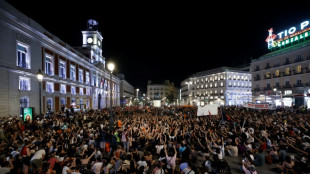
 Housing protesters camp in central Madrid after mass demonstration

 Louise Trotter expands her palette at Bottega Veneta

 Pope prays at Lourdes after huge Paris mass

 USA trims International lead after Presidents Cup four-balls

 Russia accuses Europe of blocking Ukraine talks, as strikes drag on

 'He said hello': Families pray with pope on Paris avenue

 Pope celebrates giant Paris mass, flies to Lourdes

 Thousands march in Madrid over eviction of 87-year-old woman
 England women back to winning ways with last-gasp defeat of New Zealand

 Trump rejects Iran proposal for deal to reopen Hormuz

 England's Cox says injured Buttler leaves 'big shoes to fill'
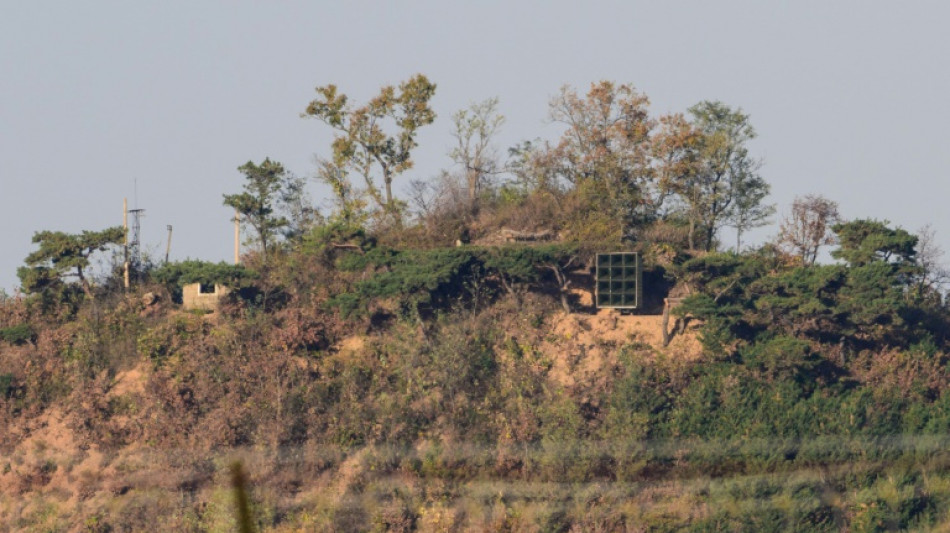
Gunshots, screams, eerie laughter: South Korea's border island Ganghwa is being bombarded nightly with blood-curdling sounds, part of a new campaign by the nuclear-armed North that is driving residents to despair.
Before it started, 56-year-old Kim Yun-suk fell asleep to the hum of insects and woke to the chirping of birds. Now, she is kept awake every night by what sounds like the soundtrack of a low-budget horror movie at top volume.
"The peaceful sounds of nature... have now been drowned out," Kim told AFP.
"All we hear is this noise."
The noise campaign is the latest manifestation of steadily-declining ties between the two Koreas this year, which have also seen Pyongyang test ever more powerful missiles and bombard the South with trash-carrying balloons.
Since July, North Korea has been broadcasting the noises every day from loudspeakers along the border.
The northern point of Ganghwa -- an island in the Han river estuary on the Yellow Sea -- is about two kilometres (a mile) from the North.
When AFP visited, the nighttime broadcast included what sounded like the screams of people dying on the battlefield, the crack of gunfire, bombs exploding, along with chilling music that started at 11:00 pm.
North Korea has done propaganda broadcasts before, said 66-year-old villager Ahn Hyo-cheol, but they used to focus on criticising the South's leaders, or idealising the North.
Now "there were sounds like a wolf howling, and ghostly sounds", he said.
"It feels unpleasant and gives me chills. It's really feels bizarre."
Ganghwa county councillor Park Heung-yeol said that the new broadcasts were "not just regime propaganda -- it's genuinely intended to torment people".
- Torture -
Experts said the new broadcasts almost meet the criteria for a torture campaign.
"Almost every regime has used noise torture and sleep deprivation," Rory Cox, a historian at University of St Andrews, told AFP.
"It is very common and leaves no physical scarring, therefore making it deniable."
Exposure to noise levels above 60 decibels at night increases the risk of sleep disorders, experts said, but AFP tracked levels of up to 80 decibels late at night on Ganghwa during a recent trip.
"I find myself taking headache medicine almost all the time," An Mi-hee, 37, told AFP, adding that prolonged sleep deprivation due to the noise has also led to anxiety, eye pain, facial tremors and drowsiness.
"Our kids can't sleep either, so they've developed mouth sores and are dozing off at school."
Distraught and desperate, An travelled to Seoul and got on her knees to beg lawmakers at the National Assembly to find a solution, breaking down in tears as she described the island's suffering.
"It would actually be better if there were a flood, a fire, or even an earthquake, because those events have a clear recovery timeline," An said.
"We have no idea if this will go on until the person in North Korea who gives the orders dies, or if it could be cut off at any moment. We just don't know."
- '70s horror flick' -
The noise tormenting Ganghwa island residents appeared to be a rudimentary mix of clips from a sound library, typically common at any TV or radio broadcasters, audio experts told AFP.
The sound effects are "like something found in a South Korean horror film in the 70s and 80s," said sound engineer Hwang Kwon-ik.
The two Koreas remain technically at war since the 1950 to 1953 conflict ended in an armistice not a peace treaty.
North Korean leader Kim Jong Un this year declared Seoul his "principal enemy" and has ramped up weapons testing and built closer military ties with Russia.
The isolated and impoverished North is known to be extremely sensitive about its citizens gaining access to South Korean pop culture.
Some experts have suggested the latest broadcasts could be aimed at preventing North Korean soldiers from hearing the South's own propaganda broadcasts, which typically feature K-pop songs and international news broadcasts.
In August, just weeks after South Korea resumed K-pop broadcasts in response to Pyongyang floating trash-carrying balloons south, a North Korean soldier defected by crossing the heavily fortified border on foot.
But Lee Su-yong, an audio production professor at the Dong-Ah Institute of Media and Arts, said "if there is sound coming towards the North that you want to mask, then the sound (you use to cover it) must also be directed toward the North."
"It seems less about masking noise and more about inflicting pain on people in the South," he told AFP.
Choi Hyoung-chan, a 60-year-old resident, said the South Korean government had failed to protect vulnerable civilians on the frontier.
"They should come here and try to live with these sounds for just ten days," he told AFP, referring to officials in Seoul.
"I doubt they could even endure a single day."
C.Meier--BTB