-
 China's Factory Activity Contracts as Export Orders Weaken
-
Wall Street Ends Turbulent Week Higher Despite Inflation and AI Jitters

-
 US Retail Sales and Fed Minutes Set Up a Critical Test for Consumers
-
Kansas City Fed Chief Says Inflation Is Still Running Too Hot

-
 Oil Heads for Second Weekly Loss as Supply Surplus Emerges
-
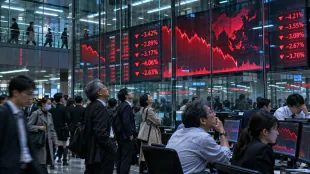
Asian Markets Slide as AI Concerns Hit Chip Stocks
-
 Four Mainland Universities Join Scheme for Hong Kong DSE Admissions from 2027
-
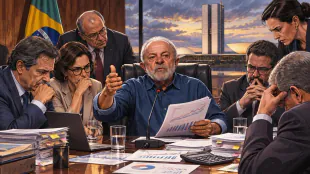
Brazil Faces Debt and Inflation Test as Lula Prepares Fourth Term
-
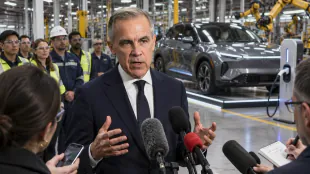 Canada Signals Openness to Chinese Automakers if US Trade Talks Fail
-
Chinese Drug Ribupatide Shows Greater Weight Loss Than Wegovy in Clinical Trial

-
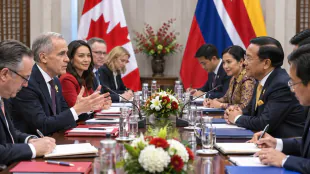 Canada Expands Asian Trade Push as US Negotiations Resume
-
US Mortgage Rate Falls for Fourth Week but Remains Above 7%

-
 US Jobless Claims Rise to 200,000 but Layoffs Remain Historically Low
-
Italy Raises 2026 Growth View but Warns Energy Will Keep Inflation High

-
 Euro-Area Growth Slows to 0.4% While Employment Stalls
-
UK Economy Grows 0.7% in Third Quarter as Services Lead Expansion
-
 US Wholesale Inflation Eases Monthly but Hits a Four-Year Annual High
-
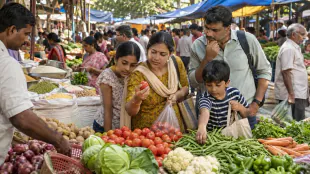
India's Retail Inflation Reaches 6.09% as Food Prices Accelerate
-
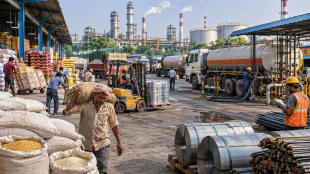 India's Wholesale Inflation Jumps to 12.29% as Fuel Costs Surge
-
China's October Activity Data Reveal a Weak Start to the Fourth Quarter

-
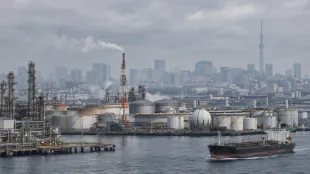 Japan's Economy Edges Into Contraction as Costly Oil Weighs on Demand
-
Thomas Tuchel Refuses to Name England Number One Goalkeeper After James Trafford's Display

-
 Helen Haines Discharged from Hospital Following Attack That Cost Her Both Legs
-
Qatar's Amir and Venezuelan Acting President Discuss Energy Cooperation

-
 River Medway Reveals Financial Struggles Before 'Drag Race' Windfall
-
Russell Brand’s Wife Reads Prison Letter Denying Guilt; Fellow Inmate Questions Faith

-
 OBI Pharma Signs Collaboration and License Agreement with Novartis
COP29 draft deal proposes rich nations give $250 bn in climate finance
A new draft deal at UN climate talks Friday proposes rich nations commit $250 billion a year to help poorer nations combat global warming in a bid to break the deadlocked negotiations.
With the gathering scheduled to end Friday, delegates from nearly 200 nations had eagerly awaited COP29 hosts Azerbaijan's new proposal after two weeks of fraught bargaining.
The text sets an ambitious overall target to raise a total of $1.3 trillion per year by 2035, with the money from rich governments at the core of funding that would be coupled with private-sector investments.
It is the first time concrete numbers were formally proposed at talks dominated by divisions over how to boost assistance for developing nations to cut emissions and adapt to climate change.
The existing pledge committed wealthy nations most responsible historically for global warming to provide $100 billion a year in climate finance.
An influential negotiation bloc of 134 developing nations including China has demanded at least five times that figure from developed countries.
Major contributors such as the European Union had said such demands were politically unrealistic and that private-sector money must play a large part.
The EU has resisted pressure to put its own figure on the table and wants newly wealthy emerging economies like China, the world's largest emitter, to contribute to the overall goal.
"Inadequate, divorced from the reality of climate impacts and outrageously below the needs of developing countries, we've at least got a number now," Jasper Inventor, head of Greenpeace's COP29 delegation, said in one of the first reactions from activists.
Many countries have also pushed at COP29 for a redoubling of efforts to cut planet-heating emissions, something opposed by the Arab Group of nations which does not want fossil fuels singled out.
COP29's Azerbaijani presidency, under pressure to reach a compromise, said earlier Friday it had conducted "an extensive and inclusive consultation process" on the new text.
Azerbaijan, an authoritarian state and major oil and gas exporter, has been accused of lacking the experience and bandwidth to steer such large and complex negotiations.
"This is the worst COP in recent memory," Mohamed Adow, speaking for the Climate Action Network, said at a press conference before the text's release, adding that "no deal is better than a bad deal" for developing countries.
Sindra Sharma from the Pacific Islands Climate Action Network, an activist coalition, expressed "a complete sense of frustration" at the talks.
"I've never seen a presidency like this, I've never seen a process like this," she said.
The European Union had also called for stronger leadership from Azerbaijan, whose leader, Ilham Aliyev, opened the conference by railing against Western nations and hailing fossil fuels as a "gift of God".
- Fossil fuel fight -
Apart from splits over money, many nations fear the climate deal in negotiation does not reflect the urgency on phasing out coal, oil and gas -- the main drivers of global warming.
Last year's COP28 summit made a landmark call on the world to transition away from fossil fuels after long negotiations in Dubai.
But a Saudi official speaking on behalf of the Arab Group said the bloc would "not accept any text that targets any specific sectors, including fossil fuel" in Baku.
The renewed discussion on fossil fuels comes after the US election victory of Donald Trump, who is again expected to withdraw the world's largest economy from climate diplomacy and ramp up oil and gas extraction.
Other Western nations have also seen a shift in political mood with a backlash against foreign aid and the green agenda.
The annual UN-led climate talks come on what is already poised to be the hottest year in history and as disasters rise around the world.
Just since the start of COP29 on November 11, deadly storms have battered the Philippines and Honduras, Ecuador has declared a national emergency due to drought and forest fires and Spain has been reeling after historic floods.
bur-np-lth-sct/fg
M.Odermatt--BTB