
-
 Alex Bodi and Prof. Dr Dieter Lazik sign a contract for ALPHA WHEY and BODI Energy Drink
-
Three talking points from the Azerbaijan Grand Prix

-
 Swiss reject plan to toughen neutrality: projection
-
Turkey ex-minister resigns as investment fund crisis grows
-
 UK police call in bomb disposal team near air force base
-
Pope urges French bishops to 'persevere' against clerical sex abuse

-
 Bangkok floods send thousands into shelters after days of rain
-
Decorated Indian badminton star calls Japan Asian Games 'very sad'

-
 Assefa just misses women's world record at Berlin Marathon
-
Asian Games chiefs say lessons learned over accommodation

-
 Dramatic winners Zimbabwe to end five-year exile by tackling DR Congo
-
UK's PM urges 'calm' as thousands seek to thwart flashpoint N.Ireland parade

-
 Pope to meet victims of clerical sex abuse on France trip
-
Thousands seek to thwart disputed N.Ireland flashpoint parade

-
 How young is too young as child prodigies win big at Asian Games
-
Swiss vote on what it means to be neutral

-
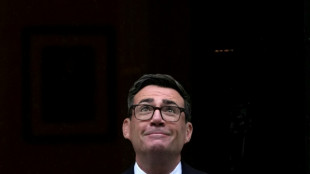 UK Labour party meets buoyed by Burnham but eager for concrete plans
-
Pope to meet with victims of clerical sex abuse during France trip

-
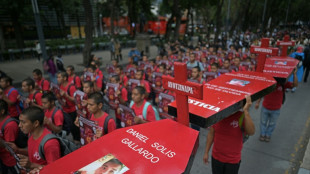 Thousands protest ahead of Mexican president's report on missing students
-
Iran stands firm on Hormuz plan after US rejection
-
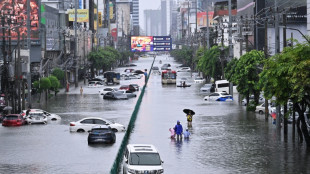 Bangkok floods force thousands into shelters
-
Madrid protest camp grows after eviction outrage

-
 AI startup urges optimism from Europe despite safety fears
-
Italy winemakers hail bumper harvest but cut output

-
 'Godlike, invincible': Japan hails 11-year-old Games history-maker
-
Kyiv shoppers feel the pinch from Russian strikes

-
 Nepal's hydropower ambitions face climate reality check
-
Japanese anime actor fights TikTok over AI voice cloning

-
 Power cuts, rubble: millions come home to find Sudan's capital unlivable
-
Curtain falls on the romance of India's single-screen cinemas

-
 Internationals keep Presidents Cup lead with late fightbacks
-
Smells like teen spirit as US thrash Peru 4-1

-
 Tuchel to 'keep pushing' England to reach Spain's level
-
Cavy chaos: Hundreds attend New Zealand's biggest guinea pig show

-
 Alcaraz saves match points to keep Europe ahead in Laver Cup
-
Venezuela releases more political prisoners after opposition talks
-
 Spain success driven by hunger to improve, says De La Fuente
-
England's best 'for a long time' despite Spain defeat, says Kane

-
 Lyon collapse at Stade Francais to suffer first Top 14 loss
-
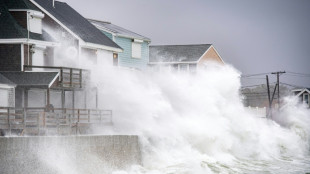
Powerful storm pummels northeast US with rain, high winds
-
 Oyarzabal and Spain sink England again as Modric shines for Croatia
-
Filmmaker Mike Leigh wins top prize at Spain festival with 'last film'

-
 Housing protesters camp in central Madrid after mass demonstration
-
Spain beat England in Nations League to extend unbeaten run

-
 Louise Trotter expands her palette at Bottega Veneta
-
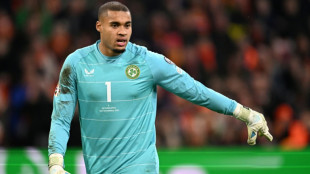
Ireland squad vote to play Israel tie despite Gaza unease
-
 Pope prays at Lourdes after huge Paris mass
-
Gutsy Vollering wins cycling road race world title

-
 USA trims International lead after Presidents Cup four-balls
-
Vollering wins cycling road race world title

Wealthy nations offer $250 bn on climate but pressed for more
Wealthy nations on Friday offered $250 billion a year to help poorer nations hit hardest by global warming but faced immediate calls led by Africa to give more as UN climate negotiations extended into overtime.
At the COP29 talks in Azerbaijan, developing nations are demanding a bigger commitment from historic polluters most responsible for warming, but rich countries insist that massive financial pledges are not politically realistic.
In a draft text revealed hours before two weeks of fraught bargaining were set to end, Azerbaijan said wealthy nations had committed to providing $250 billion a year by 2035.
The text also sets an ambitious overall target to raise at least $1.3 trillion per year by 2035 from not only developed countries but the private sector.
But a red line for many climate-imperilled nations at COP29 had been securing a new commitment from developed nations well above their existing pledge of $100 billion a year.
The new target "is totally unacceptable and inadequate", said Ali Mohamed, chair of the African Group of Negotiators.
"$250 billion will lead to unacceptable loss of life in Africa and around the world, and imperils the future of our world," he said.
The Alliance of Small Island Developing States, for which climate change is an existential threat, said the target showed "contempt for our vulnerable people".
But the United States signalled it was not looking to negotiate a higher figure. President-elect Donald Trump takes office in two months and is expected to pull the world's largest economy again out of climate diplomacy.
"It has been a significant lift over the past decade to meet the prior, smaller goal. $250 billion will require even more ambition and extraordinary reach," said a senior US official, whose team in Baku comes from outgoing President Joe Biden's administration.
Germany, a longtime leader on climate where elections are due next year, said any final deal was inevitable to include debt restructuring and other financial tools to raise the money, not just government money.
Europe wants to "live up to its responsibilities, but also in a way that it doesn't make promises it can't live up to", German Foreign Minister Annalena Baerbock told reporters.
COP29 lead negotiator Yalchin Rafiyev said negotiations would press on and that $250 billion "doesn't correspond to our fair and ambitious goal".
- Less than needed -
Activists point to studies that show that far more is needed for poor countries, which bear little responsibility but are disproportionately affected by record-high temperatures and rising disasters.
Jasper Inventor from Greenpeace called the $250 billion offer "inadequate, divorced from the reality of climate impacts and outrageously below the needs of developing countries".
But Avinash Persaud, special advisor on climate change to the president of the Inter-American Development Bank, said that the offer showed the talks were "within sight of a landing zone" for the first time.
"There is no deal to come out of Baku that will not leave a bad taste in everyone's mouth," said the former advisor to Barbados Prime Minister Mia Mottley.
The United States and European Union have wanted newly wealthy emerging economies like China -- the world's largest emitter -- to chip into the pot.
China, which remains classified as a developing nation under the UN framework, provides climate assistance but wants to keep doing so on its own voluntary terms.
Apart from splits over money, many nations fear the climate deal in negotiation does not reflect the urgency on phasing out coal, oil and gas -- the main drivers of global warming.
Last year's COP28 summit in Dubai made a landmark call on the world to transition away from fossil fuels after long negotiations in Dubai.
But a Saudi official speaking on behalf of the Arab Group said the bloc would "not accept any text that targets any specific sectors, including fossil fuel" in Baku.
Top German diplomat Baerbock singled out Saudi Arabia and warned that its goal was "turning back the clock".
- Criticism of Azerbaijan -
Azerbaijan, an authoritarian state that relies on oil and gas exports, has been accused of lacking the experience and bandwidth to steer such large and complex negotiations.
"This is the worst COP in recent memory," said Mohamed Adow of the Climate Action Network.
The EU had also called for stronger leadership from Azerbaijan, whose leader, Ilham Aliyev, opened the conference by railing against Western nations and hailing fossil fuels as a "gift of God".
The annual UN-led climate talks come on what is already poised to be the hottest year in history and as disasters rise around the world.
Just since the start of COP29 on November 11, deadly storms have battered the Philippines and Honduras, while Ecuador has declared a national emergency due to drought and forest fires and Spain has been reeling after historic floods.
bur-np-lth-sct/giv
F.Müller--BTB