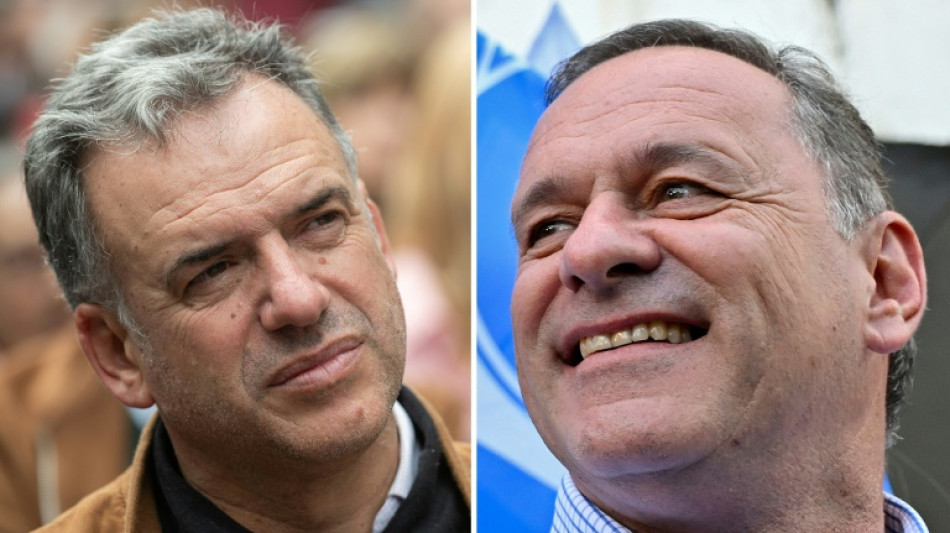
Uruguayans head to polls with left hoping for comeback / Photo: © AFP

 Alex Bodi and Prof. Dr Dieter Lazik sign a contract for ALPHA WHEY and BODI Energy Drink

 Swiss reject plan to toughen neutrality: projection

 UK police call in bomb disposal team near air force base
 Bangkok floods send thousands into shelters after days of rain

 Assefa just misses women's world record at Berlin Marathon

 Dramatic winners Zimbabwe to end five-year exile by tackling DR Congo

 Pope to meet victims of clerical sex abuse on France trip

 How young is too young as child prodigies win big at Asian Games

 UK Labour party meets buoyed by Burnham but eager for concrete plans
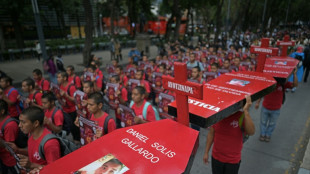 Thousands protest ahead of Mexican president's report on missing students

 Bangkok floods force thousands into shelters
 AI startup urges optimism from Europe despite safety fears

 'Godlike, invincible': Japan hails 11-year-old Games history-maker

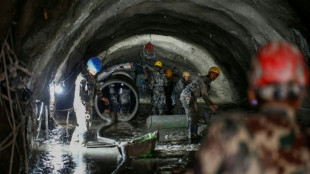 Nepal's hydropower ambitions face climate reality check

 Power cuts, rubble: millions come home to find Sudan's capital unlivable

 Internationals keep Presidents Cup lead with late fightbacks

 Tuchel to 'keep pushing' England to reach Spain's level

 Alcaraz saves match points to keep Europe ahead in Laver Cup
 Spain success driven by hunger to improve, says De La Fuente

 Lyon collapse at Stade Francais to suffer first Top 14 loss
 Oyarzabal and Spain sink England again as Modric shines for Croatia
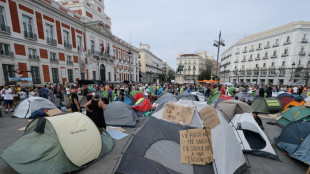
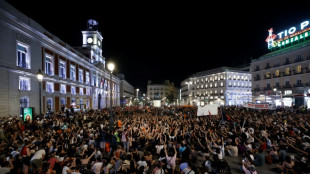
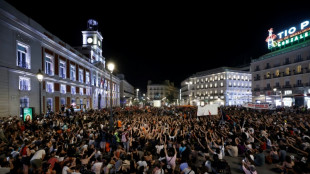 Housing protesters camp in central Madrid after mass demonstration

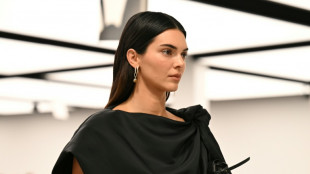 Louise Trotter expands her palette at Bottega Veneta

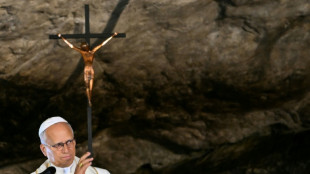
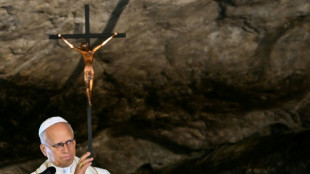 Pope prays at Lourdes after huge Paris mass

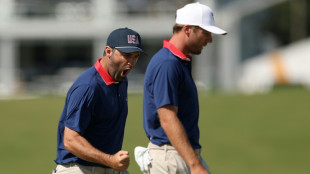 USA trims International lead after Presidents Cup four-balls

Uruguayans go to the polls Sunday, with the leftist alliance of celebrated ex-president Jose "Pepe" Mujica hoping to reclaim the country's top job five years after a right-wing victory driven by concerns over crime and taxes.
Former history teacher Yamandu Orsi of the leftist Frente Amplio (Broad Front) will go head-to-head with ex-veterinarian Alvaro Delgado of the National Party, a member of outgoing President Luis Lacalle Pou's center-right Republican Coalition.
Orsi, 57, is seen as the understudy of 89-year-old Mujica, a former guerrilla lionized as "the world's poorest president" during his 2010-2015 rule because of his modest lifestyle.
Orsi had garnered 43.9 percent of the October 27 first-round vote -- short of the 50-percent cutoff to avoid a runoff but ahead of the 26.7 percent of ballots cast for Delgado, 55.
The pair came out on top of a crowded field of 11 candidates seeking to replace Lacalle Pou, who has a high approval rating but is barred constitutionally from seeking a second consecutive term.
Polls point to a tight race Sunday, with Orsi only marginally ahead in stated voter intention in South America's second-smallest country.
Other parties within the Republican Coalition have thrown their support behind Delgado since the first round, boosting his numbers.
"Conditions are in place for us to take charge... to make the changes the country needs," Orsi told a closing campaign rally Wednesday.
Delgado, for his part, told supporters Uruguay was better off today thanks to the Republican Coalition in charge, adding: "I am prepared" to lead.
- Liberal mold-breaker -
A victory for Orsi would see Uruguay swing left again after five years of center-right rule in the country of 3.4 million inhabitants.
The Frente Amplio coalition broke a decades-long conservative stranglehold with an election victory in 2005, and held the presidency for three straight terms.
It was voted out in 2020 on the back of concerns about rising crime blamed on high taxes and a surge in cocaine trafficking through the port of Montevideo.
Polling numbers show perceived insecurity remains Uruguayans' top concern five years later.
"For workers, these past five years have not been good at all. I'm on the street all day, and what worries me the most is insecurity," Orsi voter Gustavo Maya, a 34-year-old vendor of gas cylinders told AFP.
"I see many robberies, more and more homicides, and few police officers. That's what worries me the most."
For Delgado backer and stonemason William Leal, 38, the center-right is the best option for workers.
"I want this government to continue because in the construction sector there was much more work than in previous governments," he said.
The first round of voting was accompanied by a referendum in which Uruguayans were asked whether police should be allowed to carry out nighttime raids on homes as part of the fight against drug trafficking. The initiative failed.
Voting is compulsory in Uruguay, one of Latin America's most stable democracies which boasts comparatively high per-capita income and low poverty levels.
During the heyday of leftist rule, Uruguay legalized abortion and same-sex marriage, became the first Latin American country to ban smoking in public places and the world's first nation, in 2013, to allow recreational cannabis use.
F.Müller--BTB