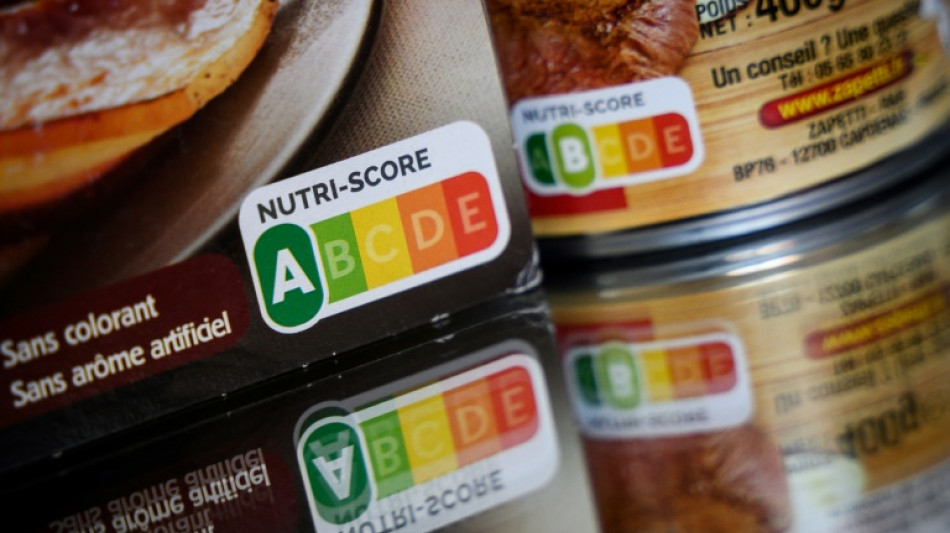
EU grocery shoppers 'fooled' by 'maze' of food labels: audit / Photo: © AFP

 Kansas City Fed Chief Says Inflation Is Still Running Too Hot

 Asian Markets Slide as AI Concerns Hit Chip Stocks

 Brazil Faces Debt and Inflation Test as Lula Prepares Fourth Term
 Chinese Drug Ribupatide Shows Greater Weight Loss Than Wegovy in Clinical Trial

 US Mortgage Rate Falls for Fourth Week but Remains Above 7%

 Italy Raises 2026 Growth View but Warns Energy Will Keep Inflation High

 UK Economy Grows 0.7% in Third Quarter as Services Lead Expansion
 India's Retail Inflation Reaches 6.09% as Food Prices Accelerate

 China's October Activity Data Reveal a Weak Start to the Fourth Quarter

 Thomas Tuchel Refuses to Name England Number One Goalkeeper After James Trafford's Display

 Qatar's Amir and Venezuelan Acting President Discuss Energy Cooperation

 Russell Brand’s Wife Reads Prison Letter Denying Guilt; Fellow Inmate Questions Faith

 Alouettes and Elks Set for 113th Grey Cup Showdown
European grocery shoppers are at risk of "being fooled" by a proliferation of confusing and sometimes misleading food labels, EU auditors said Monday, calling on the bloc to improve current rules.
Labelling in the EU is meant to give consumers accurate and honest information on the contents of their food so they can make informed decisions about what they are buying.
But due to gaps in EU rules consumers can easily get "lost in a maze" of puzzling claims, according to the European Court of Auditors (ECA).
"Instead of bringing clarity, food labels too often create confusion; there are hundreds of different schemes, logos and claims that people need to decipher," said Keit Pentus-Rosimannus, an ECA auditor.
"Companies can be very creative in what they put on packaging, and EU rules have not caught up with a constantly evolving market, leaving some 450 million European consumers vulnerable to intentionally or unintentionally misleading messages."
EU rules require producers to list ingredients, allergens and other mandatory information on food packages.
Firms can then add voluntary statements including nutrition and health claims -- such as "source of Omega-3 fatty acids" or "calcium is necessary to maintain healthy teeth".
Here the picture gets muddier, according to the 27-nation bloc's spending watchdog, as current rules allow businesses to zoom in on the more flattering features of their products and gloss over other aspects.
An energy bar with lots of sugar can for example be branded simply as "high in protein" and a fatty orange cookie as a "source of fibre", according to the report.
- 'Massive impact' -
Even when such claims are false, checks and penalties are weak and almost non-existent for online food sales, it said.
Health claims related to plant-substances or "botanicals" are not yet regulated at EU level, which leaves consumers potentially exposed to assertions not supported by science, the auditors added.
Similarly, there is no EU definition of what "vegan" and "vegetarian" mean, although private certification schemes exist.
Finally, different "front-of-pack nutrition labelling" schemes such as Nutri-Score and Keyhole, which aim at helping shoppers identify healthier food options, are in use in different countries, adding to the confusion, the ECA said.
European consumer rights group Foodwatch is pushing for Nutri-Score, currently used in France, Germany and a handful other countries, to be adopted across the bloc.
"Food labels may often be small in size, but they are of huge importance: They shape eating habits of millions of people and therefore have a massive impact on the health of European consumers," said Suzy Sumner, who heads the group's Brussels office.
The ECA urged the European Commission to take a number of steps including addressing the gaps in the EU legal framework, and strengthening member states' checks on voluntary labels and online retail.
M.Ouellet--BTB

