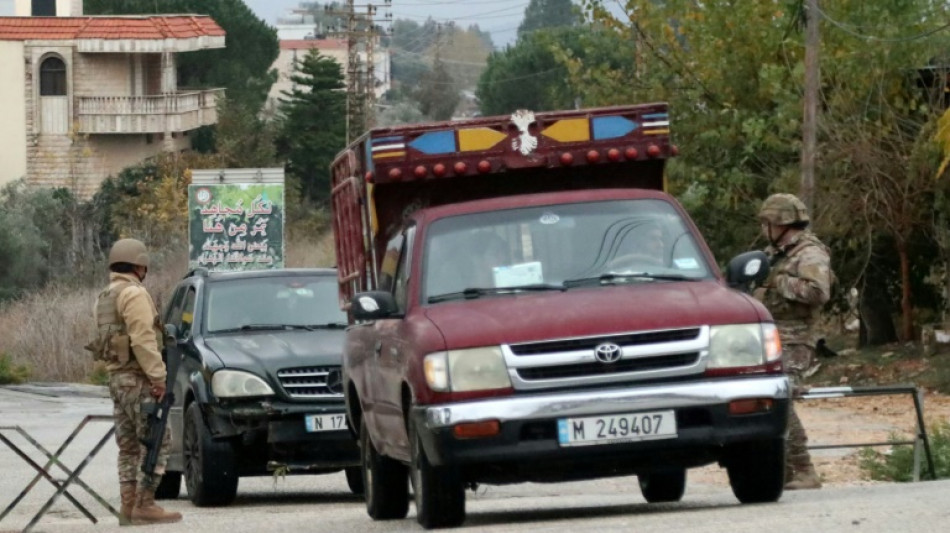
Israel conducts first strike on Lebanon since ceasefire / Photo: © AFP

 Kansas City Fed Chief Says Inflation Is Still Running Too Hot

 Asian Markets Slide as AI Concerns Hit Chip Stocks

 Brazil Faces Debt and Inflation Test as Lula Prepares Fourth Term

 Chinese Drug Ribupatide Shows Greater Weight Loss Than Wegovy in Clinical Trial
 US Mortgage Rate Falls for Fourth Week but Remains Above 7%

 Italy Raises 2026 Growth View but Warns Energy Will Keep Inflation High
 UK Economy Grows 0.7% in Third Quarter as Services Lead Expansion

 India's Retail Inflation Reaches 6.09% as Food Prices Accelerate

 China's October Activity Data Reveal a Weak Start to the Fourth Quarter
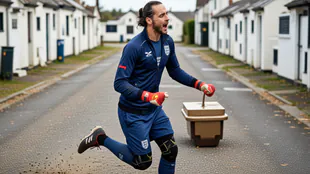 Thomas Tuchel Refuses to Name England Number One Goalkeeper After James Trafford's Display

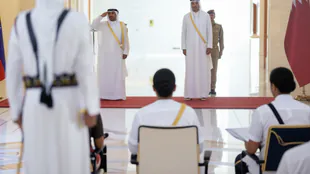 Qatar's Amir and Venezuelan Acting President Discuss Energy Cooperation

 Russell Brand’s Wife Reads Prison Letter Denying Guilt; Fellow Inmate Questions Faith
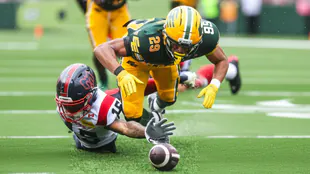 Alouettes and Elks Set for 113th Grey Cup Showdown
Israel said it conducted an air strike on a Hezbollah weapons facility on Thursday, the first since a ceasefire in the war in Lebanon took effect.
The truce, which came into force on Wednesday, seeks to end a war that has killed thousands in Lebanon and sparked mass displacements in both Lebanon and Israel.
The war began with Hezbollah firing into Israel in support of its Palestinian ally Hamas and its unprecedented October 7 attack on Israel.
Israel shifted its focus from Gaza to Lebanon in September to secure its northern border from Hezbollah attacks, dealing the Iran-backed Shiite Muslim movement a series of heavy blows.
Lebanon deployed troops and tanks on Thursday across the country's south, where Hezbollah has long held sway, where only the army and UN peacekeepers are to maintain a presence under the terms of the ceasefire.
"A short while ago, terrorist activity was identified in a facility used by Hezbollah to store mid-range rockets in southern Lebanon," the Israeli military said, adding that "the threat was thwarted" by its air force.
Nazih Eid, mayor of Baysariyeh in south Lebanon, told AFP a strike had hit an area of his town.
"They targeted a forested area not accessible to civilians," he said.
The deal to end the war in Lebanon was brokered by Israel's top ally the United States and France.
Under the agreement, Israeli troops will hold their positions but "a 60-day period will commence in which the Lebanese military and security forces will begin their deployment towards the south", a US official told reporters on condition of anonymity.
Then, Israel should begin a phased withdrawal without a vacuum forming that Hezbollah or others could rush into, the official said.
- Two wounded -
The Israeli and Lebanese militaries have both called on residents of frontline villages to avoid returning home immediately.
Earlier on Thursday, Israeli fire wounded two people in a border village, according to Lebanon's official National News Agency.
The Israeli army said that "over the past hour, several suspects were identified arriving with vehicles to a number of areas in southern Lebanon, breaching the conditions of the ceasefire".
The army "opened fire toward them", the statement said, adding that the Israeli military "remains in southern Lebanon and will actively enforce violations of the ceasefire agreement".
For the most part, however, the ceasefire appeared to be holding.
A Lebanese army source said its forces were "conducting patrols and setting up checkpoints" south of the Litani River without advancing into areas where Israeli forces were still present.
The Israeli army on Thursday announced a nighttime curfew for areas south of the river, which are located near the border.
- Devastation -
While there was joy around Lebanon that the war has ended, the country faces a long recovery.
Tens of thousands of Lebanese who fled their homes during the war have headed back to their towns and villages, only to find them devastated.
"Despite all the destruction and the sorrow, we are happy to be back," said Umm Mohammed Bzeih, a widow who fled the southern village of Zibqin with her four children two months ago.
"I feel as if our souls have returned," she said, visibly exhausted as she swept up the shattered glass and rubble that carpeted the floor.
In the border village of Qlayaa, residents threw rice and flowers to celebrate the arrival of Lebanese soldiers.
The majority-Christian village is nestled in an area that is home mostly to Shiite Muslim communities.
Lebanon is deeply divided along political and sectarian lines, with Hezbollah long dominant among the Shiite population.
"We only want the Lebanese army," chanted residents of Qlayaa, as they clapped and cheered for the troops and waved the Lebanese flag.
- Crisis -
Even before the conflict, Lebanon had been wracked for years by political and economic crises, with World Bank data from earlier this year indicating poverty had tripled in a decade.
On Thursday, there was a glimmer of hope as the official National News Agency reported parliament would meet to elect a president on January 9, following a two-year vacuum.
Hezbollah, the only armed group that did not surrender its weapons following the 1975-90 civil war, built its popularity by providing health and education services.
It has maintained a formidable arsenal, supplied chiefly by Iran, which is widely regarded as more powerful than that of the Lebanese army.
Hezbollah proclaimed on Wednesday that it had achieved "victory" in the war against Israel, after the truce took effect.
It also said that its fighters would "remain in total readiness to deal with the Israeli enemy's ambitions and its attacks".
But the war saw Israel deal Hezbollah a string of unprecedented blows, key among them the killing in September of its longtime leader Hassan Nasrallah.
Hezbollah lawmaker Hassan Fadlallah told AFP his group was cooperating on the army's deployment in the south.
There is "full cooperation" with the Lebanese state in strengthening the army's deployment, he said, adding the group had "no visible weapons or bases" but "nobody can make residents leave their villages".
- Scepticism -
In northern Israel, which has come under steady attack from Hezbollah for more than a year, there was hope tinged with scepticism over whether the truce might last.
Nissim Ravivo, a 70-year-old in the coastal city of Nahariya near the border with Lebanon, voiced disappointment.
"It's a shame, we should have continued for at least another two months and finished the job," he said. "We still don't feel safe and we are not happy about it."
On the Israeli side, the hostilities with Hezbollah killed at least 82 soldiers and 47 civilians, authorities there say.
I.Meyer--BTB