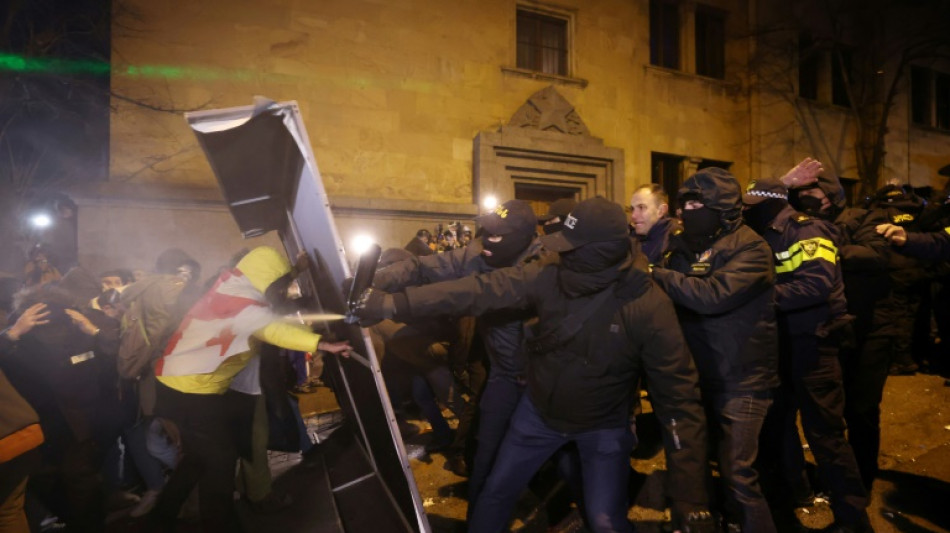
Thousands rally in Georgia after violent police crackdown on pro-EU protesters / Photo: © AFP

 Brazil Faces Debt and Inflation Test as Lula Prepares Fourth Term
 Chinese Drug Ribupatide Shows Greater Weight Loss Than Wegovy in Clinical Trial
 US Mortgage Rate Falls for Fourth Week but Remains Above 7%

 Italy Raises 2026 Growth View but Warns Energy Will Keep Inflation High
 UK Economy Grows 0.7% in Third Quarter as Services Lead Expansion
 India's Retail Inflation Reaches 6.09% as Food Prices Accelerate
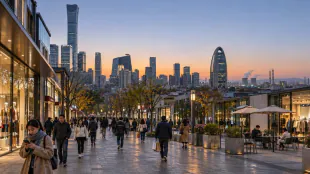 China's October Activity Data Reveal a Weak Start to the Fourth Quarter
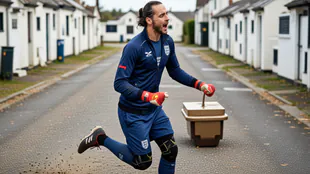 Thomas Tuchel Refuses to Name England Number One Goalkeeper After James Trafford's Display
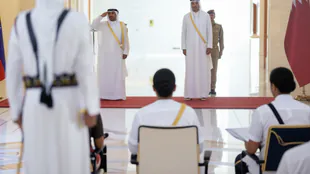 Qatar's Amir and Venezuelan Acting President Discuss Energy Cooperation
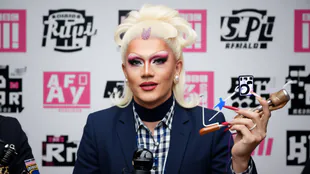
 Russell Brand’s Wife Reads Prison Letter Denying Guilt; Fellow Inmate Questions Faith
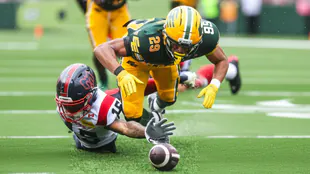 Alouettes and Elks Set for 113th Grey Cup Showdown
Thousands of Georgians rallied for a second day running on Friday after police arrested dozens in a violent overnight crackdown on protests against the government's decision to delay EU membership talks.
The Black Sea nation has been rocked by turmoil since the ruling Georgian Dream party declared victory in October parliamentary elections that the pro-EU opposition decried as falsified.
Amid a heavy police presence, several thousand protesters gathered outside the Georgian parliament building on Friday evening, blocking traffic on Tbilisi's main avenue.
"Georgian Dream's self-proclaimed government is doing everything it can to destroy Georgia's chances of joining the EU," said one demonstrator, 39-year-old schoolteacher Laura Kekelidze.
"They know their authoritarian rule is incompatible with EU membership," she told AFP. "But Georgians belong in Europe, and that's why we are out here in the streets today."
On Thursday night and Friday morning, riot police fired rubber bullets, tear gas and water cannons to disperse the gathering outside parliament, beating peaceful protesters and journalists, an AFP reporter witnessed.
The interior ministry said 32 of its staff were injured and "43 individuals were detained by law enforcement for disobeying lawful police orders and for petty hooliganism".
- 'Please Moscow' -
Thousands of people took to the streets Thursday after Prime Minister Irakli Kobakhidze of the ruling Georgian Dream party said his government will not seek to open EU accession talks with Brussels until 2028.
On Friday, he accused the opposition and the EU ambassador to Georgia of distorting his statement and insisted that EU membership "by 2030" remains his "top priority."
The opposition has accused Georgian Dream of steering Tbilisi away from its long-held dream of joining the bloc and gravitating towards Russia.
Two politicians from the opposition Coalition for Change, Elene Khoshtaria and Nana Malashkhia, were reportedly injured during Thursday's protests.
Khoshtaria sustained a broken arm, while Malashkhia suffered a broken nose, the coalition said.
Prominent poet Zviad Ratiani was among those arrested, the PEN writers' association in Georgia said, demanding his immediate release. His lawyer told journalists that he was beaten in custody.
The Council of Europe condemned what it described as the "brutal repression" of protesters, urging Georgia to remain "faithful to European values".
Ukraine and Poland said Friday they were "disappointed" by Tbilisi's decision to pause EU accession talks, with Kyiv accusing the Georgian government of trying to "please Moscow".
British foreign office minister Stephen Doughty said he was "deeply concerned by reports of excessive use of force by Georgian police against peaceful protestors exercising legitimate democratic rights."
- Post-election crisis -
Opposition lawmakers are boycotting the new parliament, while Georgia's pro-EU president, Salome Zurabishvili, has sought to annul the election results through the country's constitutional court.
The prime minister's announcement to delay EU accession came hours after the European Parliament adopted a non-binding resolution rejecting the results of Georgia's October 26 elections, alleging "significant irregularities".
The resolution called for a new vote within a year under international supervision and for sanctions to be imposed on top Georgian officials, including Kobakhidze.
On Thursday, Georgian Dream MPs voted unanimously for Kobakhidze to continue as prime minister.
But constitutional law experts say both Georgian parliament and the government are facing a serious legitimacy crisis.
One author of Georgia's constitution, Vakhtang Khmaladze, told AFP that any decisions made by the new parliament -- including Kobakhidze's nomination -- are invalid, because it approved its own credentials in violation of a legal requirement to await a court ruling on Zurabishvili's bid to annul the election results.
On Wednesday, the ruling party nominated far-right politician and former international footballer Mikheil Kavelashvili for the largely ceremonial post of president, further ratcheting up tensions.
The former Soviet country officially gained EU candidate status in December 2023, an aspiration that is supported by 80 percent of the population, according to polling.
But earlier this year Brussels froze Georgia's accession process, citing the need for Tbilisi to address what it says is democratic backsliding.
O.Lorenz--BTB