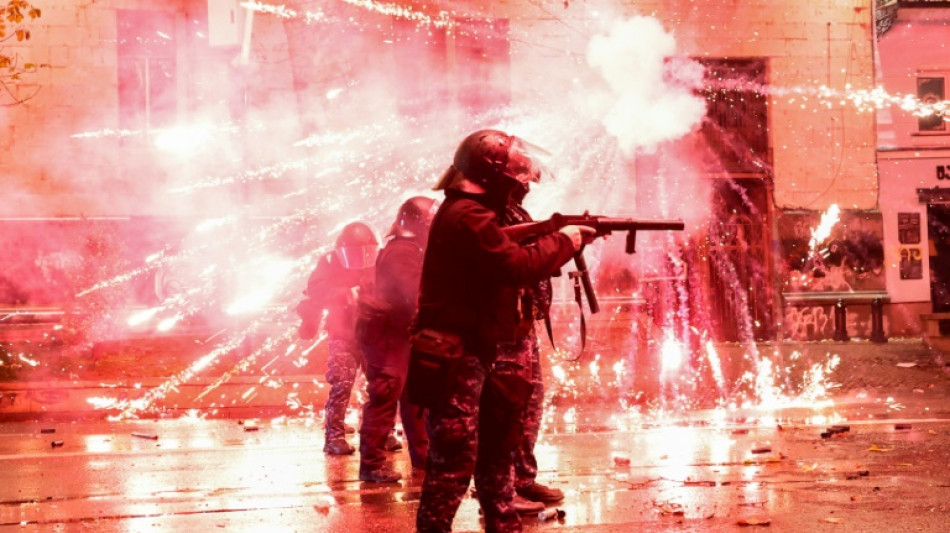
Georgia pro-EU protesters 'standing firm', president says / Photo: © AFP

 Brazil Faces Debt and Inflation Test as Lula Prepares Fourth Term
 Chinese Drug Ribupatide Shows Greater Weight Loss Than Wegovy in Clinical Trial
 US Mortgage Rate Falls for Fourth Week but Remains Above 7%

 Italy Raises 2026 Growth View but Warns Energy Will Keep Inflation High
 UK Economy Grows 0.7% in Third Quarter as Services Lead Expansion

 India's Retail Inflation Reaches 6.09% as Food Prices Accelerate
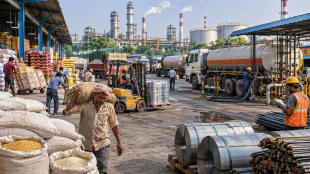
 China's October Activity Data Reveal a Weak Start to the Fourth Quarter
 Thomas Tuchel Refuses to Name England Number One Goalkeeper After James Trafford's Display
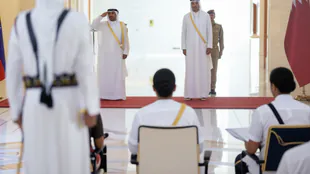 Qatar's Amir and Venezuelan Acting President Discuss Energy Cooperation
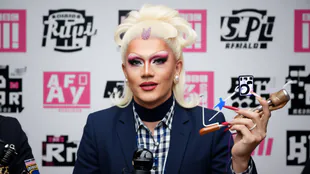
 Russell Brand’s Wife Reads Prison Letter Denying Guilt; Fellow Inmate Questions Faith
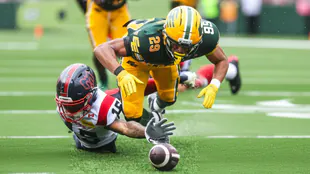 Alouettes and Elks Set for 113th Grey Cup Showdown
Georgia's president said Monday that mass pro-EU protests involving tens of thousands of people showed no sign of stopping after police fired water cannon and tear gas on a fourth night of demonstrations.
The Black Sea nation has been rocked by turmoil since the governing Georgian Dream party claimed victory in October 26 parliamentary elections that the pro-European opposition said were fraudulent.
"Another powerful night of Georgians standing firm to defend their constitution and their European choice," pro-European President Salome Zurabishvili posted on X on Monday.
"The determination in the streets shows no signs of stopping!" she wrote.
The turmoil deepened after Prime Minister Irakli Kobakhidze announced Thursday that Georgia was shelving accession talks with the European Union until 2028, sparking a wave of protests in the capital, Tbilisi, and other cities.
Kobakhidze further angered protesters Sunday by ruling out new parliamentary elections, saying "the formation of the new government based on the October 26 parliamentary elections has been completed".
The opposition is boycotting the new parliament, and Zurabishvili has asked the constitutional court to annul the election result, declaring the new legislature and government "illegitimate".
Critics accuse Georgian Dream, in power for more than a decade, of having steered the country away from the European Union in recent years and of moving closer to Russia, an accusation it denies.
On Sunday evening, tens of thousands rallied outside parliament waving European and Georgian flags, AFP reporters saw.
Some demonstrators threw fireworks and stones at riot police, while others banged on the metal door blocking parliament's entrance or built barricades from dustbins and set them ablaze.
Police fired water cannon but were unable to disperse the crowds.
Later during the night riot police moved in using tear gas and water cannon to disperse the crowds.
The interior ministry said around 150 demonstrators had been arrested in the latest protest wave, while the Georgian Young Lawyers' Association put the number at 200.
Police in some instances have chased protesters through the streets, beating them and firing rubber bullets and tear gas.
- 'Systematic beatings' -
Zurabishvili said Monday that those detained by police "have been subjected to systematic beatings between arrest and transport to already overcrowded detention facilities".
The "majority of the arrested protesters have injuries to their heads and faces, broken face bones, eye sockets, open wounds," she said.
The leader of the opposition United National Movement party, Levan Khabeishvili, told journalists that he was attacked by around 15 masked police officers attempting to detain him, but said he had managed to escape with the help of protesters.
The interior ministry said Monday that 21 police officers were injured.
Georgia's Public Broadcaster (GPB), widely accused of acting as a propaganda tool for the ruling party, on Sunday conceded to the protesters' demand to grant Zurabishvili airtime, which it had previously denied her.
Earlier last week, Georgian Dream nominated a far-right former football international, Mikheil Kavelashvili, to replace her in the largely ceremonial post of president.
But Zurabishvili told AFP in an exclusive interview on Saturday that she would not step down until the parliamentary elections are redone.
Brussels has not recognised the outcome of the October elections, and demanded an investigation into "serious electoral irregularities".
The European Parliament has called for a re-run and for sanctions against top Georgian officials, including Kobakhidze.
Constitutional law experts have questioned the legitimacy of the new parliament, citing the fact it approved its own credentials in violation of a requirement to await a court ruling on Zurabishvili's bid to annul the election results.
Hundreds of public servants, including from the ministries of foreign affairs, defence and education, as well as a number of judges, issued joint statements protesting Kobakhidze's decision to postpone EU accession talks.
More than 200 Georgian diplomats criticised the move as contradicting the constitution and leading the country "into international isolation".
A number of Georgia's ambassadors resigned, while around 100 schools and universities suspended academic activities in protest.
I.Meyer--BTB

