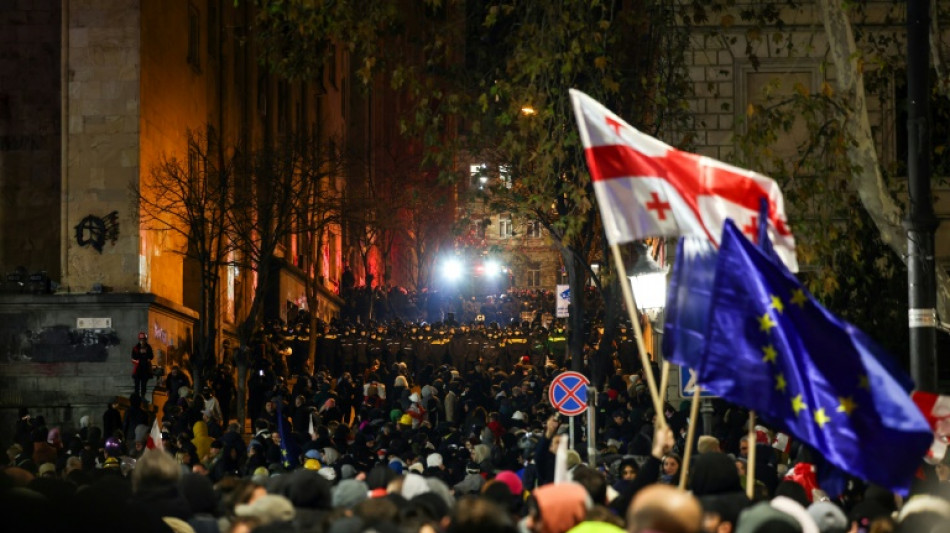
Thousands rally after Georgian PM vows 'no negotiations' with pro-EU opposition / Photo: © AFP

 Brazil Faces Debt and Inflation Test as Lula Prepares Fourth Term
 Chinese Drug Ribupatide Shows Greater Weight Loss Than Wegovy in Clinical Trial
 US Mortgage Rate Falls for Fourth Week but Remains Above 7%

 Italy Raises 2026 Growth View but Warns Energy Will Keep Inflation High
 UK Economy Grows 0.7% in Third Quarter as Services Lead Expansion

 India's Retail Inflation Reaches 6.09% as Food Prices Accelerate
 China's October Activity Data Reveal a Weak Start to the Fourth Quarter
 Thomas Tuchel Refuses to Name England Number One Goalkeeper After James Trafford's Display
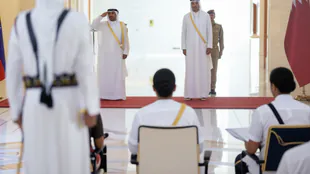 Qatar's Amir and Venezuelan Acting President Discuss Energy Cooperation
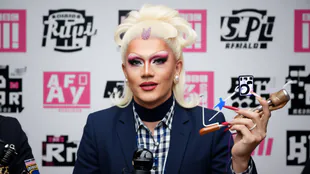
 Russell Brand’s Wife Reads Prison Letter Denying Guilt; Fellow Inmate Questions Faith
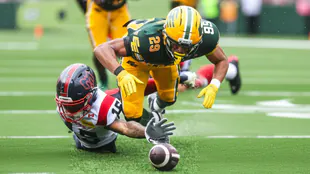 Alouettes and Elks Set for 113th Grey Cup Showdown
Georgian police fired tear gas to disperse thousands of pro-EU demonstrators on Monday, who had rallied in the centre of Tbilisi amid a deepening political crisis in the Black Sea nation.
The country's prime minister hours earlier had vowed "no negotiations" with the opposition, enraged by the ruling Georgian Dream party's decision to shelve EU accession talks after it claimed victory in an election they decried as fraudulent.
The Caucasus country of some 3.7 million has been rocked by turmoil since the October 26 parliamentary elections, with Georgian Dream facing accusations of betraying the country's long-standing ambition of joining the EU and of moving Tbilisi closer to Moscow.
Opposition lawmakers are boycotting the country's parliament and the pro-EU president is seeking to throw out the election results in the constitutional court.
Prime Minister Irakli Kobakhidze refused any potential negotiations with the opposition, as Monday marked five consecutive nights of clashes between protesters and riot police outside the parliament in central Tbilisi.
Thousands of demonstrators, waving Georgian and EU flags and shouting "Georgia", were on the streets again, including in the second city of Batumi, to protest the government's decision to suspend EU accession talks.
Police quickly moved in to disperse the crowds, firing tear gas at protestors, some of whom had launched fireworks at the police, who later regathered a few kilometres from the parliament building.
- 'No revolution' -
Kobakhidze claimed on Monday that the protests were "funded from abroad" and vowed "there will be no revolution in Georgia".
He also lambasted Western countries for failing to condemn "organised violence" by protesters, as they have criticised excessive force by Georgian police.
Those on the streets of Tbilisi said they were just as defiant about not backing down.
"We don't care about their orders, they are breaking the law every day," Giorgi, 35, told AFP.
"We have to stand here and protest against this dictatorship that is coming," he added.
An AFP reporter saw several dozen young protestors standing still in front of a wall of masked riot police, singing the Georgian national anthem.
Others took refuge in a church opposite the parliament while hundreds were hit by tear gas.
Rights groups and pro-EU President Salome Zurabishvili have slammed the police's forceful crackdown over the last week.
Zurabishvili, who backs what she calls a "resistance movement" against Georgian Dream, said Monday that those detained by police "have been subjected to systematic beatings".
The "majority of the arrested protesters have injuries to their heads and faces, broken face bones, eye sockets, open wounds", she said.
Authorities are accusing the protesters of turning violent and endangering public safety.
- 'Top priority' -
Dozens have been injured in the protests since Thursday including demonstrators, police and journalists, according to officials and activists, though the exact numbers were unclear.
Some protesters have launched fireworks towards police, started fires and thrown projectiles, while police have been seen charging into and forcibly detaining protesters.
Authorities have also deployed water cannon, tear gas and rubber bullets against the crowds.
More than 200 were detained during the first four nights of protest, the interior ministry said.
Tbilisi has seen numerous bouts of protest over the past two years, as the Georgian Dream party has pushed through legislation targeting civil society, independent media and the LGBTQ community.
Brussels has warned those policies are incompatible with membership of the bloc.
Georgia's constitution commits the country to seeking membership of the European Union, and opinion polls have regularly shown 80 percent of the country in favour.
On Monday the premier said the government would make "maximum efforts" to join the EU, despite ruling out talks on accession for the next four years. He said he had discussed EU integration with Georgian diplomats earlier that day.
Zurabishvili has asked the constitutional court to annul the election result, declaring the new parliament and government "illegitimate".
Critics accuse Georgian Dream, in power for more than a decade, of having steered the country away from the European Union and closer to Russia, an accusation it denies.
Russia on Monday defended Georgia's crackdown on protesters.
Kremlin spokesman Dmitry Peskov said Tbilisi is acting to "stabilise" the situation, accusing protesters of wanting to "stir up" unrest.
Peskov said he drew a "direct parallel" with Ukraine's 2014 "Maidan" protest, which ousted a Kremlin-backed leader who reneged on an EU partnership agreement.
K.Thomson--BTB

