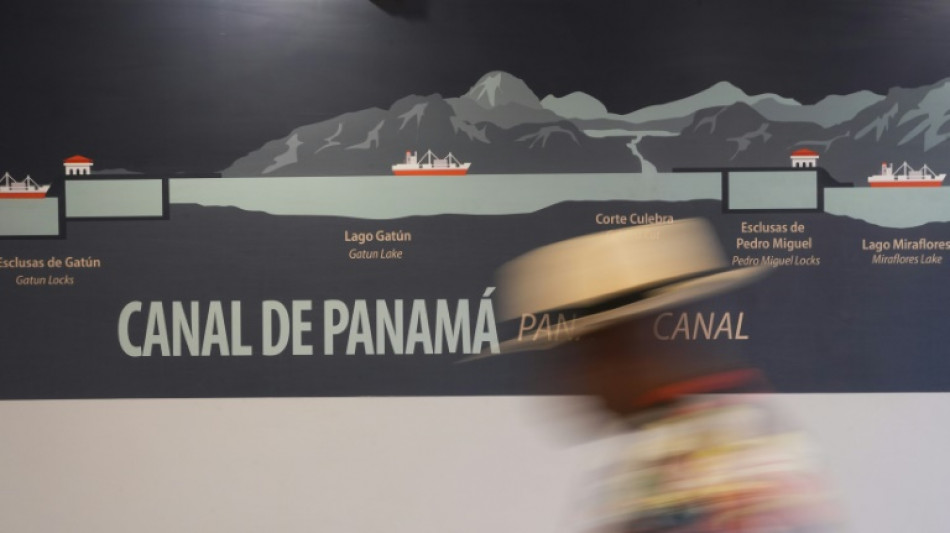
Panama leaders past and present reject Trump's threat of Canal takeover / Photo: © AFP

 Thomas Tuchel Refuses to Name England Number One Goalkeeper After James Trafford's Display

 Qatar's Amir and Venezuelan Acting President Discuss Energy Cooperation

 Russell Brand’s Wife Reads Prison Letter Denying Guilt; Fellow Inmate Questions Faith
 Alouettes and Elks Set for 113th Grey Cup Showdown

The status of the Panama Canal is non-negotiable, President Jose Raul Mulino said in a statement Monday signed alongside former leaders of the country, after Donald Trump's recent threats to reclaim the man-made waterway.
The US president-elect on Saturday had slammed what he called unfair fees for US ships passing through the Panama Canal and threatened to demand control of the waterway be returned to Washington.
Mulino dismissed Trump's comments Sunday, saying "every square meter of the Panama Canal and its adjacent areas belongs to Panama and will continue belonging to Panama".
He reiterated Monday in a statement -- also signed by former presidents Ernesto Perez Balladares, Martin Torrijos and Mireya Moscoso -- that "the sovereignty of our country and our canal are not negotiable."
The canal "is part of our history of struggle and an irreversible conquest," read the statement, which the four politicians had signed after a meeting at the seat of the Panamanian government.
"Panamanians may think differently in many aspects, but when it comes to our canal and our sovereignty, we all unite under the same flag."
Former leader Laurentino Cortizo, who did not attend the meeting, also showed support for the statement on social media, as did ex-president Ricardo Martinelli.
The 80-kilometer (50-mile) Panama Canal carries five percent of the world's maritime trade. Its main users are the United States, China, Japan, South Korea and Chile.
It was completed by the United States in 1914, and then returned to the Central American country under a 1977 deal signed by Democratic president Jimmy Carter.
Panama took full control in 1999.
R.Adler--BTB