
-
 Canadian negotiator says 'more work to do' on US trade deal
-
Nakashima knocks out Fritz to reach Cincinnati semi-finals

-
 'Solid' Clark takes solo lead at BMW Championship
-
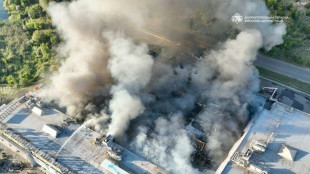
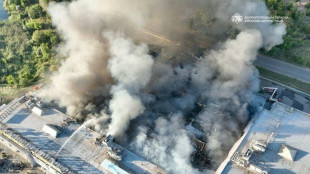
Ukraine says 'cynical' Russian strike on shopping centre killed 16
-
 Arteta hails Arsenal's desire after perfect start to title defence
-
TikTok to pay $400 mn settlement in US children's privacy case

-
 Betis down Real Sociedad in La Liga opener
-
MLS fines Messi for striking an opponent

-
 Mexican governor resumes job despite US drug charges
-
Gouiri double fires Marseille past Strasbourg in Ligue 1 opener

-
 Arsenal rout Coventry to open Premier League season in style
-
Mavericks buy out Thompson, now reportedly bound for Heat

-
 Giant-killer Bejlek overhauls Keys to reach Cincinnati semi-finals
-
England v Pakistan first Test: Three talking points

-
 Man Utd agree deal for Brighton midfielder Baleba: reports
-
US, Canada push to seal trade deal as deadline nears

-
 Werro wins Lausanne 800m, well off world record pace
-
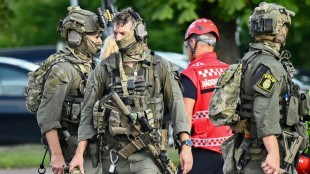
One dead, three wounded after sword attack at Swedish high school
-
 China mulls bid to host 2028 UN climate talks: sources
-
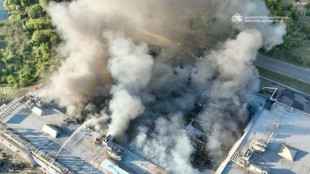
Ukraine says 'cynical' Russian strike on shopping centre killed 15
-
 Jones becomes third Englishman to join Inter this summer
-
US Supreme Court allows White House ballroom construction for now

-
 Mexican governor wanted on US drug charges returns to job
-
Root hails emerging fast bowlers as England thrash Pakistan

-
 Bolivia's Paz forced to fire economy minister in mid-crisis
-
Brazil's Lula urges tariffs resolution in call with Trump

-
 A-Rod ups T-Wolves stake in $4.5bn ownership change
-
Ukraine says 'cynical' Russian strike on shopping centre killed 14
-
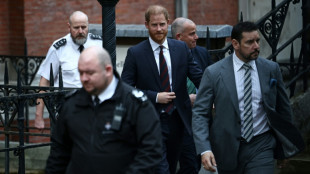 UK court orders Prince Harry, others to pay Daily Mail initial £9.5mn
-
Heatwave-hit Europe logs over 30,000 excess summer deaths: first figures
-
 'Grateful' ex-world champion Alaphilippe retires from cycling
-
Give LIV Golf 'one more shot,' says DeChambeau

-
 US, Canada work to wrap up trade deal ahead of looming deadline
-
Duplantis hits the high notes for athletics anthem

-
 Malaysia's JDT claim unbeaten run world record
-
Malaysia's JDT claims unbeaten run world record

-
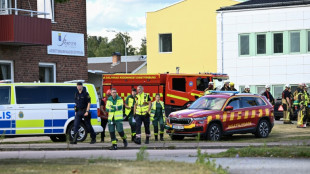 At least 2 teens seriously wounded in sword attack at Swedish school
-
Bolivian economy minister fired after Congress vote

-
 Popular forest near Paris to reopen after wildfire
-
Russell roars to Dutch GP sprint pole, Antonelli fifth

-
 UN holds second informal poll of secretary-general candidates
-
Russell takes pole for Dutch GP sprint

-
 Shakhtar Donetsk to play Champions League home games at Chelsea
-
England start life after Bazball with rout of Pakistan

-
 Arsenal sign Villa centre-back Konsa as champions bolster defence
-
'Duck run' pest control catching on in S.Africa's winelands
-
 The 'hedgehogs' leading Poland's defences on Russian border
-
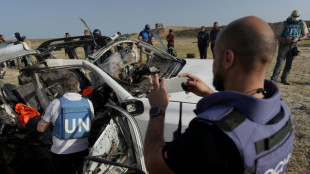
UK, Canada, Australia slam Israel ending probe into aid worker killings
-
 England thrash Pakistan by an innings and 103 runs in first Test
-
Spurs spending spree vital to raise standards: De Zerbi

In a village near Kharkiv, life under constant shelling
"This is how we live, running to our cellars. Maybe we should leave," cries retired nurse Larysa Kosynets, heading for safety before Russian shells start slamming into her village near the eastern Ukraine city of Kharkiv.
As the 57-year-old rushes off to hide, a Ukrainian commander orders visiting journalists to leave the area as quickly as possible.
The reporters have been escorted by the Ukrainian army on condition they do not identify the village.
Before the Russian shelling started, the Ukrainians were firing on Russian positions in an artillery battle that has lasted days on the outskirts of Kharkiv, Ukraine's second city.
Although the Russians pulled back from Kharkiv to redirect troops to Ukraine's eastern Donbas region and the south, they have kept their positions to the east, maintaining a constant barrage of fire towards the city and nearby villages to hold back the Ukrainian counteroffensive.
In this rural village, evidence of the fighting is everywhere with many houses destroyed, others missing walls or with the roof caved in. The ground is pockmarked with craters.
The village, largely dedicated to livestock farming, had around 1,000 residents before the war. Today only around 100 remain.
"The people who stayed have animals. They can't leave them. They'll die if nobody gives them food or water. Those who only had chickens left," Kosynets explains.
"The village is our land, our home. How can we just leave? We have our roots here," she adds.
Kosynets and the other residents who have stayed spent two months under Russian occupation before Ukrainian troops took back control of the village about two weeks ago.
- 'We're not Nazis' -
When the Russians were there, life was very difficult, she says.
"It was forbidden to go to Kharkiv. There was a shortage of everything, there were only potatoes and some tinned food. After a while, the Russians let us go to Volchansk," a town northeast of Kharkiv.
With no water or electricity and no working phone network, the villagers were only allowed to go up a nearby hill once a day to get a mobile signal so they could contact their relatives.
Kosynets says it was troops from Donetsk, a city which since 2014 has been run by pro-Russian separatists, who allowed them that one liberty, saying they were more flexible with the villagers than the Russians.
But going up the hill quickly became dangerous because other soldiers would "shoot over their heads to scare them".
Russia's rationale of a "special military operation" to demilitarise and de-Nazify Ukraine draws a snort of derision.
"Show me one Nazi in the village! We have our nation, we are nationalists but not Nazis nor fascists," she says, demanding that Russian President Vladimir Putin "withdraw his troops".
Living alongside Ukrainian soldiers has really helped, she says.
"They share everything. Cigarettes, food... We have become a family."
Nearby her husband Vitaliy Kuzmenko, 42, is raking up freshly cut grass to feed to their cow and goats.
"We're surviving -- what else can we do?" he shrugs, totally fed up with the ongoing artillery fire.
He says he has learned to distinguish between the sound of "an incoming shell from an outgoing one".
"When the strikes are nearby, we hide. I reinforced my basement with concrete and iron and I equipped it well, I built a stove," Kuzmenko says.
"We sleep in the house with our clothes on and if there is shelling we go to the basement."
"It's my land, I don't want to leave,"he says, despite the doors and windows of his home having been blown out by shelling, and his fields damaged.
"We were lucky, thank God."
L.Janezki--BTB