For the first time, Syrians 'not afraid' to talk politics / Photo: © AFP

 Trump admin finalizes reversal of US fuel economy standards
 US says no China arms sale plans after envoy cites Trump offer
 Dozens kidnapped in two weekend attacks in northern Nigeria
 Next stop the world: Pathirage wins Asian Games javelin gold
 Aster Launches Perpetual Grid Trading 2.0 with Up to 140,000 $ASTER Liquidity Mining Campaign
 Seoul says North Korean mines 'highly suspected' as cause of DMZ blast
 Russia pummels Kyiv in latest deadly daytime attack
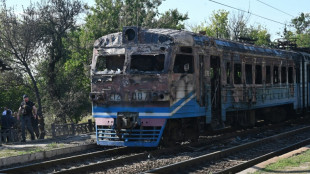 Wartime Ukraine works to keep its railways on track
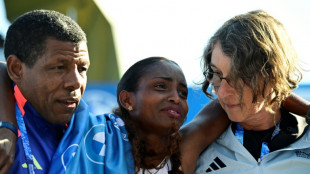
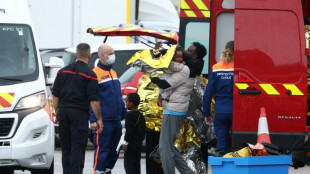 Boy among 3 dead in migrant Channel crossing accident: French authorities
 SGFX Creates a Standout Brand Experience at Forex Expo Dubai 2026
 Pope urges Europe to help combat 'deceit and lies' in international ties
 Injured Buttler to miss England ODI series in Pakistan
 Madrid housing protesters vow to maintain pressure on government
 In kayaks or waist-deep in floodwater, shoppers return to Bangkok markets
 UK police probes Iran link to air base bomb scare: media
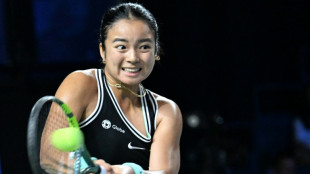 Eala blasts into Asian Games quarters in just 55 minutes
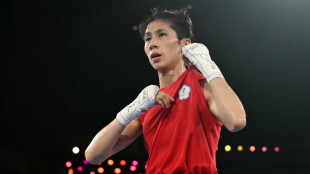 Taiwan gender-row boxer Lin Yu-ting guarantees Asian Games medal
 Comedian on trial for allegedly insulting Erdogan in standup show

 More Asian Games transport woes as bus takes Pakistan to wrong venue
 Death toll in South Africa bar shooting rises to 18
 Aide to Venezuelan opposition leader returns from exile
 Messi and Alcaraz love it, now padel takes step closer to Olympics
 Tolls mount in Thailand, Myanmar floods
 Why India's opposition wants top poll official out

 PU Prime Strengthens UAE Momentum with Strong Showing at Forex Expo Dubai 2026

For decades, any Syrian daring to broach political topics got used to speaking in hushed tones and with a watchful eye trained for a listener among the crowd.
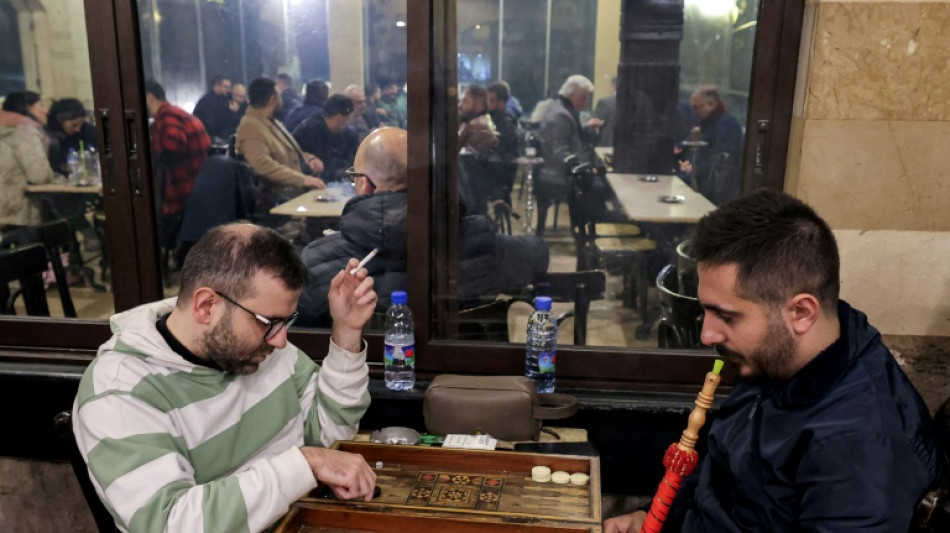
"There were spies everywhere," Mohannad al-Katee said in Al-Rawda cafe in Damascus, adding almost in disbelief: "It's the first time that I sit in a cafe and I can talk about politics.
"It was a dream for Syrians," said Katee, 42, a researcher in political and social history.
Until now, he like thousands of others had grown accustomed to watching for the proverbial flies on the walls of Damascus's renowned cafes.
Today, those same cafes are alive and buzzing with the voices of patrons speaking freely about their country for the first time.
Such discussions "were banned under the previous regime, then there was a relative opening during the Damascus Spring", Katee said.
He was referring to the year 2000, when Bashar al-Assad took over from his late father Hafez and slightly loosened the reins on political life in Syria.
Initially, the young Assad had opened up an unprecedented space, allowing for political salons to flourish alongside calls for reform in a country that had long grown accustomed to fear and silence.
"But it didn't last," said Katee.
A few months after his succession, Assad rolled back those gains, putting an end to the short-lived "Damascus Spring".
In the subsequent years, according to Katee, informants were ubiquitous, from "the hookah waiter to the man at the till, it could have been anyone".
- 'The walls have ears' -
Politically active since 1998, he fled to Saudi Arabia in 2012, a year after the outbreak of Arab Spring protests whose violent repression led to the eruption of the nearly 14-year civil war.
"Political life consisted of secret meetings," he said. "We were always taught that the walls have ears."
Today, "Syrians can never go back to obscurantism and dictatorship, to accepting single-party rule," he said.
A little further on, in the Havana cafe once known as a meeting point for intellectuals and activists in a distant past, Fuad Obeid is chatting with a friend.
Himself a former owner of a cafe he had to shut down, the 64-year-old said: "The intelligence services spent their time at my place. They drank for free as though they owned the place."
For over 50 years, the Assads maintained their vice grip on society, in large part through the countless informants that walked among the population.
On Saturday, Syria's new intelligence chief, Anas Khattab, announced that the service's various branches would be dissolved.
Obeid said: "I used to keep a low profile so they wouldn't know I was the owner. I told customers not to talk politics for fear of reprisals."
Now, he noted, in Havana cafe as in others, the difference is like "night and day".
- 'Truly free' -
Back in Al-Rawda, discussions are in full swing over hookahs and games of backgammon.
The owner Ahmad Kozorosh still can't believe his eyes, having himself witnessed numerous arrests in his own cafe over the years.
"I am now seeing almost exclusively new faces," he said. "People who had been sentenced to death, imprisoned."
To celebrate the new era, he is holding weekly symposiums in the cafe, and will even launch a new political party to be named after it.
Real estate agent Nesrine Shouban, 42, had spent three years in prison for carrying US dollars, a punishable offence in Assad's Syria.
Alongside thousands of others who found freedom when the doors of prisons were flung open, she was released on December 8 from the notorious Adra prison.
"They had dangled in front of us the possibility of an amnesty" from Assad's administration, she said. "Thankfully, the amnesty came from God."
"At cafes, we didn't dare say anything. We were even afraid that our phones were bugged," she said.
Now, for the first time, she said she felt "truly free".
Despite concerns over the radical Islamist background of Syria's new rulers, a breath of freedom has washed over the country for the first time, with public demonstrations being organised -- an unthinkable prospect just one month earlier.
"We are not afraid anymore," said Shouban. "If Jolani makes mistakes, we will denounce them," she added, referring to Syria's new leader Ahmed al-Sharaa, known by his nom de guerre Abu Mohammad al-Jolani.
"In all cases, it can't be worse than Bashar al-Assad."
L.Janezki--BTB