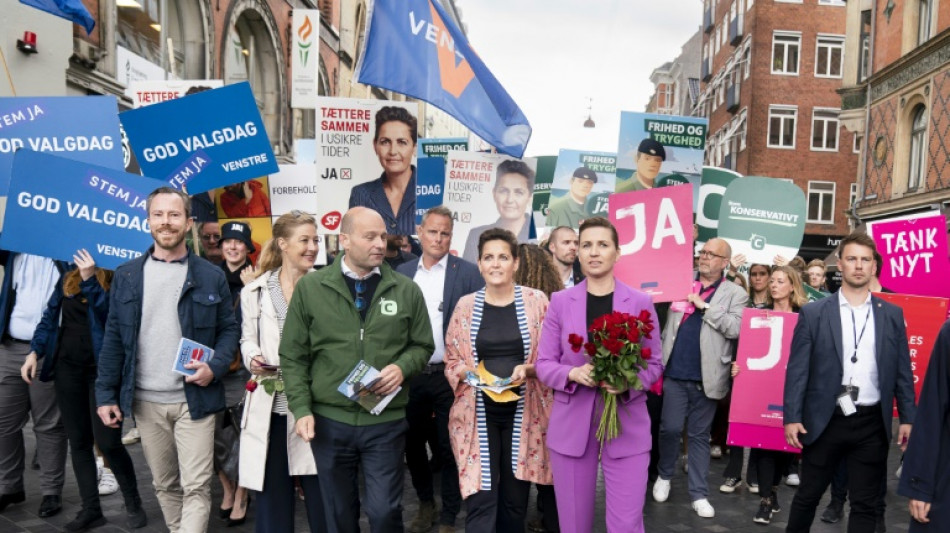
Danes say 'yes' to joining EU common defence policy / Photo: © Ritzau Scanpix/AFP

 Bangladesh all out for 64 in 2nd Test after Starc masterclass

 Odyssey effect: stars sell Greece to a new wave of US tourists
 South Korea to send first container ship through Arctic route
 Starc takes 5-11 to leave Bangladesh reeling in 2nd Test

 Injured Rune withdraws from US Open
 Nakashima knocks out Fritz to reach Cincinnati semi-finals
 Ukraine says 'cynical' Russian strike on shopping centre killed 16
 TikTok to pay $400 mn settlement in US children's privacy case

 MLS fines Messi for striking an opponent
 Gouiri double fires Marseille past Strasbourg in Ligue 1 opener
 Mavericks buy out Thompson, now reportedly bound for Heat
 England v Pakistan first Test: Three talking points
 US, Canada push to seal trade deal as deadline nears
 One dead, three wounded after sword attack at Swedish high school
 Ukraine says 'cynical' Russian strike on shopping centre killed 15

 US Supreme Court allows White House ballroom construction for now
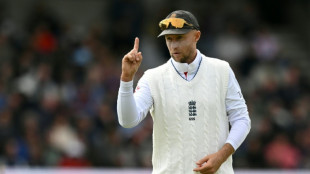 Root hails emerging fast bowlers as England thrash Pakistan
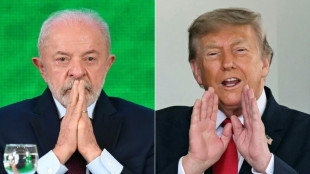 Brazil's Lula urges tariffs resolution in call with Trump
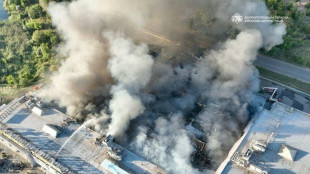 Ukraine says 'cynical' Russian strike on shopping centre killed 14
 Heatwave-hit Europe logs over 30,000 excess summer deaths: first figures
 Give LIV Golf 'one more shot,' says DeChambeau
 Duplantis hits the high notes for athletics anthem

 Malaysia's JDT claims unbeaten run world record
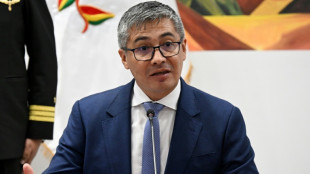
 Bolivian economy minister fired after Congress vote
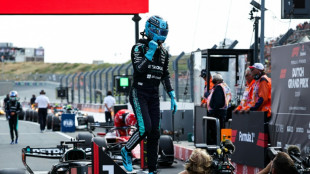 Russell roars to Dutch GP sprint pole, Antonelli fifth
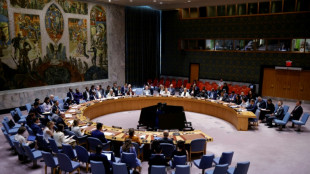
An overwhelming majority of Danes, almost 67 percent, voted Wednesday in favour of joining the EU's common defence policy 30 years after opting out, results showed with 99 percent of ballots counted.
The vote comes on the heels of neighbouring Finland and Sweden's historic applications for NATO membership, as the war in Ukraine forces countries in Europe to rethink their security policy.
"Tonight Denmark has sent a very important signal. To our allies in Europe and NATO, and to (Russian President Vladimir) Putin. We're showing, that when Putin invades a free country and threatens stability in Europe, we others pull together," Danish Prime Minister Mette Frederiksen told cheering supporters.
"Denmark now can partake in the European cooperation on defence and security. And for that I'm very, very happy", she said.
Denmark's defence opt-out has meant that Copenhagen, a founding member of NATO, has since 1993 not participated in EU foreign policy where defence is concerned and does not contribute troops to EU military missions.
Earlier in the day, Frederiksen had said as she cast her ballot that Denmark, a country of 5.5 million people, was "too small to stand alone in a very, very insecure world".
"There was a Europe before February 24, before the Russian invasion, and there is another Europe after", she said after the results came in.
"When there is once again war on our continent, you can't be neutral."
The traditionally eurosceptic country has often said "no" to greater EU integration, most recently in 2015 when it voted against strengthening cooperation on police and security matters for fear of losing sovereignty over immigration.
- Danish opt-outs -
Denmark has been an EU member since 1973, but it put the brakes on transferring more power to Brussels in 1992 when 50.7 percent of Danes rejected the Maastricht Treaty, the EU's foundation treaty.
It needed to be ratified by all member states to enter into force. In order to persuade Danes to approve the treaty, Copenhagen negotiated a series of exemptions and Danes finally approved it the following year.
Since then, Denmark has remained outside the European single currency, the euro -- which it rejected in a 2000 referendum -- as well as the bloc's common policies on justice, home affairs and defence.
Copenhagen has exercised its opt-out 235 times in 29 years, according to a tally by the Europa think tank.
Frederiksen announced the referendum just two weeks after Russia's invasion of Ukraine, and after having reached an agreement with a majority of parties in Denmark's parliament, the Folketing.
At the same time, she also announced plans to increase defence spending to two percent of gross domestic product, in line with NATO membership target, by 2033.
"These kinds of votes are even more important than earlier. In times of war it's obviously important to state if you feel that you want to join this type of community or not," Molly Stensgaard, a 55-year-old scriptwriter, told AFP as she voted in Copenhagen's city hall.
Nikolaj Jonsson, a 28-year-old sociology student, was however unhappy with the timing of the referendum, saying it had been called "in times of unrest to emphasise a 'yes'".
"I don't think it's fair to put this ballot right here, right now, because it pushes lots of people toward a yes who would normally be more sceptical toward the EU," he said.
- 'Ukraine the major reason'-
The director of the Europa think-tank, Lykke Friis, told AFP Frederiksen's decision to hold a referendum "was a big surprise".
"Nobody thought that the government would put the defence opt-out to a national referendum," she said.
"There's no doubt that Ukraine was the major reason for calling the referendum."
Eleven of Denmark's 14 parties had urged voters to say "yes" to dropping the opt-out, representing more than three-quarters of seats in parliament.
Two far-right eurosceptic parties and a far-left party called for Danes to say "no", arguing that joint European defence would come at the expense of NATO, which has been the cornerstone of Denmark's defence since its creation in 1949.
C.Meier--BTB