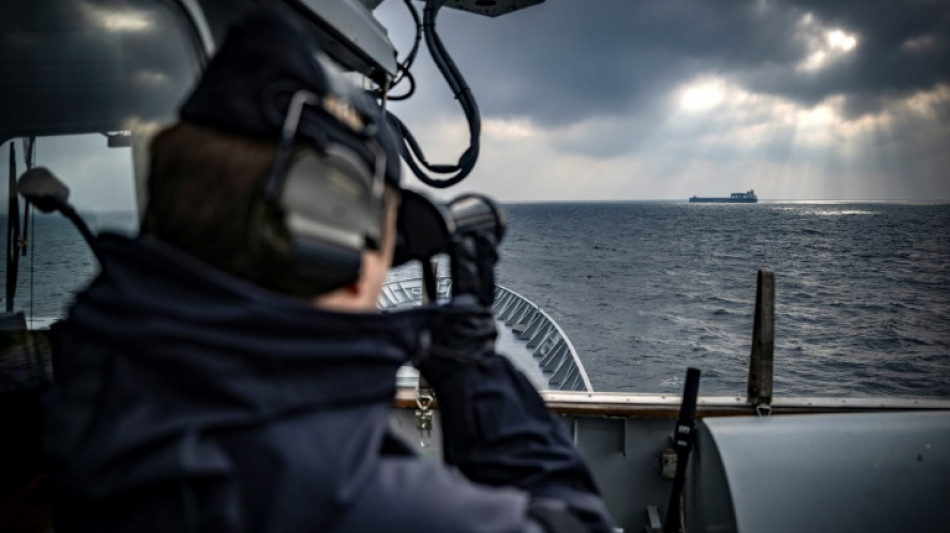
Russia's 'shadow fleet' brings 'high risk' of oil spill / Photo: © TT NEWS AGENCY/AFP/File

 'No limits': Marathon world record holder Sawe chasing history

 Countdown begins to biggest-ever Rugby World Cup
 Bangladesh women lose ground after quota reform
 Vietnam admits 'differing opinions' on Hanoi development

 Stocks temper gains as oil pares heavy losses, US data in focus
 New Zealand denies breaching climate commitments to EU
 Albert becomes youngest US scorer in 4-2 win over Chile

 Pirate island's plunging population shows Greece's demographic decline
 With elections ahead, Latvia's Russian-speakers reject Moscow's help
 Brazil football clubs face massive sponsorship blow from betting ban
 ChatGPT maker wants to be the App Store for AI as safety concerns grow

 Women fight fires and sexism in Indonesian Borneo

 Forsling's OT blast lifts Florida over Carolina in NHL opener

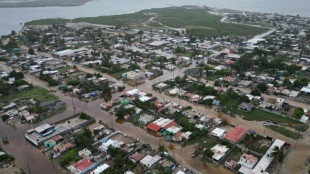 Hurricane Polo sweeps over Mexico's Pacific coast, heads inland

 Grynspan pulls ahead in race to lead UN: diplomat

 Trump touts AI boss pledge to self-regulate

 Oil down, but stocks lower as bond yields rise

 England break down stubborn Czechs to claim first Nations League win
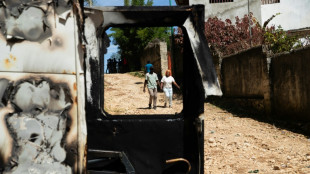 UN Security Council extends Haiti anti-gang force by 6 months

 Manchester City guilty of Premier League charges: What comes next?

 Man City chief Soriano slams Premier League 'conspiracy theory'

 Hurricane Polo sweeps over Mexico's Pacific coast

 Man City must be relegated after guilty verdict says club's former chairman

 German far-right aims to lead Saxony-Anhalt govt in December

 Little damage as Hurricane Polo sweeps over Mexico's Pacific coast

As ageing and deficient tankers in the "Russian shadow fleet" traffic the shallow waters of the Baltic Sea, a major oil spill disaster looms, experts told AFP.
Security analysts say Russia is operating a large "shadow fleet" of hundreds of vessels, seeking to dodge the sanctions Western nations imposed on its oil exports over its full-scale invasion of Ukraine in 2022.
Often rusty and obsolete, they operate in the Baltic Sea without Western protection and indemnity (P&I) insurance and with crews lacking experience navigating in winter conditions.
That is triggering alarm in the shallow, tricky-to-navigate Baltic Sea, whose only access to the Atlantic Ocean is via a narrow strait between Sweden and Denmark.
"The risk for an oil spill accident has existed for many years in the Baltic Sea, but the Russian shadow fleet has increased the risk significantly," said Mikko Hirvi, head of maritime safety at the Finnish Border Guard, charged with responding to environmental threats in the Baltic Sea.
For over two years the Finnish Border Guard has been keeping a close eye on the "shadow fleet" in the Gulf of Finland -- the heavily trafficked easternmost bay of the Baltic Sea -- bordered by Estonia in the south and Russia to the east.
Latvia, Lithuania, Poland, Germany, Sweden and Denmark also border the sea.
The Finnish authority defines the "shadow fleet" as old and technically deficient tankers that had not been sighted on the Baltic Sea before Russia invaded Ukraine in 2022.
The number of these vessels has since soared.
"We estimate 70 to 80 loaded oil tankers depart from Russian ports every week transporting oil through the Gulf of Finland. Of these, some 30 to 40 vessels belong to the shadow fleet," Hirvi said.
Around 430 vessels have been identified as constituting the shadow fleet globally, according to a report by the Kyiv School of Economics.
"A huge chunk of them sails through the Danish straits, because Russia relies heavily on their Baltic ports for export, especially of crude oil," said Yevgeniy Golovchenko, a political scientist at the University of Copenhagen.
Western officials have also accused the vessels of sabotaging undersea communications and power cables in several high-profile incidents.
- Accident waiting to happen -
Hirvi said the tankers were increasingly hiding their location data by jamming GPS and disabling AIS, a global tracking system vessels use to provide identification and positioning information to other ships and border stations, with the aim of preventing collisions.
"They turn off the system to black out their visits to Russia and circumvent the sanctions", he said.
"The risk for an accident is high."
Ownership of the vessels is opaque. They often sail under the flags of states such as Gabon, Liberia and the Cook Islands.
Some carry more than 100,000 tonnes of oil -- meaning a collision, or running aground, could result in a massive spill, with fatal consequences for the marine environment and its fragile ecosystems, the Swedish Coast Guard told AFP.
"These are big oil tankers which carry a lot of fuel, meaning the oil will always reach land... and it might reach many countries' coasts," said Mattias Lindholm from the Swedish Coast Guard.
In the event of an accident off Denmark, "the most likely scenario is that Danish taxpayers will have to pay" for clean-up since the ships lack proper insurance, Golovchenko said.
- Seeking solutions -
To curb the security and environmental risks, Denmark's maritime authority said this month it would strengthen checks of oil tankers in its waters, while the Finnish Border Guard has been increasing cooperation between authorities.
As international waters, the Danish straits are subject to the right of free passage, and any measures that would effectively stop the tankers from crossing the Baltic Sea require balancing international law with political will, Golovchenko said.
Kristina Siig, professor of maritime law at the University of South Denmark, told AFP it would be "technically doable" to stop the "entrance and exit to the Baltic Sea just by blocking what is basically three kilometres (less than two miles) of a bridge", but illegal under international law.
The European Union has blacklisted 79 of the vessels. Further measures targeting the shadow fleet are due to be included in its next round of sanctions.
W.Lapointe--BTB