Life 'cut short': Peru's victims of forced sterilization seek amends / Photo: © AFP

 'No limits': Marathon world record holder Sawe chasing history

 Countdown begins to biggest-ever Rugby World Cup
 Bangladesh women lose ground after quota reform
 Vietnam admits 'differing opinions' on Hanoi development
 Stocks temper gains as oil pares heavy losses, US data in focus
 New Zealand denies breaching climate commitments to EU

 Albert becomes youngest US scorer in 4-2 win over Chile
 Pirate island's plunging population shows Greece's demographic decline
 With elections ahead, Latvia's Russian-speakers reject Moscow's help
 Brazil football clubs face massive sponsorship blow from betting ban
 ChatGPT maker wants to be the App Store for AI as safety concerns grow
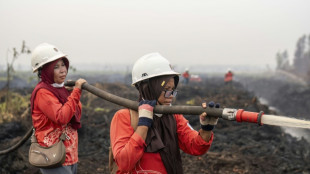 Women fight fires and sexism in Indonesian Borneo

 Forsling's OT blast lifts Florida over Carolina in NHL opener

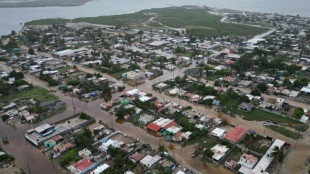 Hurricane Polo sweeps over Mexico's Pacific coast, heads inland
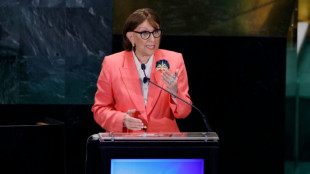 Grynspan pulls ahead in race to lead UN: diplomat

 Trump touts AI boss pledge to self-regulate

 Oil down, but stocks lower as bond yields rise

 England break down stubborn Czechs to claim first Nations League win
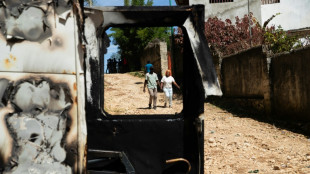 UN Security Council extends Haiti anti-gang force by 6 months

 Manchester City guilty of Premier League charges: What comes next?
 Man City chief Soriano slams Premier League 'conspiracy theory'

 Hurricane Polo sweeps over Mexico's Pacific coast

 Man City must be relegated after guilty verdict says club's former chairman

 German far-right aims to lead Saxony-Anhalt govt in December

 Little damage as Hurricane Polo sweeps over Mexico's Pacific coast
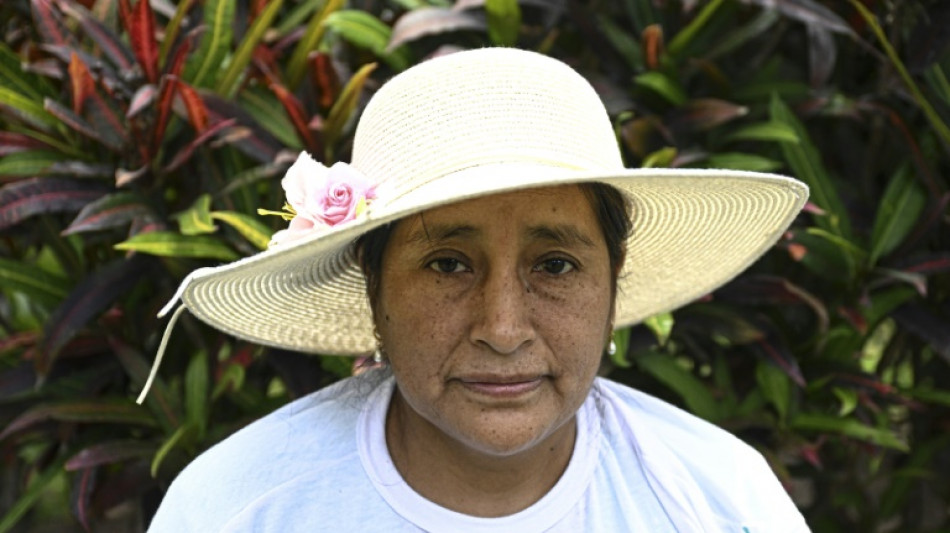
Florentina Loayza was 19 and mother to an infant when she was sterilized by agents of the Peruvian government, against her will.
Decades later, the 46-year-old Indigenous woman is still fighting for an apology and reparations along with thousands of others robbed of their fertility in a 1990s state campaign condemned by the United Nations.
"My life was cut short," Loayza told AFP, recounting how her partner abandoned her over the procedure, which also left her with lasting pain.
"On the outside, we look fine, but inside we are withering," she said of the estimated 270,000 women who, like her, were coerced, pressured or deceived into surgery to have their fallopian tubes tied.
Eighteen women died, according to official data, during the campaign that marked the final years of then-President Alberto Fujimori's 1990-2000 rule.
His government said it had offered sterilization as part of a family planning project, but the UN women's rights committee said in a report last October the state had carried out a "systematic and generalized attack against rural and Indigenous women."
It said the procedures were carried out without informed consent from victims who were often poorly educated and did not understand Spanish, the language of officialdom in Peru.
"It’s not something that was done in the cities... but in a specific (rural) area as a way of fighting poverty so that the poorest women didn't reproduce," Leticia Bonifaz, who was a member of the UN committee, told AFP.
She said it was the biggest known case of forced sterilization in Latin America.
- 'Life hasn't been easy' -
Loayza today is an activist. She wishes she could have had more children and rarely smiles.
In 1997, she was living in rural Huancavelica in Peru's southeast, with a baby a few months old.
Her life changed dramatically when she left home one day, stuffed with other women onto the back of a truck "like sheep," to collect promised food aid from a nearby clinic.
When they got there, she said, the women were not given aid but forced surgery.
"We were grabbed by nurses and placed on stretchers. They injected us with something."
When she woke up, Loayza was informed she had been sterilized.
Back home, her partner refused to believe her, accusing Loayza of wanting to be infertile in order to sleep with other men.
He left her and Loayza moved to the capital, Lima, to make a living cleaning houses.
She said she has suffered abdominal pain ever since the procedure, and desperately needs government help with health care she cannot afford.
"Life hasn't been easy," Loayza told AFP.
- 'Internal scar' -
In the house she shares with her four children on the outskirts of Lima, 55-year-old Maria Elena Carbajal shows the only photo she has of her last pregnancy before she, too, was sterilized against her will.
Aged 26, she had given birth in a public hospital and claims doctors who scolded her for "having many children" told her that if she wanted to see the newborn, she had to agree to a procedure.
Out of fear, she acquiesced.
Carbajal's husband also left her as a result, and like Loayza, she survived by cleaning other people's homes.
"I took my four children and practically had to escape from my mother-in-law's house and go to my mom's house," she recalled.
"For many years I thought it was my fault."
Carbajal now heads an organization for victims like her, but in 2021, she suffered a back injury in an attack on a protest she was part of.
For two years, she has waited to have surgery on her back on top of the treatment she needs for a hormonal deficit caused by her sterilization.
"Not only are our bodies scarred," she said, "but we also carry the internal scar of being abandoned by our families."
In its report last year the United Nations urged the Peruvian state to "accelerate and expand its investigations" into the matter, and provide financial compensation, psychological support and a comprehensive reparation program.
Fujimori died last September, having served 16 years of a 25-year prison sentence for human rights abuses.
He was never brought to trial over the sterilization campaign.
In 2023, a Peruvian court ruled that involuntary sterilizations had been part of public policy at the time, and ordered compensation and health care access for victims.
This has not yet come to pass.
S.Keller--BTB