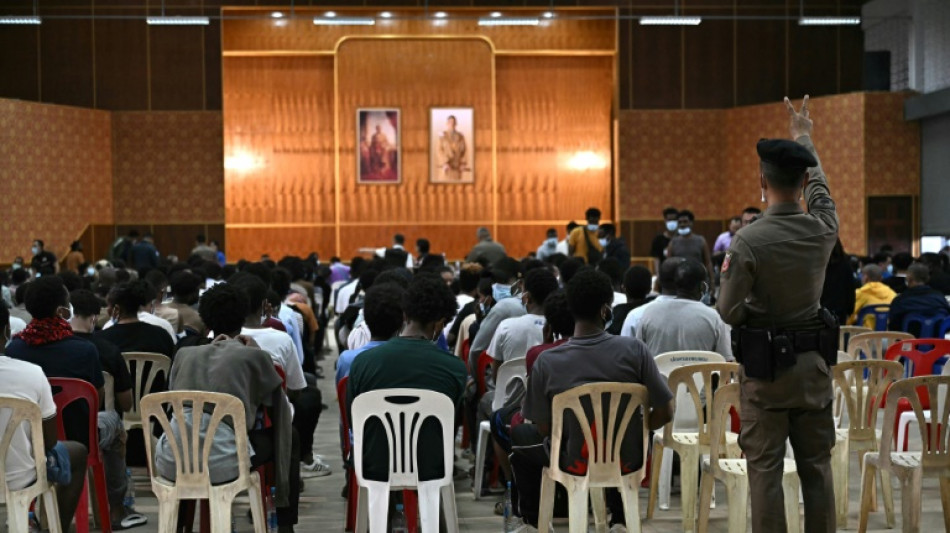
Over 250 people held at Myanmar scam centre released at Thai border / Photo: © AFP

 How to Watch the Rugby League World Cup Final on 7plus for Free

 Kayla Harrison Defeats Amanda Nunes via Submission at UFC 334

 GTA 6 Advertising Strategy and Disc Version Controversy

 From First Date to Wedding Day: How a TV Quote Sparked a Lifetime Commitment

 Malta Stuns Sweden with Late Penalty Comeback in Rugby Europe Trophy

 BingX: Major Announcement of Far-Reaching Significance

 Élan Opens as Late-Night Wine Bar in Honolulu

More than 250 people rescued from online scam centres in Myanmar were handed over to Thailand on Wednesday, a senior Thai army official said, following a series of crackdowns on the illegal operations.
Scam compounds have mushroomed in Myanmar's borderlands and are staffed by foreigners who are often trafficked and forced to work, swindling their compatriots in an industry analysts say is worth billions of dollars.
The group released on Wednesday had been working at a scam centre in Kyauk Khet, a village in Kayin state along the Thai-Myanmar border, according to the Democratic Karen Buddhist Army (DKBA), a Myanmar insurgent group that controls the area.
After being taken by boat across a small border river, they were dropped off in Phop Phra, about 30 kilometres (19 miles) south of Mae Sot on the Thai side of the border, an AFP journalist saw.
"There are currently 261 (people), but the final number is yet to be confirmed," said Natthakorn Rueantip, an army commander in Mae Sot.
Cyberscam compounds often lure people from the region with promises of high-paying jobs but then effectively hold them hostage and force them to commit online fraud.
In an effort to curb the illicit enterprises -- which have also been linked to drug smuggling and gambling -- authorities and militia groups in Myanmar and Thailand have made a show of raiding the centres before releasing and repatriating the foreigners inside.
Thai officials said the Kyauk Khet centre first appeared on the other side of the Moei River in 2019 and is still under construction.
A Thai border official said that the compound is run by Chinese nationals but that the workers were smuggled in from all over the world.
The official, who spoke on condition of anonymity, added that the compounds are now running on generators since Thailand cut off electricity and fuel supplies starting last week.
In contrast to Kyauk Khet, Shwe Kokko, one of the most notorious scam compounds almost 50 kilometres to the north on the Myanmar side, is a gleaming built-up city.
Security has been tightened in the area, with several Thai military checkpoints and signs warning of Thais and foreigners being "deceived" into working illegally online.
The proliferation of so-called "scam cities" has caused a storm on Chinese social media, with netizens calling Thailand a "dangerous place".
Last week, Chinese and Thai media reported that 61 people, including 39 from China, were released from a Myanmar scam compound and handed over to Thai authorities.
burs-sjc/aph/sco
O.Lorenz--BTB