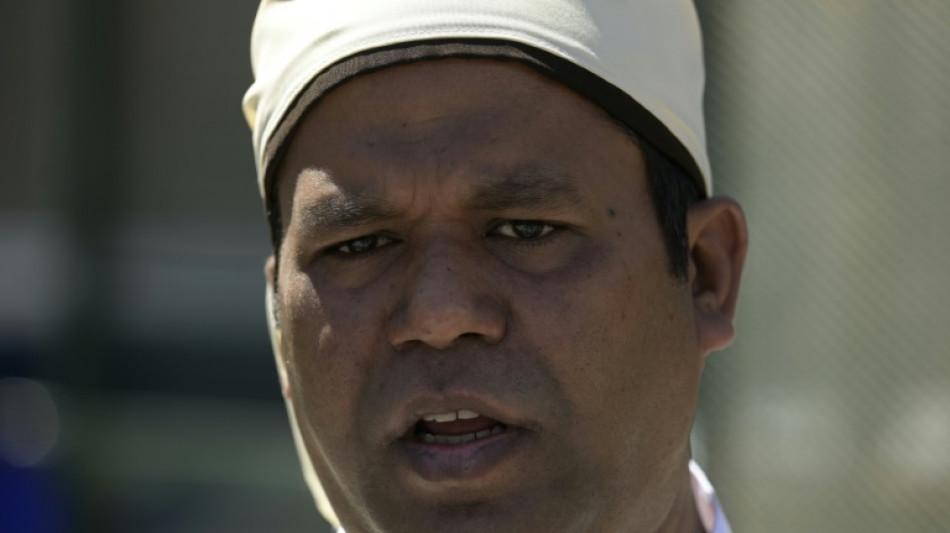
Argentine court issues warrants for Myanmar officials accused of Rohingya 'genocide' / Photo: © AFP/File

 How to Watch the Rugby League World Cup Final on 7plus for Free

 Kayla Harrison Defeats Amanda Nunes via Submission at UFC 334

 GTA 6 Advertising Strategy and Disc Version Controversy
 From First Date to Wedding Day: How a TV Quote Sparked a Lifetime Commitment
 Malta Stuns Sweden with Late Penalty Comeback in Rugby Europe Trophy

 BingX: Major Announcement of Far-Reaching Significance

 Élan Opens as Late-Night Wine Bar in Honolulu

An Argentine court has issued arrest warrants for the head of Myanmar's military junta and former officials including Nobel Peace Prize winner Aung San Suu Kyi over alleged "genocide and crimes against humanity" targeting the Rohingya minority group.
The court ruling, seen by AFP on Friday, was issued in response to a complaint filed in Argentina by a Rohingya advocacy group.
It was filed under the principle of "universal jurisdiction" by which countries can prosecute crimes regardless of where they occurred if, like genocide or war crimes, they are considered sufficiently serious.
Warrants were issued for military and civilian officials including current junta leader Min Aung Hlaing, ex-president Htin Kyaw, and former elected civilian leader Aung San Suu Kyi in her capacity as "state counselor" from 2016 to 2021, when she was ousted in a coup.
In that time, she has been accused by detractors of doing little to stop the abuse of Rohingya.
Hlaing is also under investigation by the International Criminal Court, while the International Court of Justice -- the UN's highest tribunal -- is examining a complaint of "genocide" against Myanmar.
The Rohingyas, mainly Muslims, are originally from Buddhist-majority Myanmar where, according to Amnesty International, they have been subjected to a regime akin to apartheid.
Beginning in 2017, many have been forced to flee persecution and violence to richer and predominantly Muslim Malaysia, or to refugee camps in Bangladesh, where about a million of them live.
Myanmar has been in turmoil since the 2021 coup that sparked renewed clashes with ethnic rebels and saw the formation of dozens of "People's Defense Forces" now battling the junta.
In her ruling issued Thursday, Judge Maria Servini said the allegations listed in the complaint "constitute crimes that violate human rights recognized in various international criminal law instruments, subscribed to by most countries in the world."
They included "internationally known crimes such as genocide and crimes against humanity, committed by the political and military authorities in power in that country," she added.
- 'Historic step' -
Argentine courts have in the past opened investigations into crimes in other countries under the principle of "universal jurisdiction," including for acts committed by the Francisco Franco regime in Spain.
And last December, a judge ordered the arrest of Nicaraguan President Daniel Ortega for "systematic violation of human rights."
None of the cases have yet resulted in action against a foreign national.
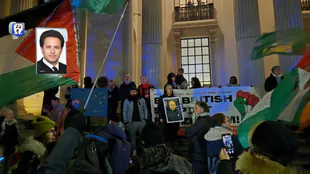
Tun Khin, president of the Burmese Rohingya Organisation UK, nevertheless welcomed the latest ruling as an "historic step towards justice for Rohingya and everyone in Burma suffering under the Burmese military."
It was "also a victory for international justice at a time of growing violations of international law worldwide," he said in a statement.
Tomas Ojea Quintana, the Rohingya' plaintiffs' lawyer in Argentina, told AFP the next step will be for the ruling to be forwarded to prosecutors, who will take the steps necessary for the notification of Interpol, which issues international warrants.
R.Adler--BTB