Kenya's HIV patients victims of US aid freeze / Photo: © AFP

 Most equities rise after oil price plunge, US data in focus
 Polar oceans transformed as warming melts ice habitats: research
 Lost shark becomes viral star in South Korea
 Dangote to launch $16bn refinery in Kenya
 North Korean leader 'extremely obese': Seoul spy agency
 Yankees and pope-backed White Sox start MLB playoffs with wins
 Malaysia's ex-PM Mahathir in hospital for observation
 'No limits': Marathon world record holder Sawe chasing history
 Countdown begins to biggest-ever Rugby World Cup
 Bangladesh women lose ground after quota reform
 Vietnam admits 'differing opinions' on Hanoi development
 Stocks temper gains as oil pares heavy losses, US data in focus
 New Zealand denies breaching climate commitments to EU

 Albert becomes youngest US scorer in 4-2 win over Chile
 Pirate island's plunging population shows Greece's demographic decline
 With elections ahead, Latvia's Russian-speakers reject Moscow's help
 Brazil football clubs face massive sponsorship blow from betting ban
 ChatGPT maker wants to be the App Store for AI as safety concerns grow
 Women fight fires and sexism in Indonesian Borneo

 Forsling's OT blast lifts Florida over Carolina in NHL opener

 Hurricane Polo sweeps over Mexico's Pacific coast, heads inland
 Grynspan pulls ahead in race to lead UN: diplomat

 Trump touts AI boss pledge to self-regulate
 Oil down, but stocks lower as bond yields rise
 England break down stubborn Czechs to claim first Nations League win
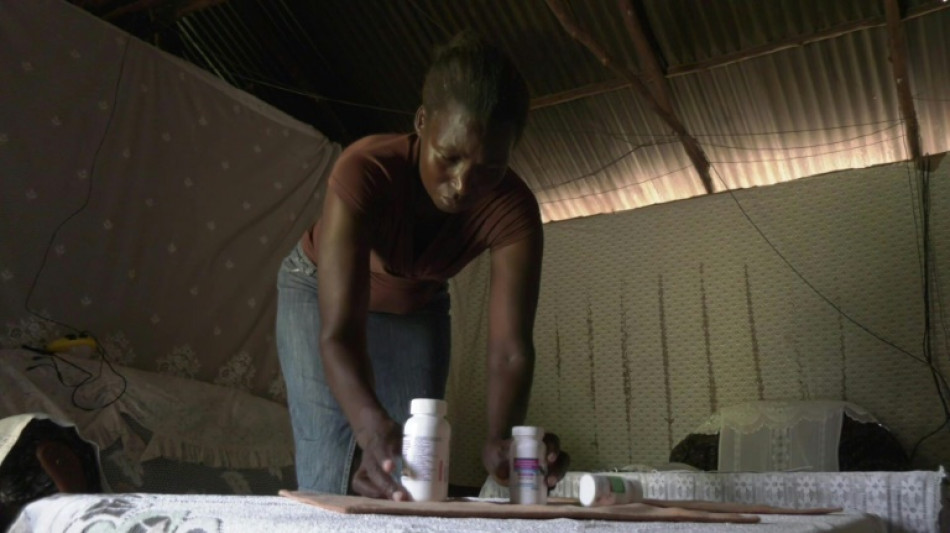
Days after US President Donald Trump froze overseas aid funding, Hellen Anyango anxiously counted her boxes of AIDS treatment drugs, unsure what would happen when they ran out.
At the beginning of February, she had only three boxes of the anti-retroviral (ARV) medication left -- enough to last her just a week.
"If I don't take them, I can't be well," said the 43 year-old shop assistant, who comes from a village in Kisumu county on the shore of Lake Victoria.
Like millions of others, Anyango has counted for her treatment on PEPFAR, a scheme launched by then-US president George W Bush in 2003.
The US embassy in Kenya said in 2023 that it had spent $8.0 billion over 20 years on PEPFAR work in the East African country, reaching some 1.3 million people with ARV medicine and saving "millions" of lives.
The programme was disrupted suddenly at the end of January when Trump suspended most foreign aid programmes for 90 days.
Despite Washington announcing waivers for life-saving treatments, PEPFAR-financed clinics and drug-distribution centres in Kisumu shut down soon after the initial aid freeze and have remained closed.
Last week, international medical charity Doctors Without Borders confirmed that access to HIV pre-exposure prophylaxis and community-led surveillance programmes were still at a standstill in the region.
More than 135,000 people -- around 11 percent of the population -- in Kisumu are HIV positive, compared to a national average of around three percent.
"I don't know if my family is going to lose me or what my future looks like," Anyango told AFP.
- Confusion -
Erick Okioma, 61, who runs a local programme helping HIV patients and has lived with the virus himself for 25 years, said the sudden stop in PEPFAR was "devastating" and experienced like "a declaration of war".
The exact impact of the US aid freeze and subsequent waivers has caused "great confusion", he added.
Okioma attributes the high level of HIV in Kisumu -- where 60 percent live below the poverty line -- to local women prostituting themselves in return for fish caught by local men.
Treating patients at specialist clinics has helped shield them from the stigma around HIV-positive people, he said. He fears the social impact if they must go to public institutions.
That is a particular concern for young people, said Evelyne Mutobwa, who treats 172 HIV-positive adolescents at the MedSup Migosi health facility.
"Most of them have said that if we expose them to the community, everyone will know that they are on treatment," she said.
Some locals are critical that the Kenyan government has not stepped up its own efforts in a country with 1.4 million HIV-positive people.
Nelson Otwoma, head of an HIV support group in Nairobi, said it was time for the government to take care of its own problems.
"We are not Trump's responsibility," he said.
Kenya's health ministry says it has enough stocks to keep treatments going for at least six months.
S.Keller--BTB